
Wandering through a dense maze of golden mud-brick walls and feeling the cool shade of ancient timber-framed alleyways are unforgettable experiences in the heart of the Arabian desert. Situated roughly 200 kilometers northwest of the capital in the historic Najd region, the beautifully preserved Ushaiqer Heritage Village stands as a living museum, offering travelers a rare glimpse into the traditional architectural wit and community life of old Najdi society.
Settled by Bedouins over 1,500 years ago, this walled oasis town grew into a crucial stopping point for pilgrims and trading caravans heading to Mecca due to its abundant underground water and fertile soil. Peering up at the distinctive triangular ventilation cutouts, stepping over the threshold of masterfully restored family homesteads, and listening to stories from local guides make this sweeping desert sanctuary an absolute highlight of any central Saudi itinerary.
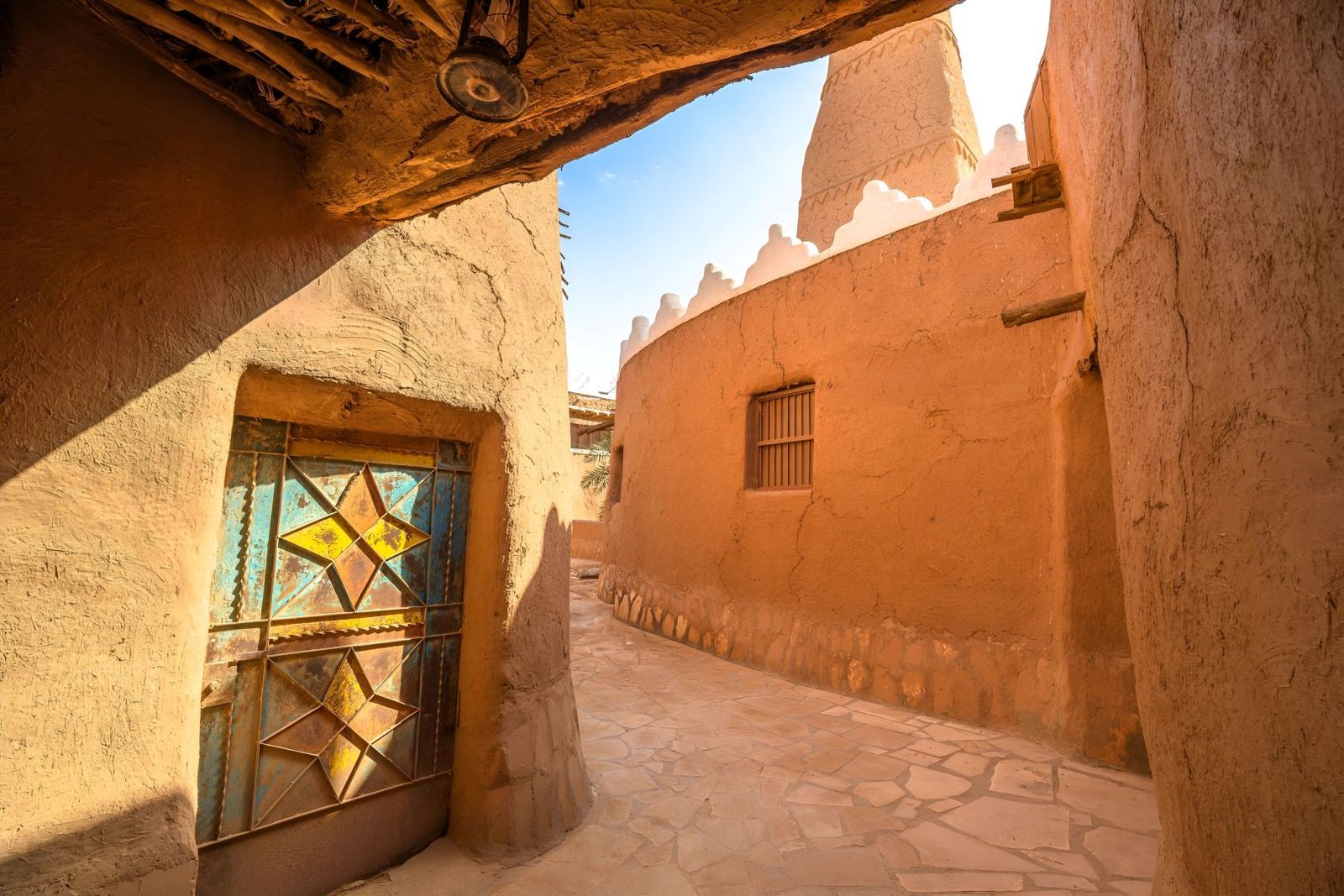
Master builders constructed the town using local sun-dried clay, thick straw, and sturdy trunks of tamarisk and palm trees, fashioning a dense urban fortress designed to beat the blistering desert heat. The architecture stands out for its high mud walls, heavy timber doors carved with geometric folk art, and unique overhead bridges that connected second-story rooms across the narrow streets, allowing families to move between houses without stepping down into the hot sun.
A beautiful rim of vibrant green date palm groves wraps around the golden clay core, sustained by ancient stone wells that have tapped into the desert aquifers for generations.
Travelers generally plan their arrival for the late afternoon hours, taking advantage of the dipping sun to explore the winding lanes just as the golden mud structures catch the soft evening light, casting deep, dramatic shadows through the historic avenues.
What Draws People to It
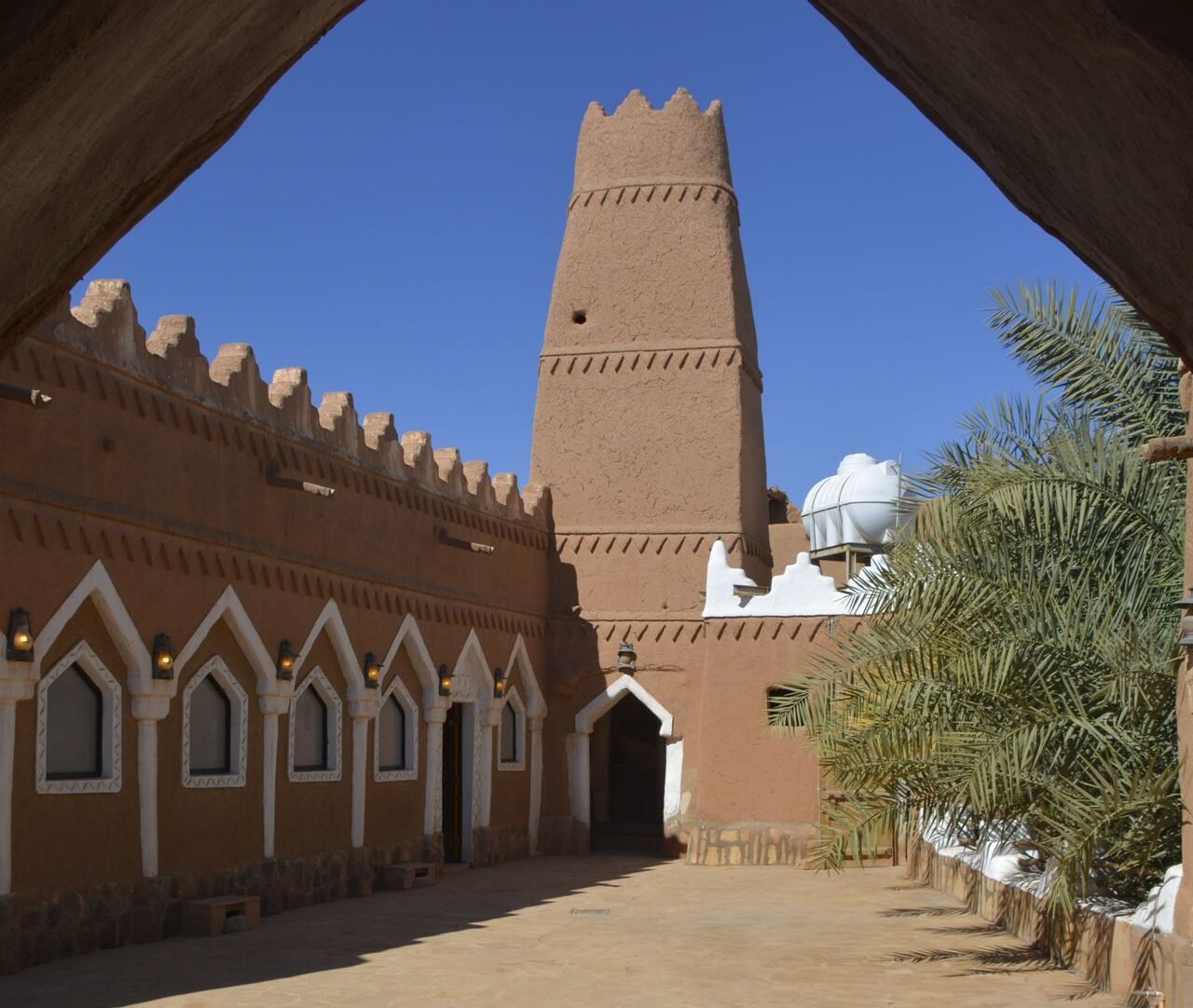
Culture seekers, history buffs, and architectural photographers focus their steps on a few exceptional landmarks inside the old city gates:
• The Al-Shenajer House Museum:
Standing as the centerpiece of the restored town is a massive, multi-room family residence packed with thousands of historic Najdi artifacts. The private collection displays everything from antique brass coffee pots and embroidered clothing to centuries-old agricultural tools and handwritten schoolbooks.
• The Historic Subai’i Mosque:
Serving as the spiritual heart of the community for centuries is a beautifully restored mud-brick mosque. You can step down into its subterranean prayer hall, which was historically used to keep worshippers warm during the freezing Najd winter nights.
• The Al-Musalla Overlook Tower:
Perched high on a nearby craggy ridge is a traditional stone and clay watchtower. Making the short trek to the top rewards you with a sweeping, panoramic view of the entire interlocking mud village, the green palm orchards, and the rolling orange sand dunes of the Nafud desert beyond.
💡 Read Next: Ready to trade the sun-baked mud-brick alleyways and flat desert landscape of the central plains for a spectacular multi-coloured mountain fortress? Head deep into the rugged peaks of Asir province to explore the towering, slate-stone towers, white-framed windows, and deep cultural heritage of the legendary gingerbread village of Rijal Almaa!
What You Can Do Here
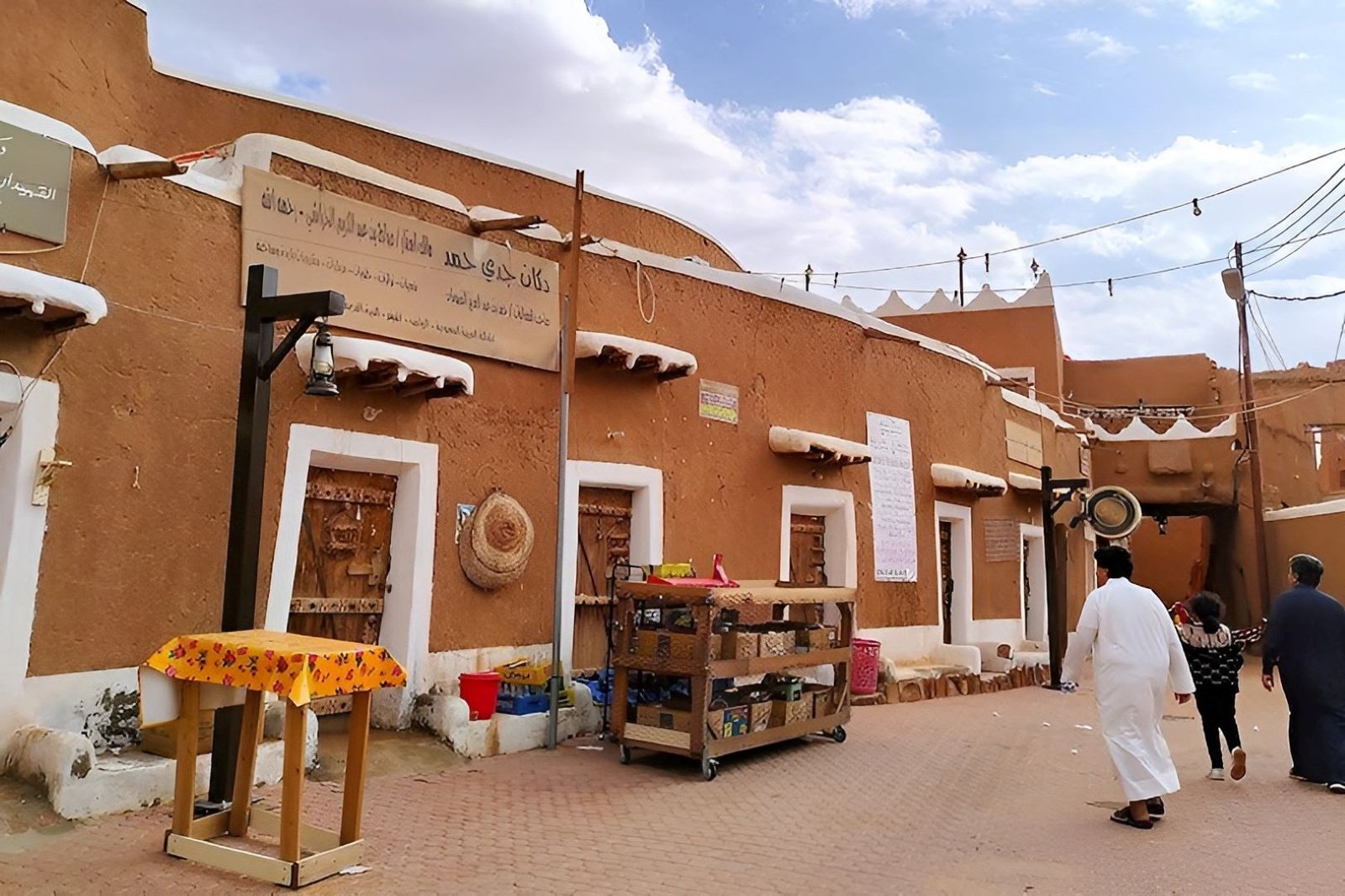
Strolling through this massive archaeological zone smoothly takes about 2 to 3 hours, letting you effortlessly tour a sequence of dedicated heritage areas:
• The Old Marketplace Alleys:
Spend your first hour walking through the open-air market stalls where local elders occasionally set up shop, selling aromatic desert truffles, local spices, and sweet, sticky Najd dates.
• The Labyrinth Residential Lanes:
Venture deep into the inner rings of the village to discover hidden courtyards, narrow shaded walkways, and abandoned, crumbling towers that reveal the true age and scale of the settlement.
• The Madheef Hospitality Hall:
Conclude your walking tour at the traditional community center, where local volunteers welcome visitors into a beautifully carpeted diwaniyah to experience authentic Saudi hospitality with cardamom-spiced coffee and fresh dates.
📌 Fast Facts for Your Itinerary
📍 Address: Ushaiqer Heritage Village, Ushaiqer 15515, Saudi Arabia
⏰ Operating Hours: 8:00 AM – 8:00 PM Daily. The best time to experience the village fully is on weekends (Friday and Saturday) when the local museums and cafes are open.
🎫 Admission Ticket Prices: Access to the historic streets and public plazas of the village is completely free. Small independent cash donations of SAR 10 to SAR 20 are highly appreciated when entering private house museums like the Al-Shenajer House to support the local families preserving the history.
🚗 Self-Drive Navigation Guardrail: Transport Notice: There is no direct public public transportation from Riyadh to Ushaiqer. Renting a car and driving along Route 546 is the best option. To coordinate your itinerary with nearby historical stops in Shakra or the wider region, consult the comprehensive Visit Saudi Riyadh Region Exploration Planner to map out your driving route across the central plains. Even though the desert highway is modern and well-maintained, you must keep an eye out for sudden dust storms and stray camels crossing the asphalt, especially during the late afternoon hours.
👟 Clay Preservation & Footwear Safety Guardrail: The village is an authentic mud-brick site with highly uneven, unpaved dirt pathways and steep earthen steps that can become incredibly slippery if a rare desert rain shower occurs. Wearing closed-toe, high-grip walking shoes or light trainers is essential to navigate the paths safely. Preservation Warning: The mud walls are fragile and highly susceptible to damage; do not attempt to climb or lean heavily on unrestored, crumbling structures, as they can shift easily.







Leave a Reply