Category: Saudi Arabia

  • Mecca’s Spectacular Abu Bakr Al-Amoudi Heritage Museum

    Mecca’s Spectacular Abu Bakr Al-Amoudi Heritage Museum

    Gleaming gold calligraphy etched onto a massive replica of the Kaaba door catches your eye as you transition away from the spiritual core of the holy city. Positioned just outside the sacred sanctuary lines on the bustling Prince Mohammed bin Salman Road, the Abu Bakr Al-Amoudi Museum serves as a fascinating cultural oasis, offering pilgrims and history enthusiasts a hands-on look into the daily customs, military tools, and domestic lifestyles of past Hejazi generations.

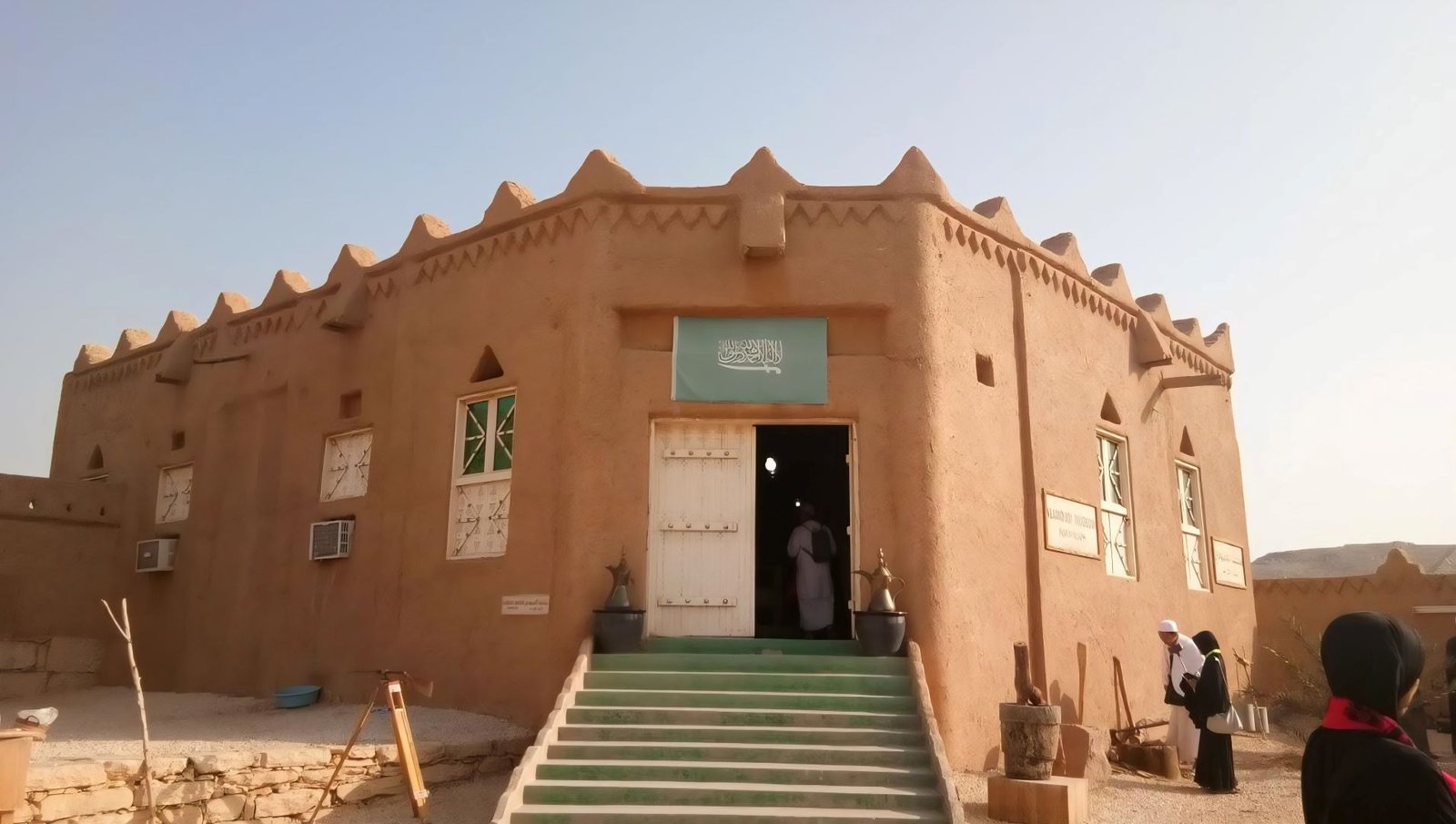
    Constructed originally in 1993 by a prominent local businessman, this privately owned fortress spans over 2,000 square meters and has been meticulously built using historic methods like packing desert clay, mud bricks, and palm fronds.

    Browsing through an expansive collection of more than 15,000 authentic artifacts, touching replica household tools, and exploring historical records detailing the structural growth of the region make this off-beat landmark a highly rewarding cultural addition to a traditional pilgrimage itinerary. For an authoritative inventory breakdown of the generational items preserved within—ranging from historic carpentry tools to ancient currency collections—browse the Saudi Press Agency Al-Amoudi Museum Heritage Report, which highlights the cultural significance of the collection to the Hejaz region.
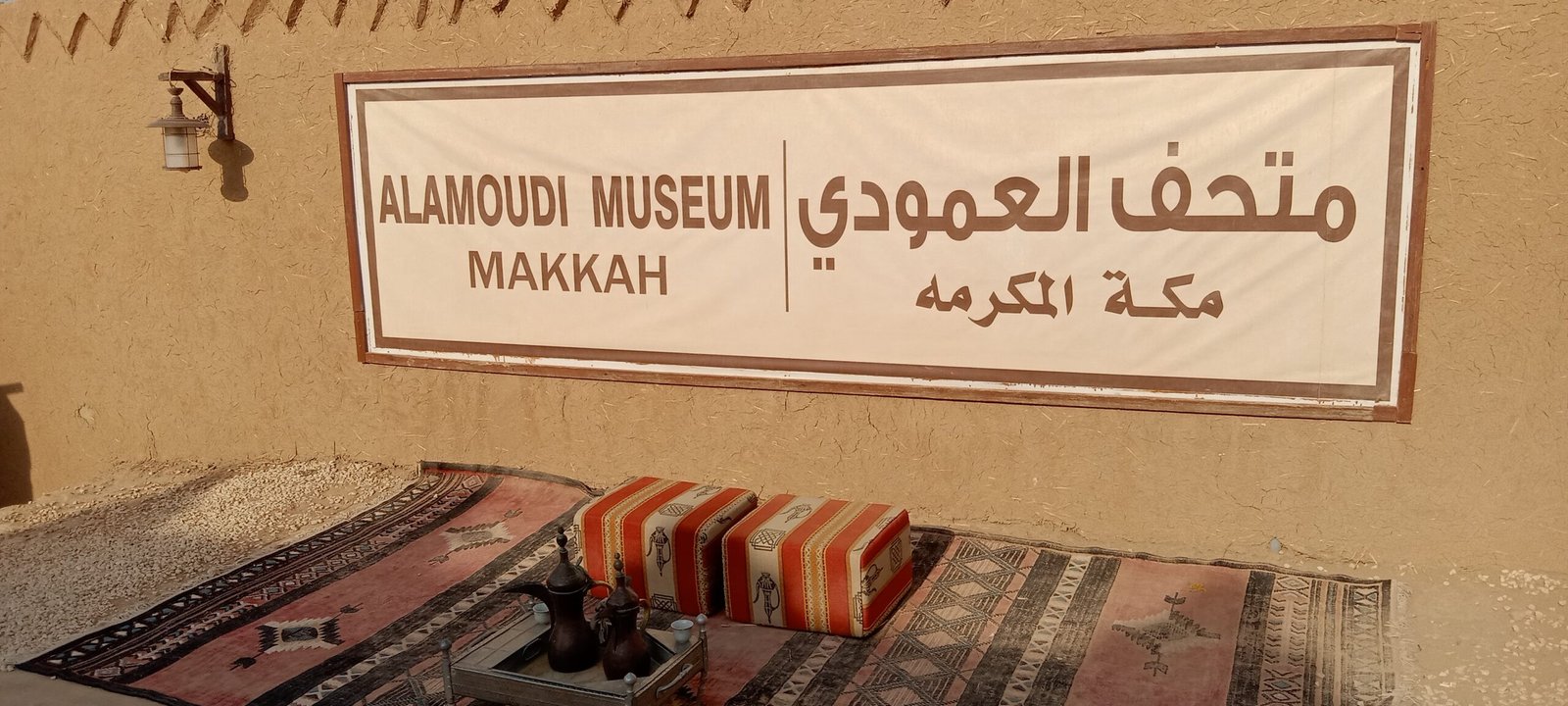
    Architects designed the museum’s outer perimeter to look exactly like an old Arabian desert castle, complete with imposing brown bastions and textured mud walls that naturally insulate the interior from the harsh sun. The inner spaces open up into an expansive, multi-zoned warehouse format arranged chronologically to trace regional history from the pre-Islamic era straight through to early 20th-century Saudi life.

    Shops, old well systems, and traditional Bedouin tents are recreated inside the galleries, allowing visitors to feel like they have stepped completely out of the modern grid and into an active ancient marketplace.

    Tour groups frequently plan their arrival for the cooler morning or late afternoon hours, taking advantage of the spacious open layouts and ample bus parking to break up the drive between the coast and the mountain valleys.

    What Makes It Popular
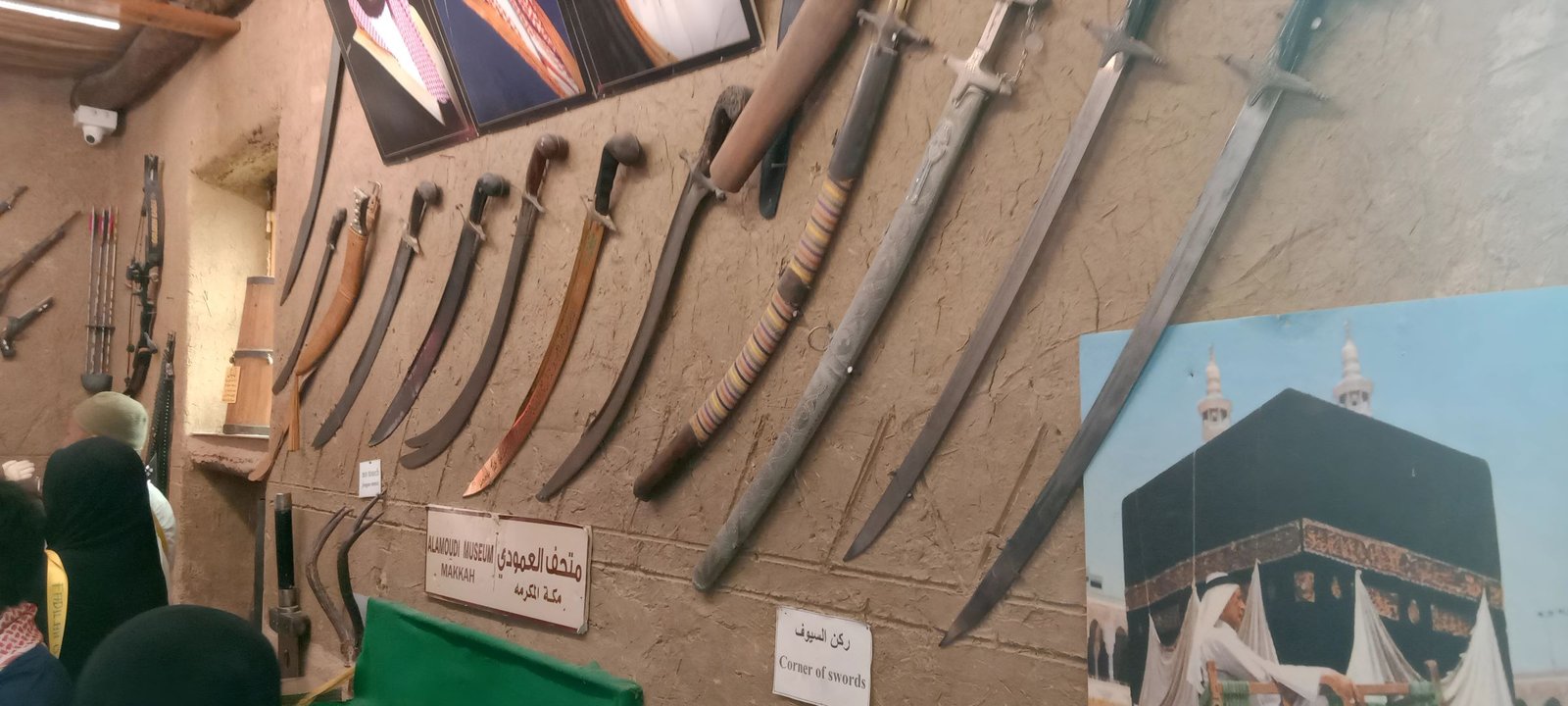
    Backpackers, photography enthusiasts, and families flock to this unique heritage vault for a few standout reasons:

    • The Solid Gold Kaaba Door Replica:
    Dominating the central exhibition hall is a spectacular, full-sized recreation of the holiest gate in Islam, crafted entirely with brilliant gold finishing and paired alongside an intricate replica of the sacred Kaaba key.

    • The Interactive Costume Pavilion:
    Providing an exceptionally rare hands-on experience, the museum allows visitors to pull authentic Bedouin robes, royal cloaks, and ancient warrior armor directly off the racks to dress up for custom cultural photo sessions.

    • The Military and Craft Galleries:
    Winding through the side wings is a dense treasure chest of antique curved swords, matchlock rifles, historic coinage, and dedicated craft workshops demonstrating traditional pottery, blacksmithing, and carpentry.

    💡 Read Next: Ready to trade the fascinating private collections, vintage artifacts, and mud-walled heritage of Jeddah’s outskirts for the ultimate spiritual epicenter of the world? Head back inland to witness the awe-inspiring sights, towering modern skyscrapers, and sacred, crowded courtyards surrounding Islam’s holiest sanctuary in our ultimate guide to Mecca!

    Things to Experience
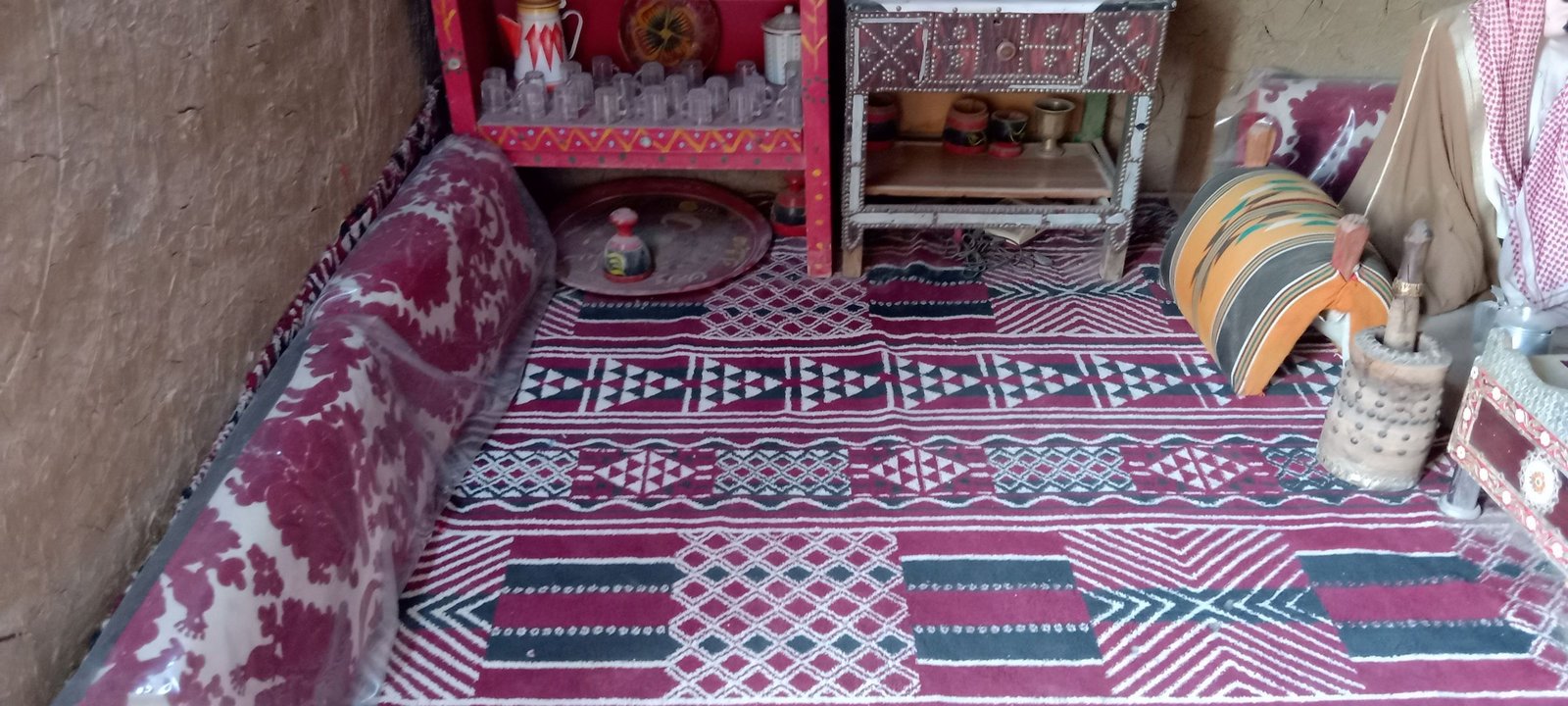
    A standard route through the sprawling fortress takes about 1.5 to 2 hours, letting you smoothly explore a sequence of dedicated heritage zones:

    • The Lifestyle and Trade Quarters:
    Spend your initial hour wandering through meticulously arranged traditional living rooms, viewing ancient copper cooking pots, woven jewelry, and vintage wooden bridal beds.

    • The Grand Mosque Historical Archive:
    Settle into a specialized pavilion filled with century-old photographs and rare administrative documents that track the grand engineering expansions of the Holy Sanctuary over the decades.

    • The Souvenir and Date Market:
    Conclude your loop at the large internal bazaar counters, where you can sample regional dates, purchase traditional Saudi aromatic oils, and browse handcrafted copper trinkets.

    📌 Fast Facts for Your Itinerary

    📍 Address: Makkah–Jeddah Highway (Prince Mohammed bin Salman Road), Al Hamra & Umm Al Jud District, Makkah 24337, Saudi Arabia.

    ⏰ Operating Hours: 8:00 AM – 9:00 PM Daily.

    🎫 Admission Ticket Prices: Entry fees are incredibly budget-friendly, structured at a nominal SAR 3 per person (approx. RM 3.50) for all general visitors, offering massive educational value for a token cost.

    🚗 Location Navigation Guardrail: Transport Notice: The museum sits roughly 20 to 25 kilometers west of the Grand Mosque, positioned right past the structural arches that mark the official boundary of the Haram sanctuary area. Because it is located in the Al-Shumaysi district along the main highway to Jeddah, hailing a ride-share app or booking a private driver is the most reliable transit method, as public city buses do not stop directly at the highway gate.

    🗣️ Language Support Guardrail: While the museum is highly interactive and touch-friendly, international travelers should note that the on-site guides speak primarily Arabic and Urdu. Information placards on the antique cases can be brief, so downloading a live visual translation app on your phone beforehand is highly recommended for scanning the historic weapon descriptions and text archives independently.
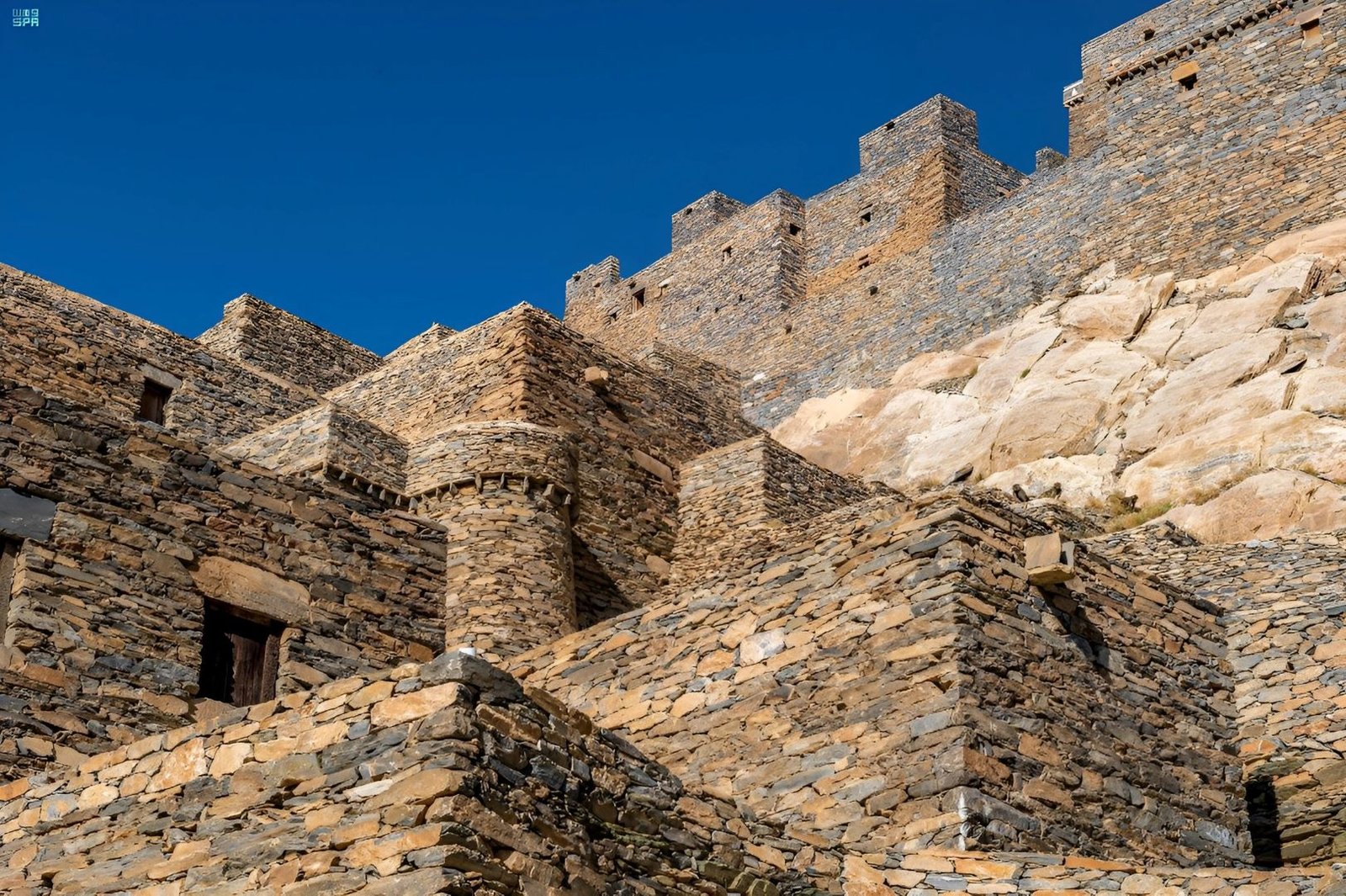
  • Discover Ancient Village of Dhee Ayn: Saudi Arabia’s Marble Citadel

    Discover Ancient Village of Dhee Ayn: Saudi Arabia’s Marble Citadel

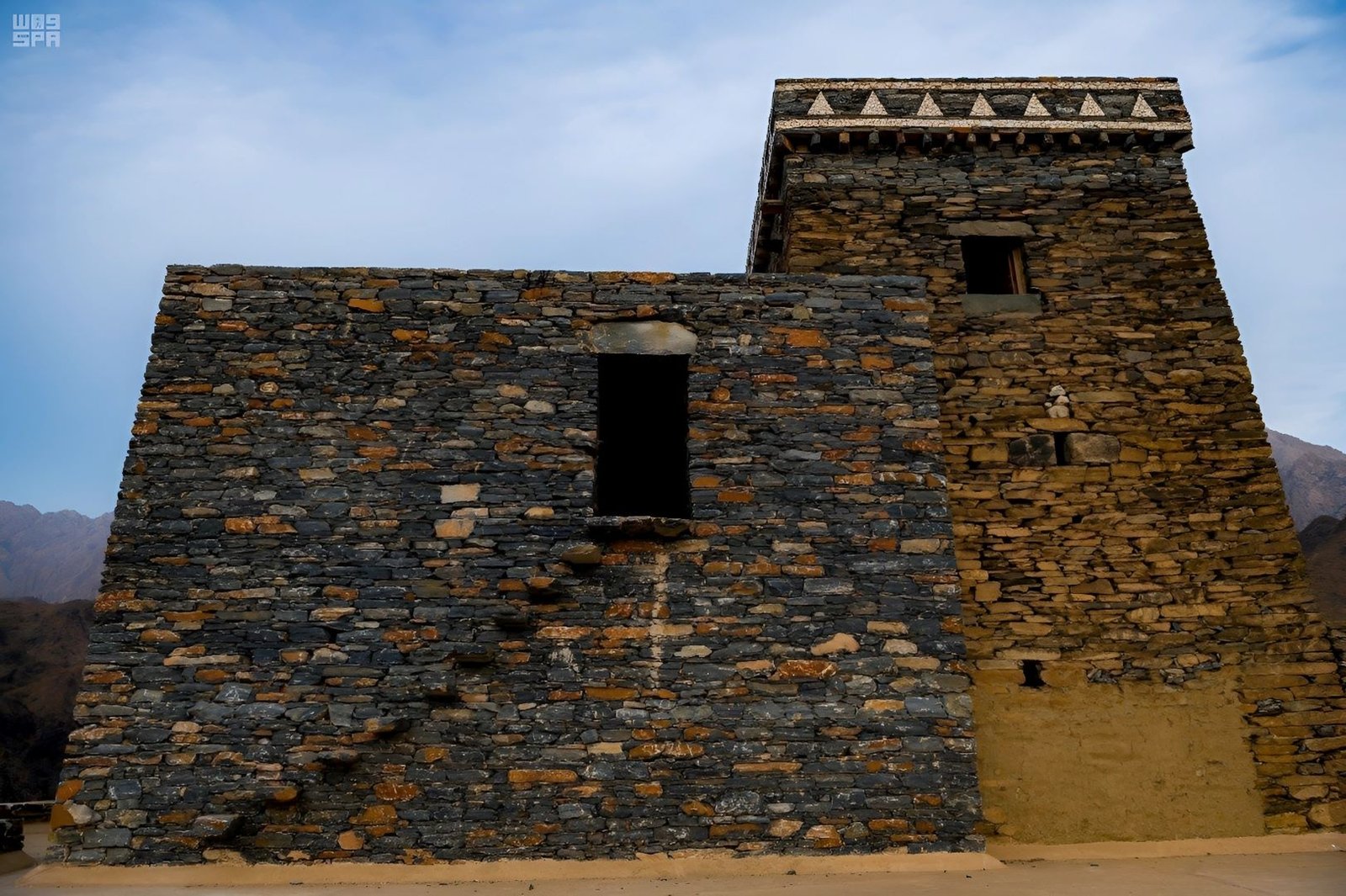
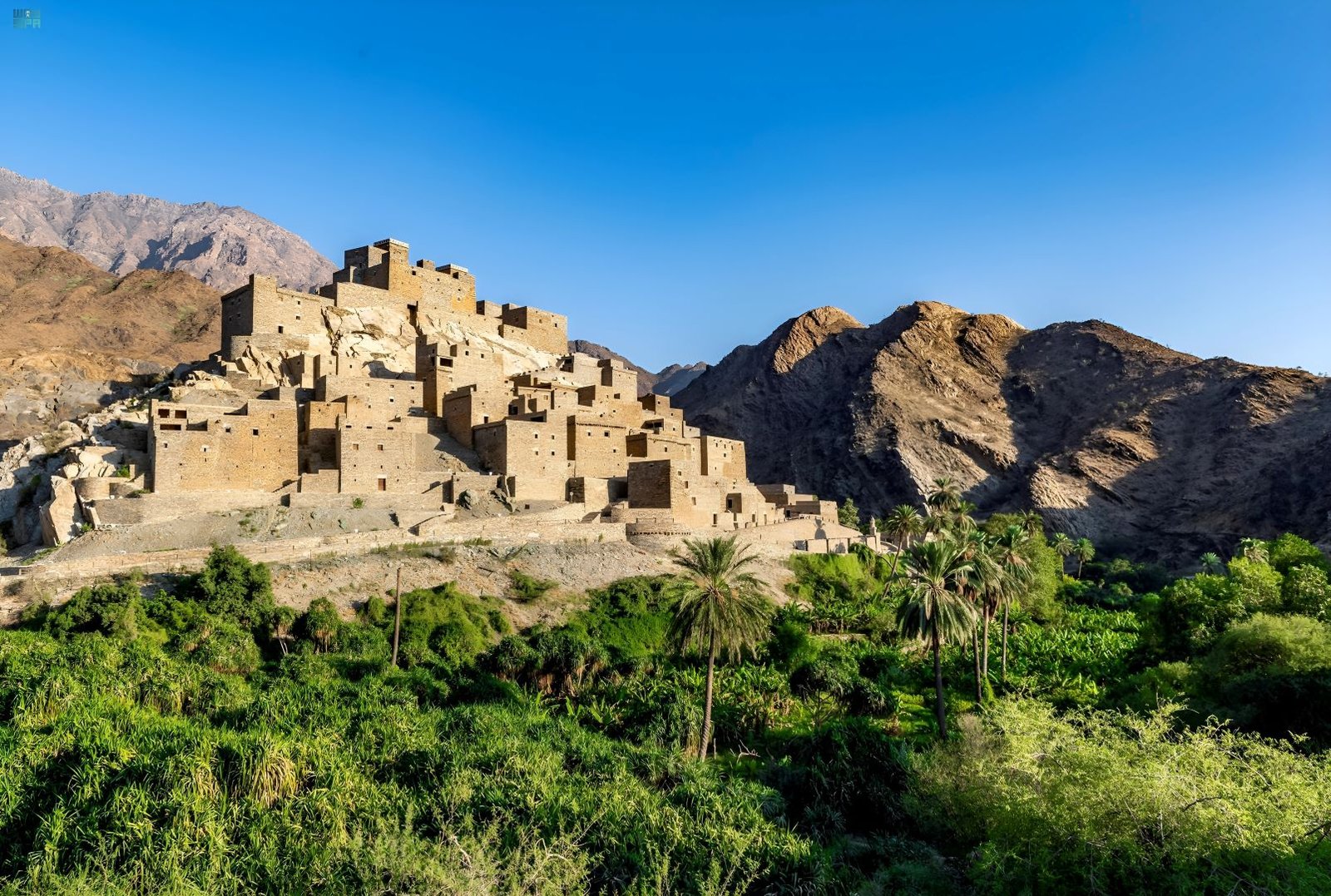
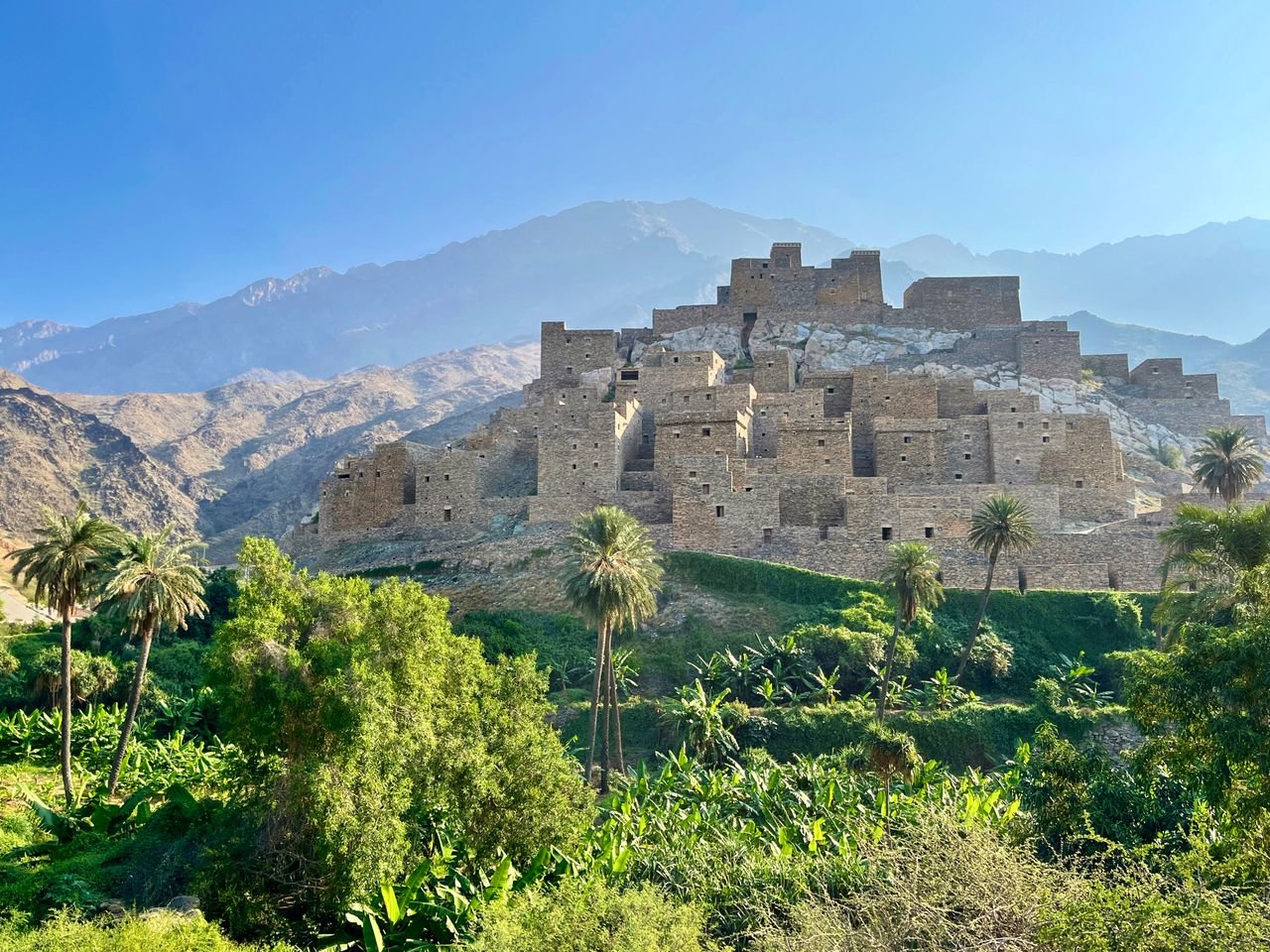
    Catching your first glimpse of a towering, multi-story stone village perched dramatically on a white marble outcrop and breathing in the sweet scent of banana trees growing in a desert oasis are unforgettable experiences in the southwestern highlands. Tucked deep within the rugged mountains of the Al-Bahah Province, the historic Dhee Ayn Marble Village stands as one of the kingdom’s most jaw-dropping archaeological treasures, offering a vivid look into centuries of traditional Arabian mountain life.

    Constructed over 400 years ago during the rule of the regional tribal alliances, this defensive stone citadel earns its nickname from the shimmering white quartz hill it rests upon, which contrasts beautifully with the dark slate stones used to build the houses.

    Exploring the narrow, winding pathways that snake between the abandoned fortresses, listening to the continuous trickle of the ancient natural spring, and looking out over the lush green valley below are magical moments that make this mountain outpost an essential highlight of your Saudi travel itinerary.

    source: arabnews.pk

    Local builders constructed the village using flat, dark stones bound together with local mud, engineering a dense cluster of nearly 50 multi-story residential towers that could withstand both harsh weather and tribal raids. The architecture features low wooden doorways, narrow slit windows designed for defense, and roofs thatched with strong juniper wood and palm fronds.

    A natural, freshwater spring flows continuously from the base of the mountains, feeding a vibrant, tropical oasis filled with wild flowers, sweet basil, lemon groves, and dense groves of local bananas. Visitors plan their arrival for the late afternoon hours, taking advantage of the cooler mountain air to climb the stone stairways just as the setting sun strikes the white marble foundations, creating a beautiful golden glow over the entire valley.

    Reasons Behind Its Appeal

    source: spa.gov.sa

    Backpackers, history buffs, and landscape photographers focus their exploration on a few key elements within the historic heritage zone:

    • The Multi-Story Slate Castles:
    Dominating the face of the white hill are the interlocking stone houses, some rising up to four floors high. You can step inside the open rooms to admire the historic plasterwork and see how families shared these massive stone fortresses.

    • The Permanent Freshwater Spring:
    Tucked into the lush green undergrowth at the foot of the hill is the legendary water source that has kept the village alive for centuries. The crystal-clear stream cascades down a series of small rocks, filling the air with a soothing sound unique to this dry region.

    • The Panoramic Upper Overlook:
    Perched at the very peak of the marble ridge is a traditional stone watchtower. Climbing to the top rewards you with an uninterrupted, 360-degree view of the sweeping Bidah Valley and the dramatic, zigzagging mountain highways that slice through the surrounding cliffs.

    💡 Read Next: Ready to trade the rugged stone walls, ancient mountain ridges, and banana groves of Al Bahah’s historic fortress for a masterpiece of ultra-modern urban architecture? Head to the heart of Riyadh to see a striking futuristic canopy wrap around one of the country’s most spectacular cultural landmarks in our ultimate guide to King Fahd National Library!

    Things to Experience

    source: spa.gov.sa

    Touring the entire historical complex smoothly takes roughly 2 hours, letting you easily experience a sequence of distinct zones:

    • The Heritage Boardwalk:
    Stroll through the beautifully restored lower paths to learn about traditional mountain agriculture, passing local farmers selling fresh fruit and aromatic herbs grown right in the valley.

    • The Interior Mountain Trails:
    Climb the winding, uneven stone paths that cut through the center of the village, exploring the hidden courtyards, narrow alleyways, and old residential wings that feel like a giant open-air museum.

    • The Riverside Rest Stop:
    Conclude your loop at the modern cafe pavilion built at the edge of the banana plantations, where you can sip traditional Saudi coffee and enjoy a quiet moment under the shade of the palms.

    📌 Fast Facts for Your Itinerary

    📍 Address: Dhee Ayn Heritage Village, Al Mukhwah Road, Al-Bahah Region, Saudi Arabia.

    ⏰ Operating Hours: 8:00 AM – 6:00 PM Daily.

    🎫 Admission Ticket Prices: Entry tickets are priced around SAR 20 (approx. RM23) for adults, which directly supports the ongoing conservation and restoration of the stone structures.

    🚗 Crucial Mountain Driving Guardrail: Transport Notice: The village sits at the base of a dramatic mountain escarpment, requiring you to drive down the spectacular, winding King Fahd Road descent from Al-Bahah city. The highway features sharp hairpin turns and steep drops; ensure your vehicle’s brakes are in perfect condition, and exercise extreme caution during rare seasonal downpours when mountain fog can reduce visibility to zero.

    👟 Rugged Terrain Safety Guardrail: The pathways throughout the ancient citadel are completely original, consisting of steep, highly uneven stone steps and loose gravel without safety handrails. Wearing sturdy, high-traction hiking shoes or trail runners is absolutely essential to prevent slips while climbing the marble ridges. Bring plenty of insect repellent, as the humid tropical oasis at the bottom draws a high volume of mosquitoes around dusk.

  • Explore the Gingerbread Citadel: Stone Village of Rijal Almaa

    Explore the Gingerbread Citadel: Stone Village of Rijal Almaa

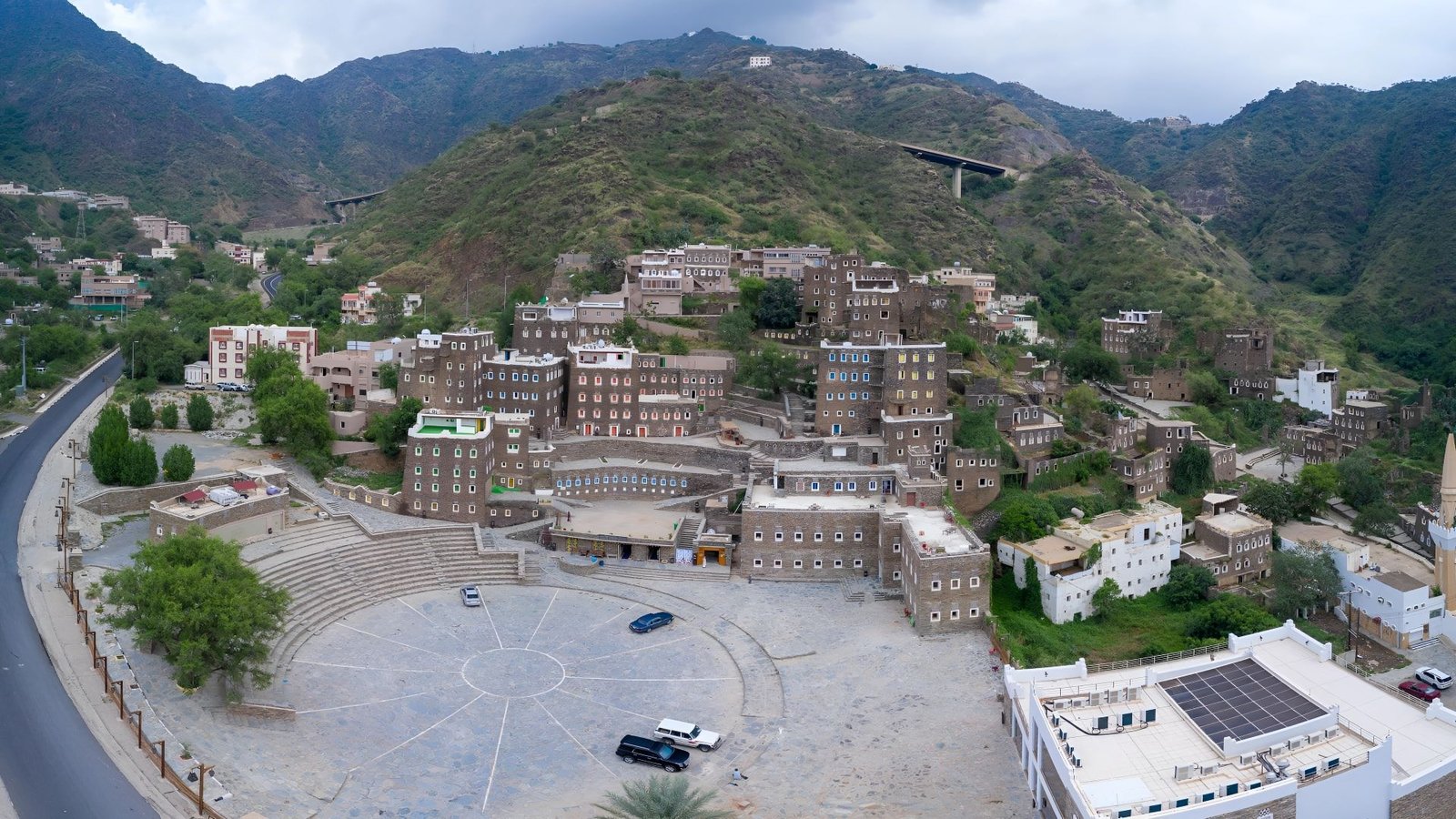
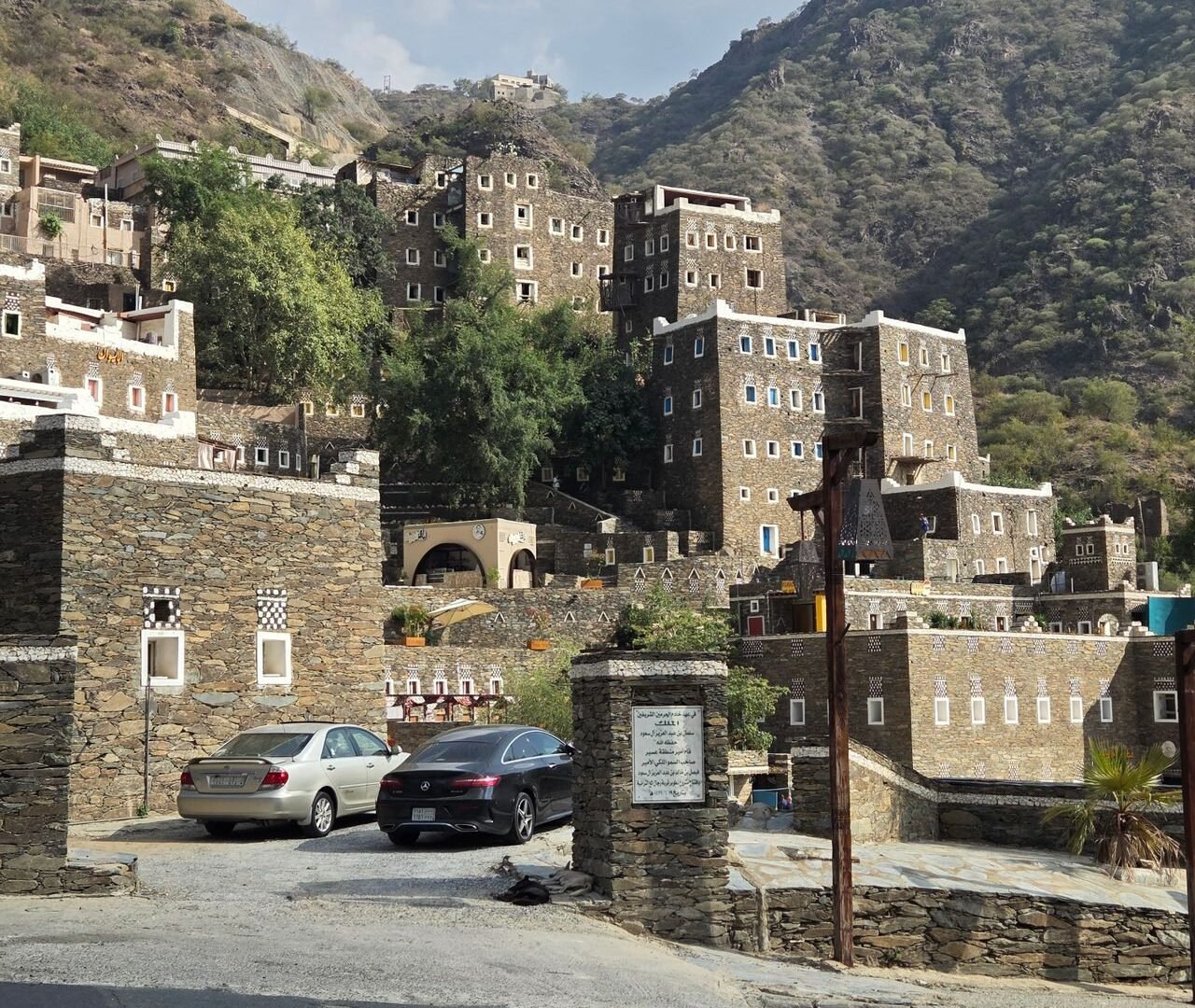
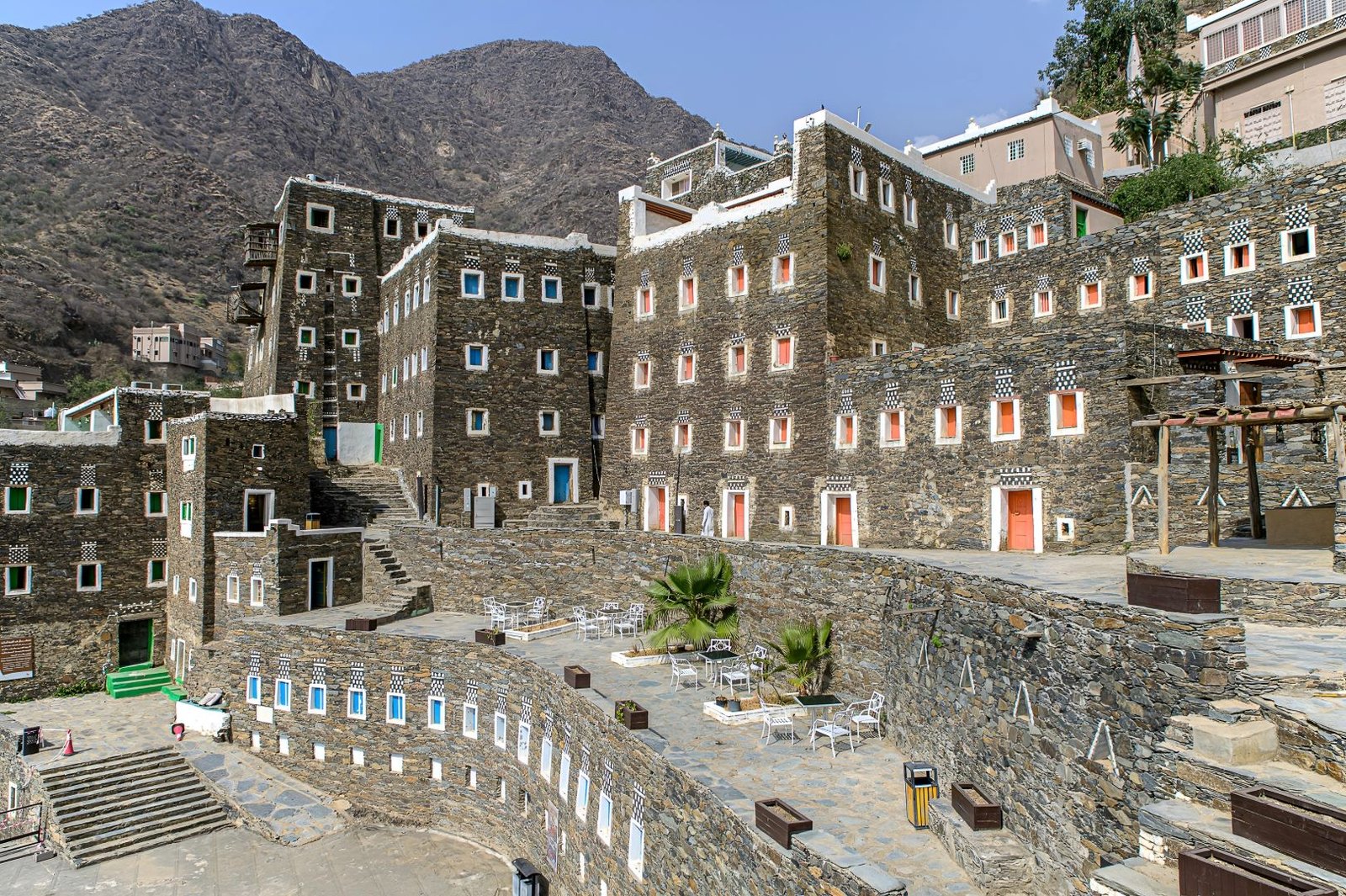
    A dramatic ribbon of dark basalt palaces trimmed with gleaming white quartz cascades down the emerald slopes of the Sarawat Mountains, signaling your arrival at a breathtaking highland outpost. Tucked deeply away in the southwest of the kingdom, the Rijal Almaa Heritage Village stands as the ultimate crown jewel of Asiri culture, famous globally for its vertical stone architectures that resemble real-life gingerbread houses.

    Dating back more than 900 years, this fortified highland settlement once served as a powerful economic crossroads along ancient regional trade routes connecting the Levant, Mecca, and Yemen. The village has earned premier international praise from UN Tourism and sits proudly on Saudi Arabia’s UNESCO tentative list due to its incredible survival and flawless preservation. 

    Climbing through narrow stone corridors, admiring the brilliant geometric interior murals hand-painted by local women, and breathing in the cool, moisture-rich mountain air make this spectacular mountain fortress an essential anchor for your southern Saudi itinerary.

    Mastery of local mountain topography is evident in the way these massive stone towers cling tightly to the steep rock faces. Local tribes laboriously built the collection of roughly 60 multi-story palaces using heavy regional basalt rocks, binding them with clay and framing the windows with aromatic juniper wood.

    The most striking feature is the brilliant white quartz stone inlaid delicately around the windows and roof lines, creating a beautiful contrast against the dark mountain stone. Travelers schedule their arrival for the mid-afternoon hours, timing their exploration perfectly to capture the soft, shifting sunlight as it illuminates the geometric facades before the mountain fog rolls across the peaks at dusk.

    Reasons Behind Its Appeal

    Photographers, history buffs, and eco-tourists find themselves completely captivated by this mountain fortress for a few standout reasons:

    • The Iconic Al Elwan Palace Museum:
    Housed inside the tallest and most historically significant fortress in the village is a brilliant 20-section museum repository. The interiors are decorated with vibrant, hand-painted geometric wall murals known as Al-Qatt Al-Asiri, showcasing a legendary traditional art form kept alive by generations of local women.

    • The Agritourism Honey Cottage:
    Tucked near the base of the terraced hillsides sits the famous Bees Tower Honey Refinery. The region’s rich botanical diversity produces ultra-premium mountain honey, allowing visitors to sample dozens of highly prized, sweet local varieties directly from the source.

    • The Panoramic Qasabat Al-Owus Tower:
    Perched high on the craggy ridgeline overlooking the valley is an ancient stone watchtower. Reaching the base of this defensive structure rewards you with an exceptional, unobstructed view over the concentric farming terraces and the deep mountain valleys below.

    💡 Read Next: Ready to trade the towering slate-stone fortresses and cool, mist-shrouded mountain peaks of Asir province for a quirky journey through Jeddah’s coastal history? Head over to the Red Sea coast to explore the fascinating private collection, traditional mud architecture, and vintage artifacts of the unique Al-Amoudi Heritage Museum!

    Things to Experience

    A complete trek through the multi-tiered settlement takes roughly 2 to 3 hours, offering a seamless tour through different historical sections:

    • The Main Village Plaza:
    Spend your first hour strolling the open stone square, stopping by local terrace cafes to sip hot Arabic coffee and soak in the cinematic views of the cascading palaces.

    • The Multi-Story Fort Interiors:
    Venture inside the open residential forts to explore the ancient architectural layouts, tracking how families historically used lower floors for livestock and upper tiers for grain storage and living quarters.

    • The Local Culinary Experience:
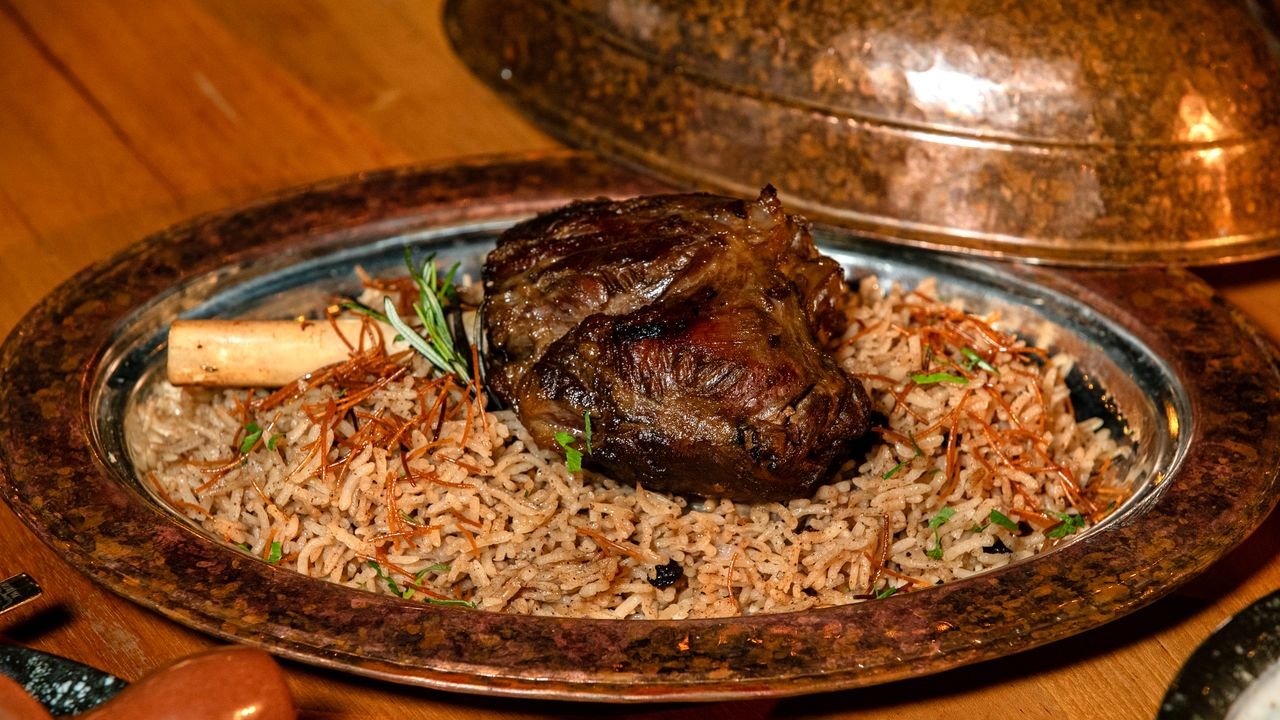
    Conclude your mountain journey at a traditional eatery to share a hearty plate of Haneeth—slow-roasted, incredibly tender lamb cooked over hot stones—complemented by fresh local flatbread and mountain honey.


    Check out this video for an actual look inside the village by RARE TV. This comprehensive 4K walkthrough perfectly captures the towering stone palaces, the vibrant Al-Qatt Al-Asiri wall art, and the dramatic mountain ridges of the Asir region.

    📌 Fast Facts for Your Itinerary

    📍 Address: Rijal Almaa Governorate, Asir Province, Saudi Arabia (Located roughly 45 kilometers west of Abha city).

    ⏰ Operating Hours: The village grounds are open year-round, 24/7. The Rijal Heritage Village Visitor Center and core museums open from 10:00 AM – 6:00 PM daily (Fridays 1:00 PM – 6:00 PM).

    🎫 Admission Ticket Prices: Access to walk through the historic village streets is completely free, though a nominal ticket fee of around SAR 10 to SAR 20 applies to enter the main Al Elwan Palace Museum.

    🚗 Getting There & Road Safety: Reaching the village requires navigating the spectacular but incredibly steep Aqabat Sama or Aqabat Dala roads descending from Abha. These mountain highways feature extreme drop-offs and sharp hairpin turns; ensure your rental vehicle’s brakes are perfectly checked and exercise caution as heavy seasonal rains and thick low-hanging clouds can reduce driving visibility instantly.

    🐒 Wildlife Warning: The scenic mountain drives leading into the valley are populated by large troops of free-roaming wild baboons. Keep your vehicle windows fully rolled up when parked, do not leave food exposed, and strictly avoid attempting to pet or feed the monkeys, as they are aggressive scavengers and can bite or snatch personal items instantly. High-traction walking shoes are essential for the highly uneven stone stairs throughout the village.

  • Heritage Village of Ushaiqer: Saudi Arabia’s Clay Labyrinth

    Heritage Village of Ushaiqer: Saudi Arabia’s Clay Labyrinth

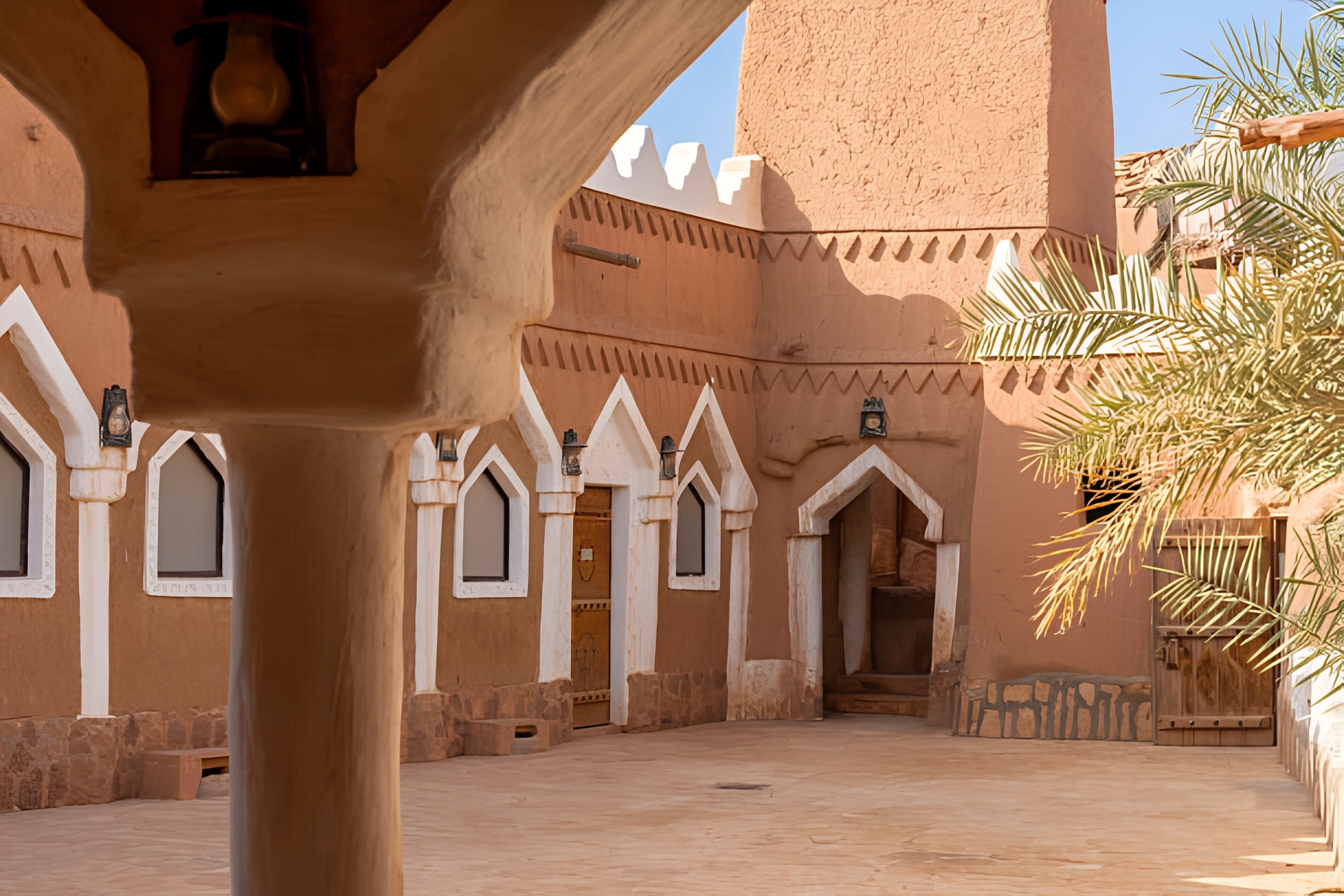
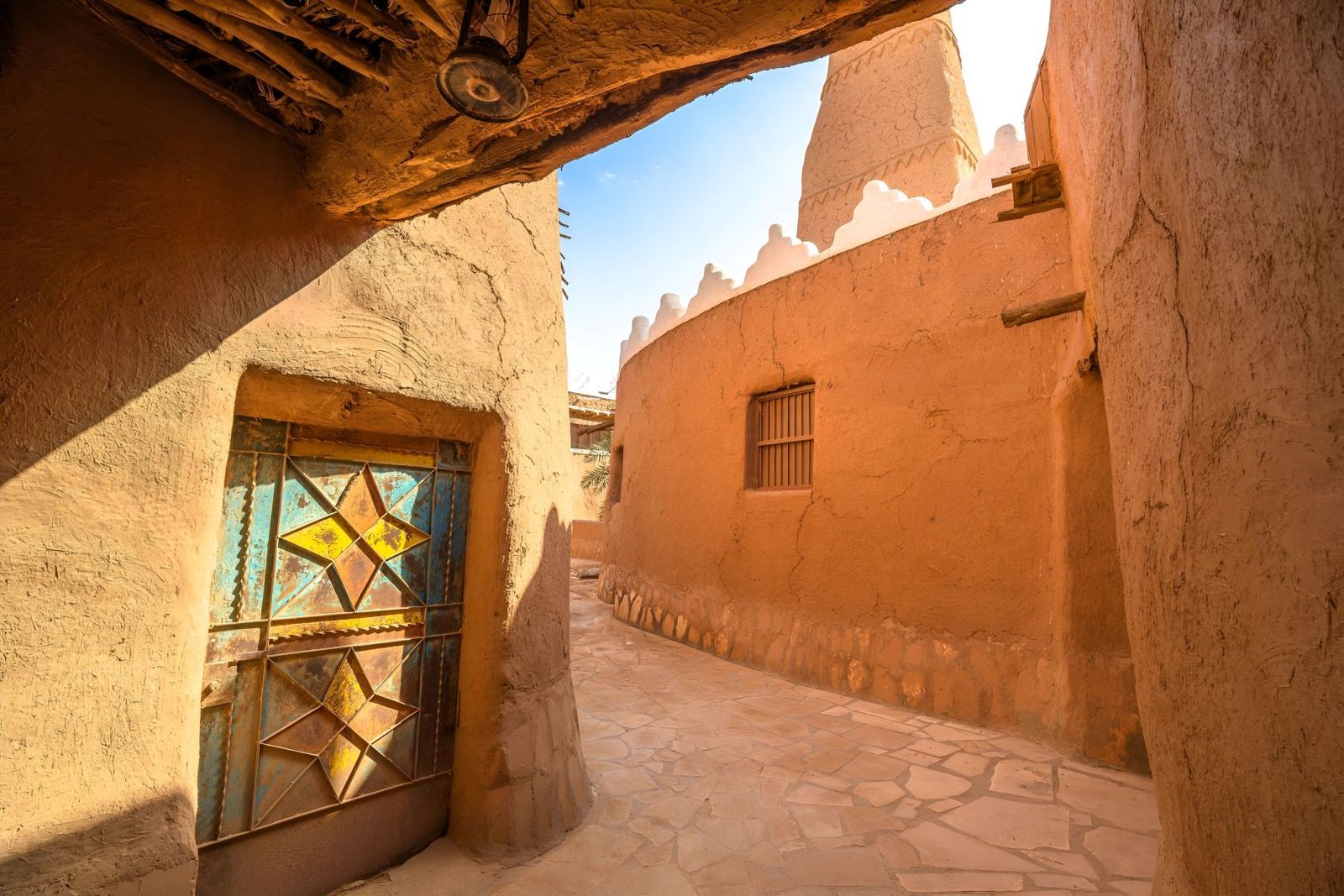
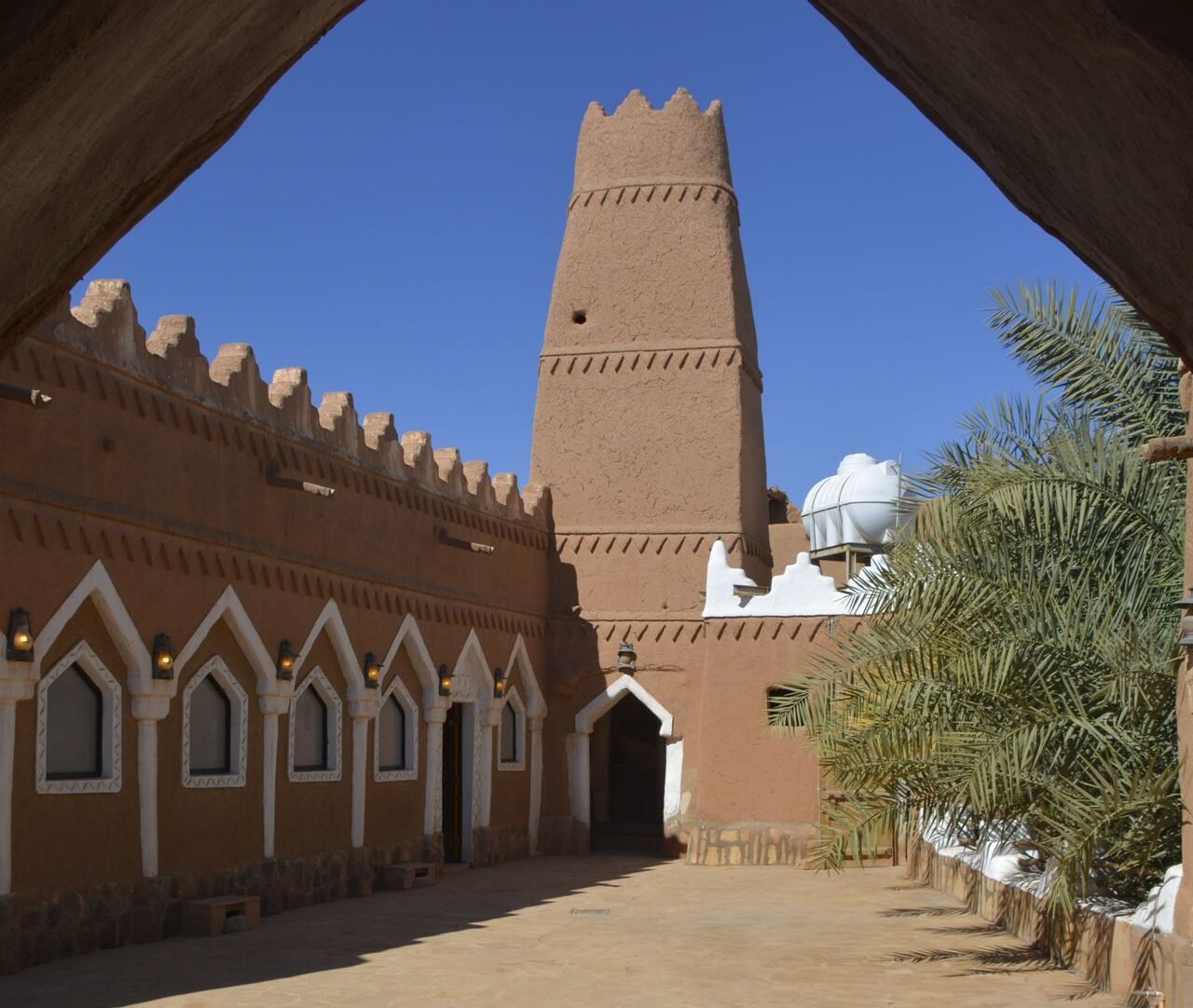
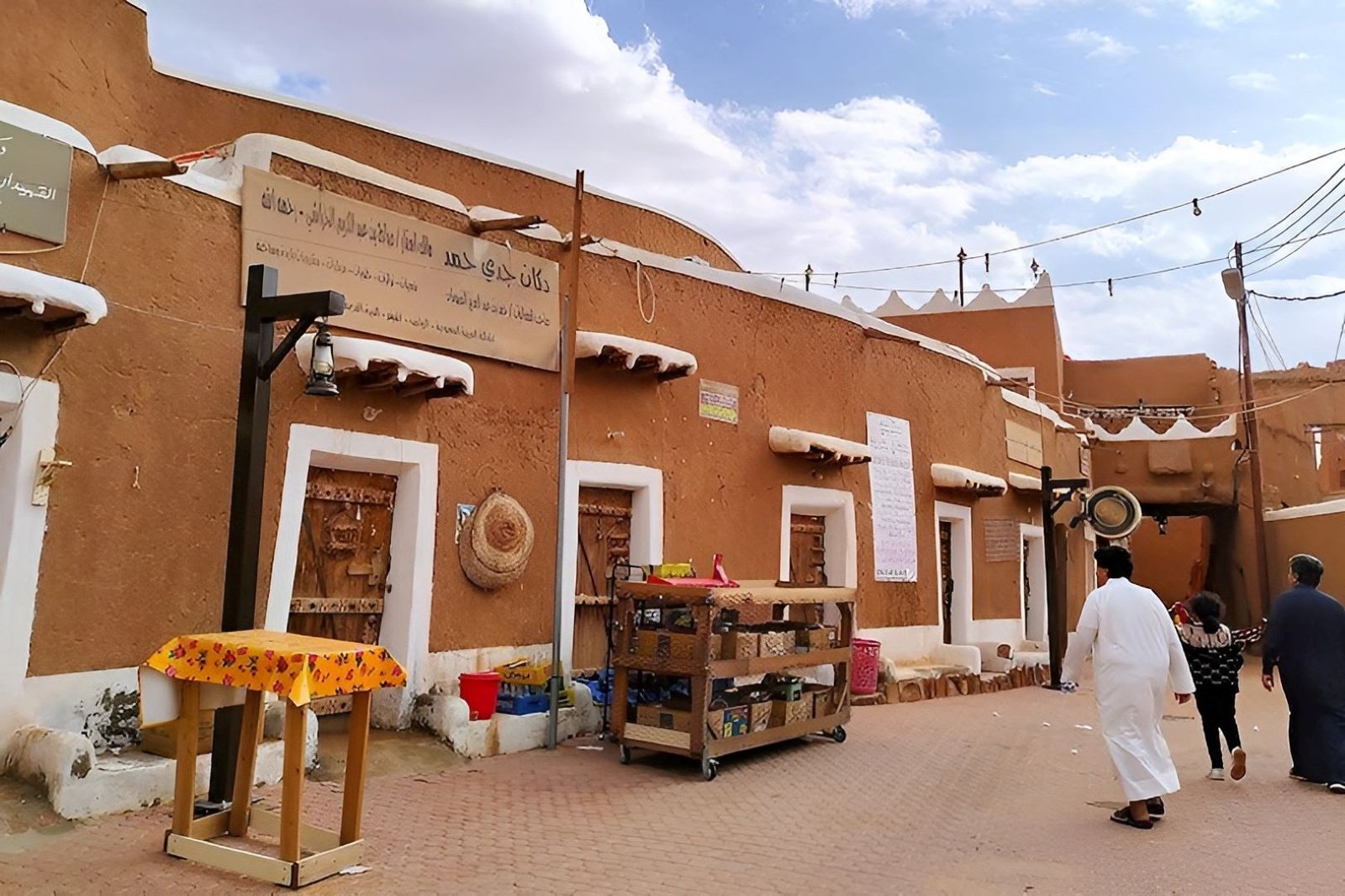
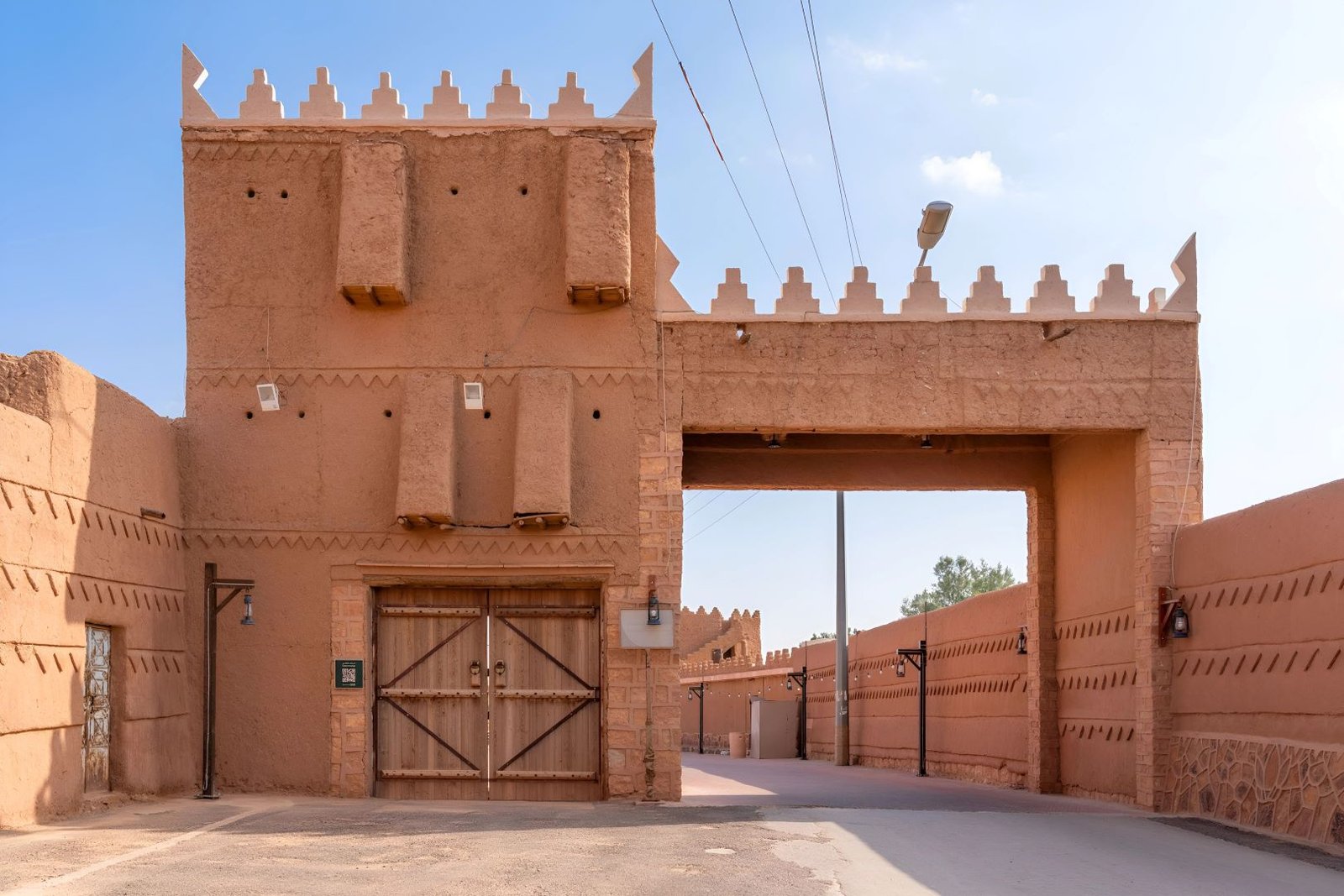
    Wandering through a dense maze of golden mud-brick walls and feeling the cool shade of ancient timber-framed alleyways are unforgettable experiences in the heart of the Arabian desert. Situated roughly 200 kilometers northwest of the capital in the historic Najd region, the beautifully preserved Ushaiqer Heritage Village stands as a living museum, offering travelers a rare glimpse into the traditional architectural wit and community life of old Najdi society.

    Settled by Bedouins over 1,500 years ago, this walled oasis town grew into a crucial stopping point for pilgrims and trading caravans heading to Mecca due to its abundant underground water and fertile soil. Peering up at the distinctive triangular ventilation cutouts, stepping over the threshold of masterfully restored family homesteads, and listening to stories from local guides make this sweeping desert sanctuary an absolute highlight of any central Saudi itinerary.

    Master builders constructed the town using local sun-dried clay, thick straw, and sturdy trunks of tamarisk and palm trees, fashioning a dense urban fortress designed to beat the blistering desert heat. The architecture stands out for its high mud walls, heavy timber doors carved with geometric folk art, and unique overhead bridges that connected second-story rooms across the narrow streets, allowing families to move between houses without stepping down into the hot sun.

    A beautiful rim of vibrant green date palm groves wraps around the golden clay core, sustained by ancient stone wells that have tapped into the desert aquifers for generations.

    Travelers generally plan their arrival for the late afternoon hours, taking advantage of the dipping sun to explore the winding lanes just as the golden mud structures catch the soft evening light, casting deep, dramatic shadows through the historic avenues.

    What Draws People to It

    Culture seekers, history buffs, and architectural photographers focus their steps on a few exceptional landmarks inside the old city gates:

    • The Al-Shenajer House Museum:
    Standing as the centerpiece of the restored town is a massive, multi-room family residence packed with thousands of historic Najdi artifacts. The private collection displays everything from antique brass coffee pots and embroidered clothing to centuries-old agricultural tools and handwritten schoolbooks.

    • The Historic Subai’i Mosque:
    Serving as the spiritual heart of the community for centuries is a beautifully restored mud-brick mosque. You can step down into its subterranean prayer hall, which was historically used to keep worshippers warm during the freezing Najd winter nights.

    • The Al-Musalla Overlook Tower:
    Perched high on a nearby craggy ridge is a traditional stone and clay watchtower. Making the short trek to the top rewards you with a sweeping, panoramic view of the entire interlocking mud village, the green palm orchards, and the rolling orange sand dunes of the Nafud desert beyond.

    💡 Read Next: Ready to trade the sun-baked mud-brick alleyways and flat desert landscape of the central plains for a spectacular multi-coloured mountain fortress? Head deep into the rugged peaks of Asir province to explore the towering, slate-stone towers, white-framed windows, and deep cultural heritage of the legendary gingerbread village of Rijal Almaa!

    What You Can Do Here

    source: nomade-aventure.com

    Strolling through this massive archaeological zone smoothly takes about 2 to 3 hours, letting you effortlessly tour a sequence of dedicated heritage areas:

    • The Old Marketplace Alleys:
    Spend your first hour walking through the open-air market stalls where local elders occasionally set up shop, selling aromatic desert truffles, local spices, and sweet, sticky Najd dates.

    • The Labyrinth Residential Lanes:
    Venture deep into the inner rings of the village to discover hidden courtyards, narrow shaded walkways, and abandoned, crumbling towers that reveal the true age and scale of the settlement.

    • The Madheef Hospitality Hall:
    Conclude your walking tour at the traditional community center, where local volunteers welcome visitors into a beautifully carpeted diwaniyah to experience authentic Saudi hospitality with cardamom-spiced coffee and fresh dates.

    📌 Fast Facts for Your Itinerary

    📍 Address: Ushaiqer Heritage Village, Ushaiqer 15515, Saudi Arabia

    ⏰ Operating Hours: 8:00 AM – 8:00 PM Daily. The best time to experience the village fully is on weekends (Friday and Saturday) when the local museums and cafes are open.

    🎫 Admission Ticket Prices: Access to the historic streets and public plazas of the village is completely free. Small independent cash donations of SAR 10 to SAR 20 are highly appreciated when entering private house museums like the Al-Shenajer House to support the local families preserving the history.

    🚗 Self-Drive Navigation Guardrail: Transport Notice: There is no direct public public transportation from Riyadh to Ushaiqer. Renting a car and driving along Route 546 is the best option. To coordinate your itinerary with nearby historical stops in Shakra or the wider region, consult the comprehensive Visit Saudi Riyadh Region Exploration Planner to map out your driving route across the central plains. Even though the desert highway is modern and well-maintained, you must keep an eye out for sudden dust storms and stray camels crossing the asphalt, especially during the late afternoon hours.

    👟 Clay Preservation & Footwear Safety Guardrail: The village is an authentic mud-brick site with highly uneven, unpaved dirt pathways and steep earthen steps that can become incredibly slippery if a rare desert rain shower occurs. Wearing closed-toe, high-grip walking shoes or light trainers is essential to navigate the paths safely. Preservation Warning: The mud walls are fragile and highly susceptible to damage; do not attempt to climb or lean heavily on unrestored, crumbling structures, as they can shift easily.

  • King Fahd National Library: Textile Jewel of the Desert

    King Fahd National Library: Textile Jewel of the Desert

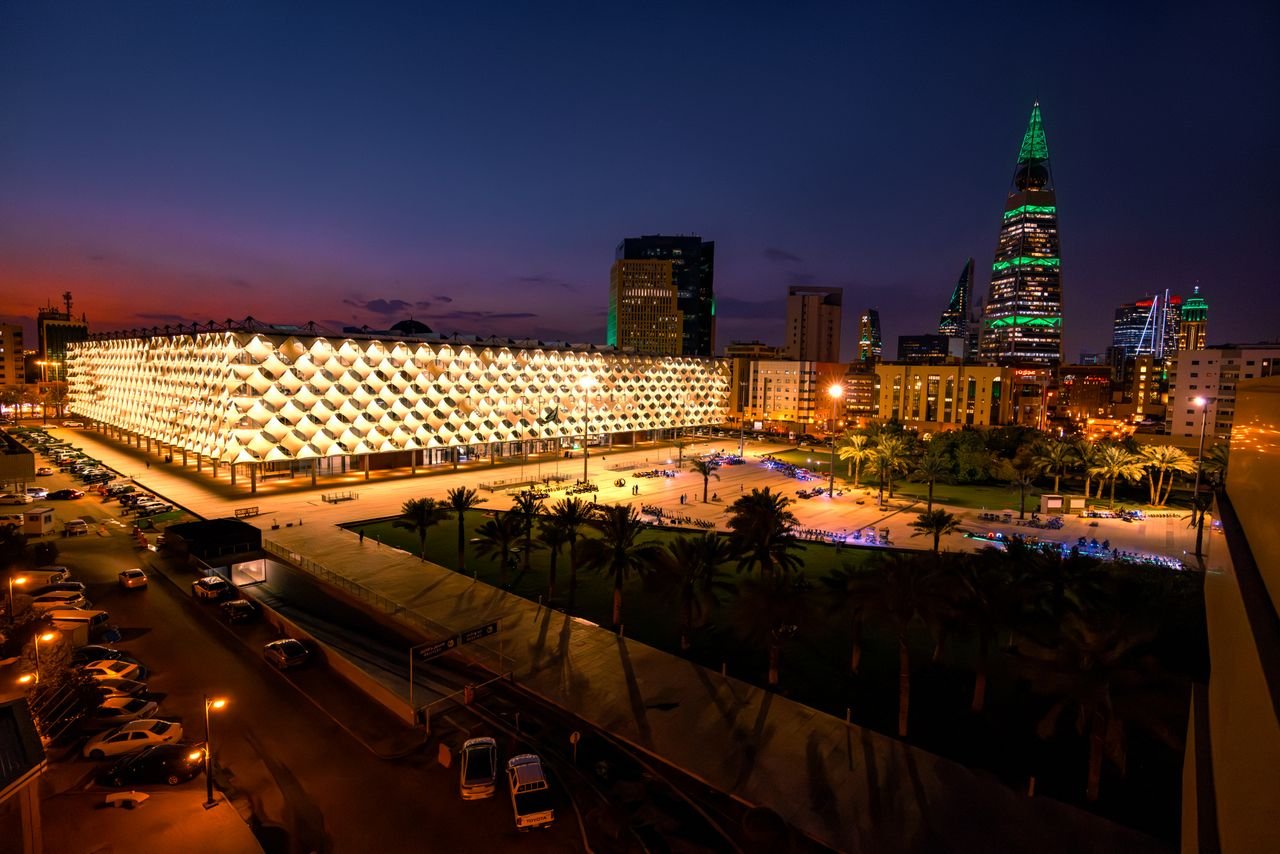
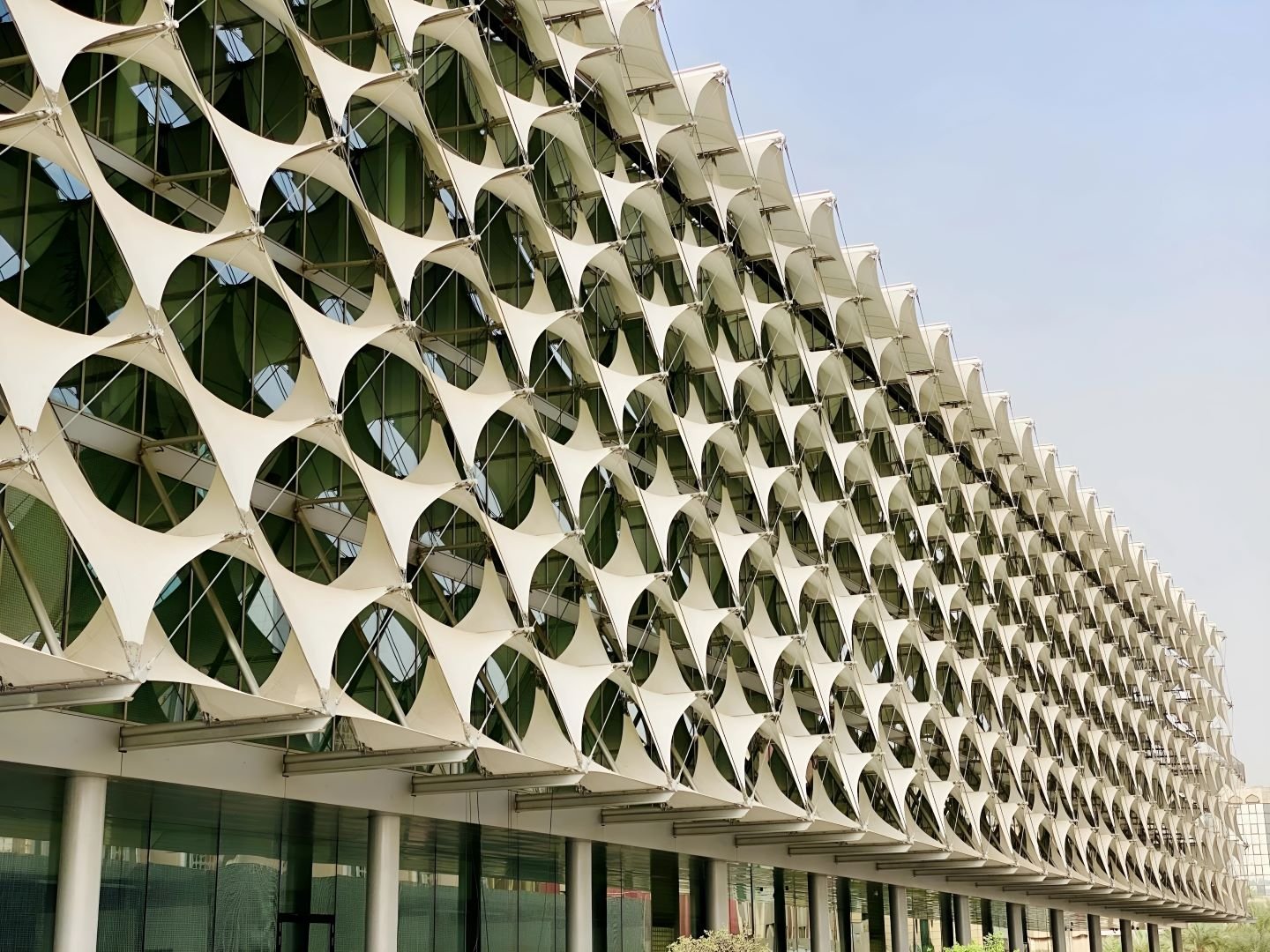
    Marveling at the way natural sunlight filters through a giant, diamond-patterned canopy of white fabric and standing surrounded by millions of historic manuscripts are definitive highlights of a trip to the capital. Located right in the bustling heart of the Olaya district, the King Fahd National Library stands as one of the most stunning architectural landmarks in the Middle East, seamlessly blending a high-tech modern shell with the city’s historic cultural fabric.

    Designed by the renowned German architecture firm Gerber Architekten, this cutting-edge facility was completed by enclosing the city’s original 1980s concrete library building inside a massive, energy-efficient glass and textile cube.

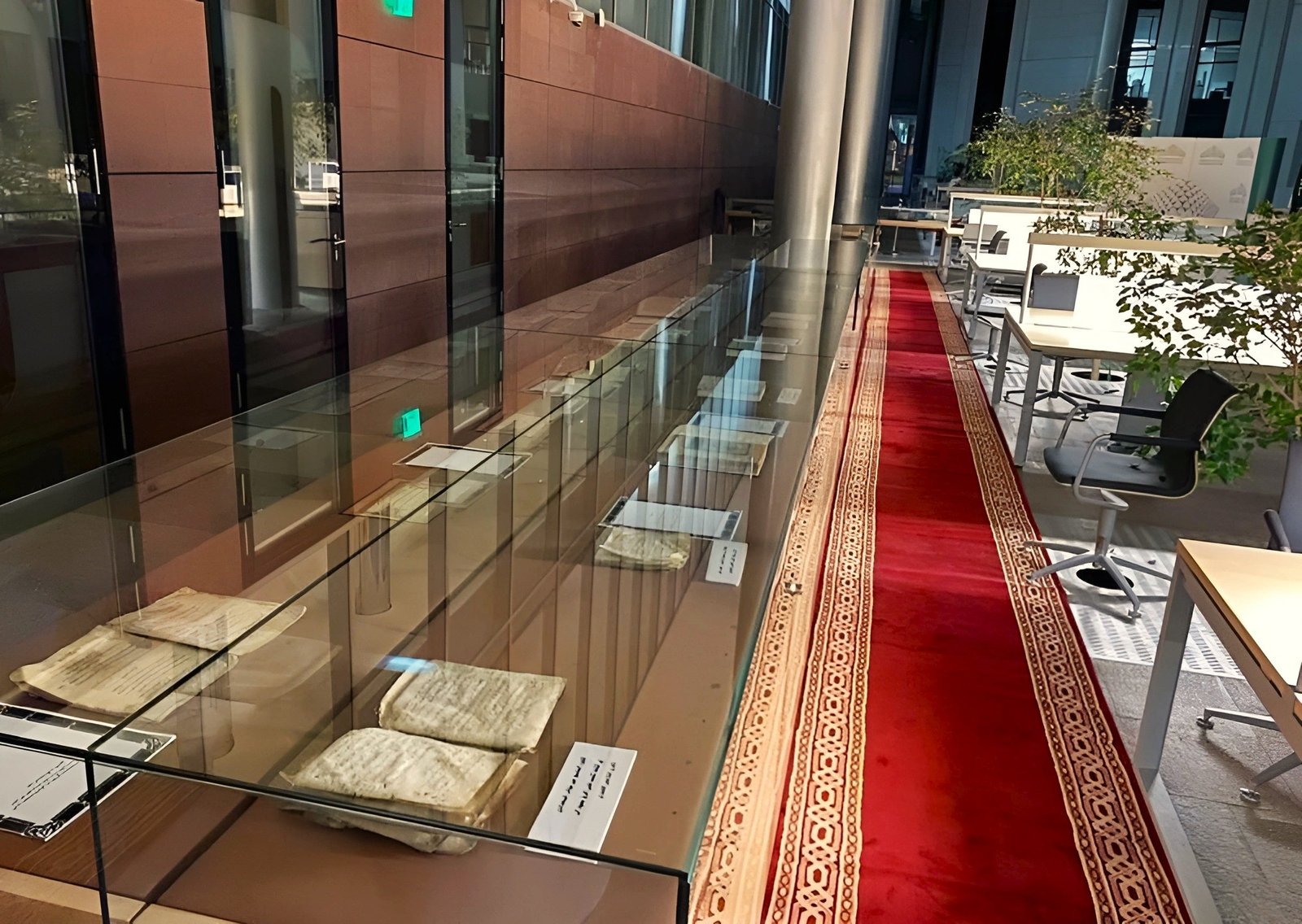
    Walking through the soaring, light-filled glass atriums, browsing rare Arabic calligraphic texts dating back centuries, and watching the building light up like a glowing lantern at night are unforgettable experiences that make this urban sanctuary a must-visit destination on your Riyadh itinerary.

    source: saudiarchitecture.org

    Architects engineered the building’s striking exterior to serve as a masterclass in sustainable desert architecture, draping the structure in a complex web of diamond-shaped Teflon-coated fabric sails. These specialized white awnings mimic traditional Arabian sunscreens, blocking out the intense solar heat while redirecting soft, glare-free natural light deep into the massive reading rooms inside.

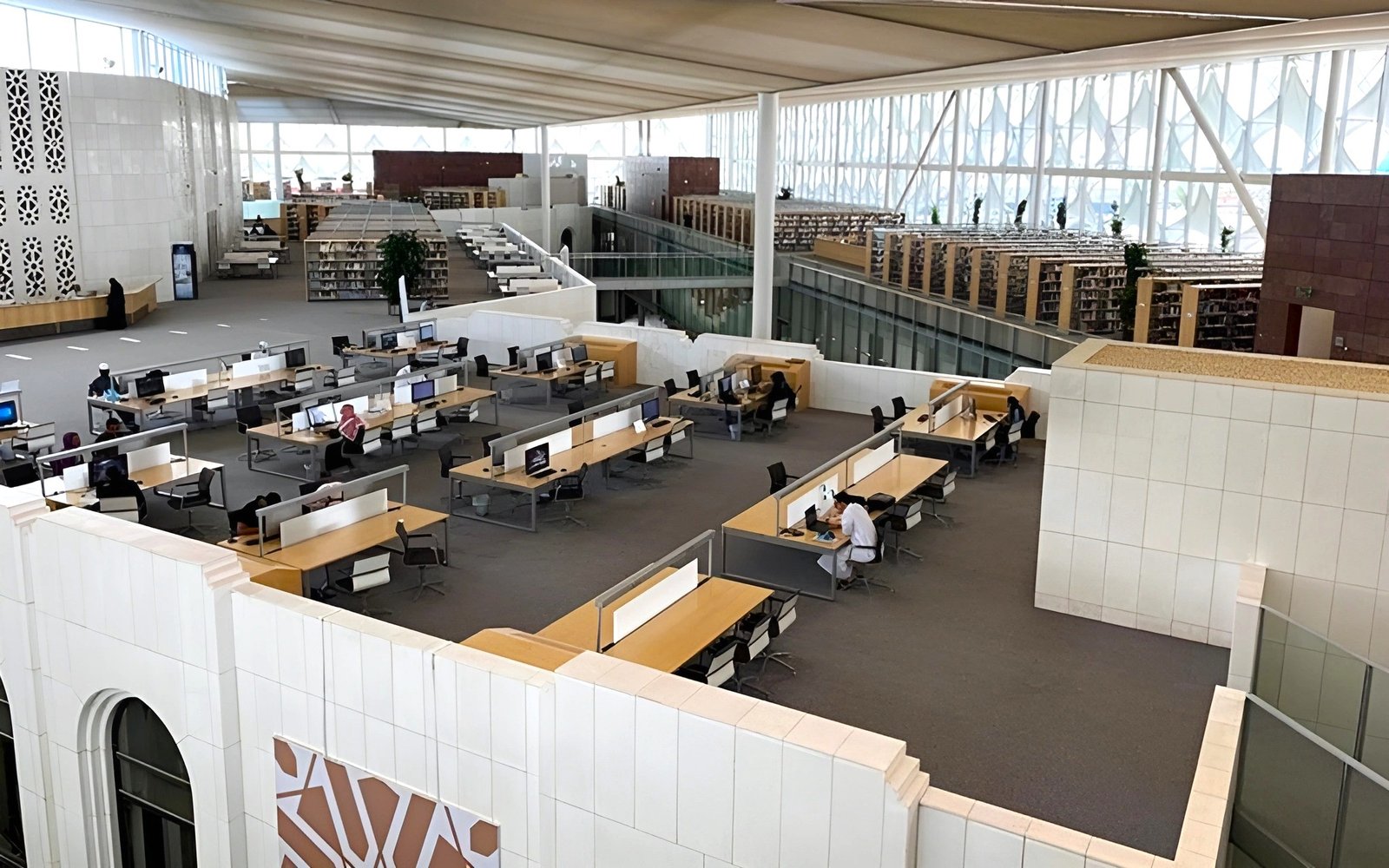
    Stepping through the main entrance reveals a space designed with absolute minimalist elegance and open-scale geometry. The interior features sweeping white marble pathways, multi-tiered floating balconies, and custom-designed wood-paneled study pods that look out over the city skyline. 

    Aim for a late afternoon arrival to take advantage of the quietest study times before the exterior lights flicker on, transforming the white textile facade into a glowing landmark against the dark desert sky.

    What Draws People to It

    source: saudigazette.com.sa

    Urban explorers, architecture enthusiasts, and history buffs focus their time on a few key structural and cultural highlights within the complex:

    • The Original Core Building:
    Standing directly in the center of the modern glass box is the old library building. Its historic concrete dome was converted into a spectacular, multi-level open stack area covered by a massive glass skylight.

    • The Rare Manuscript Vaults:
    Tucked into specialized, climate-controlled preservation galleries are thousands of priceless historic documents. The collection features ancient Qurans written on parchment, historic maps of the Arabian Peninsula, and early Islamic scientific treatises.

    • The Surrounding Landscaped Plaza:
    Spreading out from the base of the library is a beautifully designed public park filled with symmetrical palm groves, reflective water fountains, and open-air seating areas where locals gather to read and relax.

    💡 Read Next: Ready to trade the striking futuristic canopy, glass architecture, and modern city hustle of Riyadh for a journey back to the golden era of Najdi history? Head northwest into the desert to wander the winding, mud-brick alleyways, historic timber doors, and shaded pathways of the incredibly preserved Ushaiqer Heritage Village!

    Things to See and Do

    source: bayut.sa

    Navigating this architectural marvel smoothly takes roughly 1 to 2 hours, letting you easily experience a sequence of dedicated zones:

    • The Ground Floor Cultural Exhibition:
    Spend your initial hour touring the open-access lobby galleries, which feature rotating art displays, architectural models of the building, and interactive screens detailing the history of Riyadh.

    • The Panoramic Upper Reading Decks:
    Climb the grand central stairways to find a quiet study nook on the upper levels, where you can experience the unique visual effect of looking through the white fabric sails out onto the bustling city streets.

    • The Specialized Women’s Library:
    Visit the dedicated, secure research wings designed to provide private study spaces, comprehensive digital archives, and specialized workshops for female academics and students.


    Want to see the real thing today? Take a quick look at this tour video by Ahmad Nawaz on Youtube below!

    📌 Fast Facts for Your Itinerary

    📍 Address: King Fahd Road, Al Olaya, Riyadh 12211, Saudi Arabia

    ⏰ Operating Hours: 8:00 AM – 8:00 PM (Sunday to Thursday), 4:00 PM – 9:00 PM (Saturday). The library is strictly closed to the public on Fridays.

    🎫 Admission Ticket Prices: Entering the library plazas and public reading rooms is completely free, and authorities never charge an entry fee for general visitors.

    🔒 Mandatory Digital Registration & Access Rules: Visitor Entry Pass: To pass through the electronic security turnstiles, all visitors must register their national ID or passport details at the main reception desk to receive a digital day pass. International travelers must carry their physical passports for verification.

    ⚠️ Strict Silent Zone & Photography Guardrail: The upper reading floors enforce a zero-noise policy, and visitors must keep mobile phones on silent. While casual photography with smartphones is permitted in the main lobbies and public plazas, using professional DSLR cameras, tripods, or taking photos of students and researchers without a formal media permit from the library management is strictly prohibited

  • Breathe in the Serene Radiance: Prophet’s Mosque of Medina

    Breathe in the Serene Radiance: Prophet’s Mosque of Medina

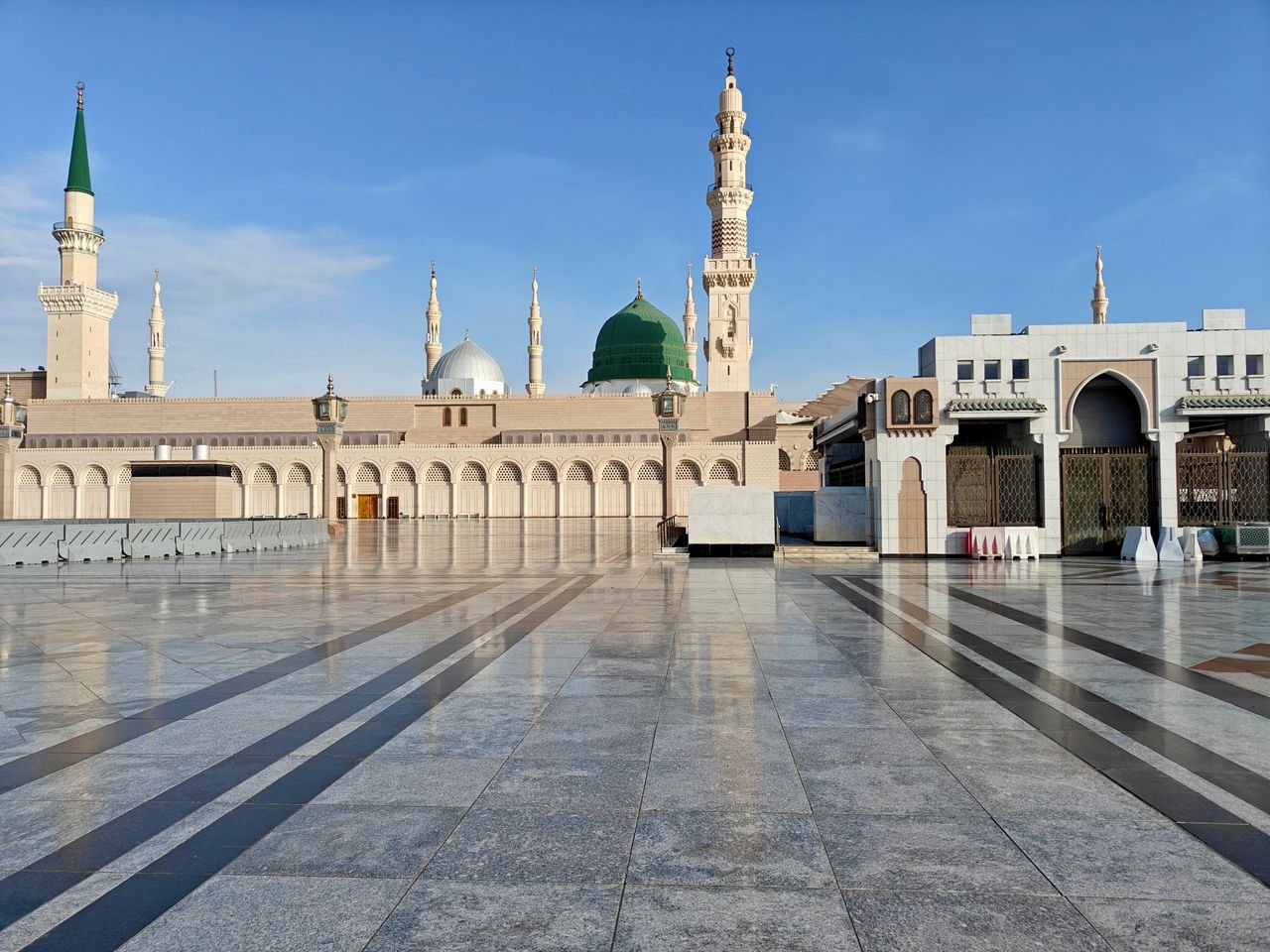
    Feeling a profound wave of tranquility wash over you as the cool desert night breeze rustles through the courtyard and hearing the deeply moving call to prayer echo through soaring marble arches are definitive travel moments in the Hejaz region. Nestled peacefully in the heart of the radiant city, the Masjid al-Nabawi (the Prophet’s Mosque) stands as the second-holiest sanctuary in the Islamic world, serving as a beacon of spiritual devotion, exquisite architecture, and rich history.

    Built originally by the Prophet Muhammad next to his modest mud-brick home following his migration from Mecca, this massive sacred complex has transformed over the centuries into a dazzling architectural masterpiece capable of hosting over a million worshippers. Wandering beneath a sea of towering white minarets, viewing the iconic green dome that marks the final resting place of the Prophet, and resting on the plush green carpets inside the historic core are deeply moving experiences that draw global travelers to this oasis of peace.

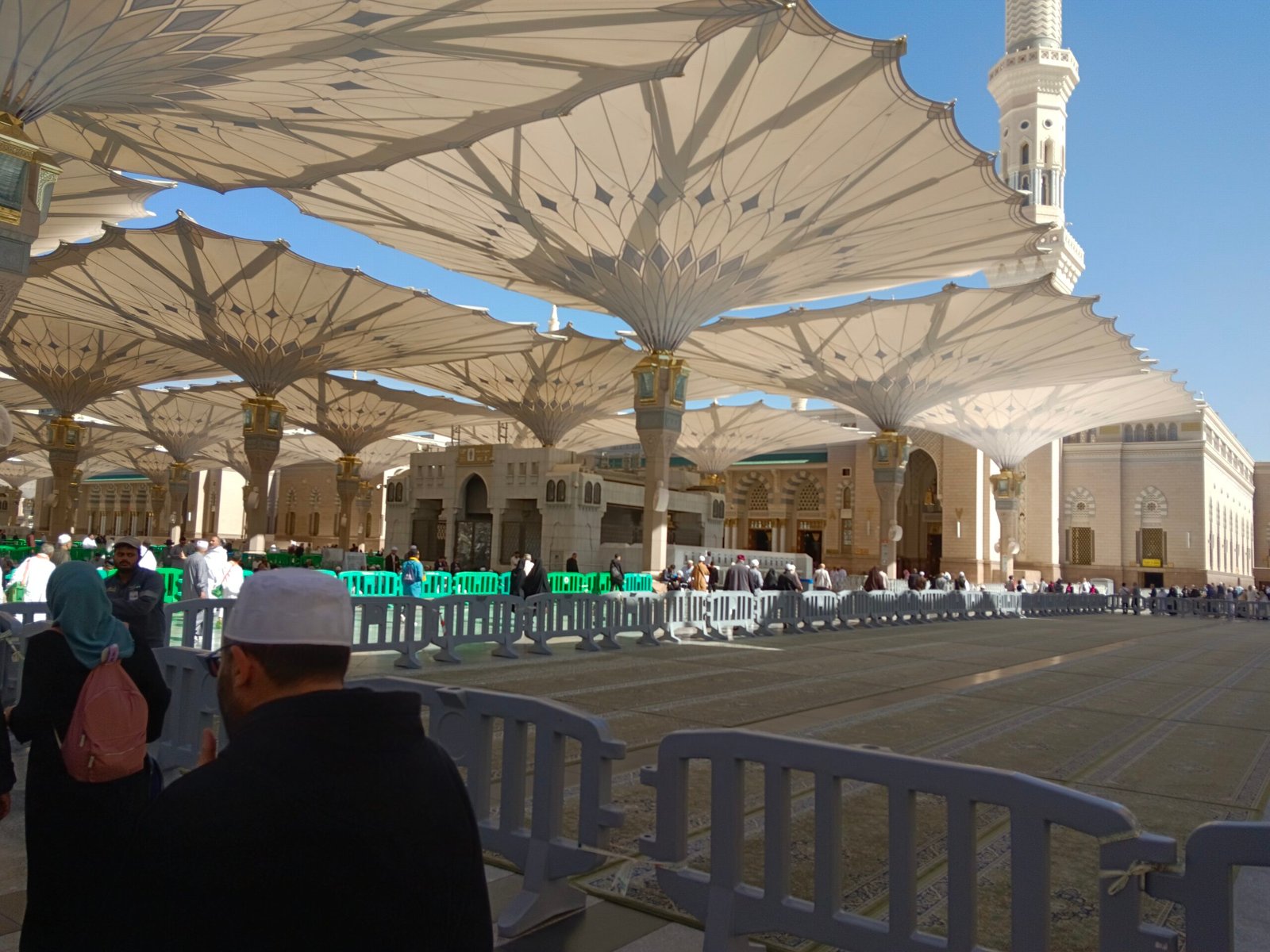
    Engineers designed the modern outdoor plazas of the mosque to serve as an engineering marvel that combats the intense desert climate. The sprawling marble courtyards feature 250 colossal, Teflon-coated hydraulic umbrellas that open automatically in the morning like blooming white flowers, creating a massive shaded canopy that lowers the ambient temperature for outdoor worshippers before closing silently at dusk.

    Walking across the pristine, white granite floors reveals an atmosphere of absolute order and reverence. The interiors present an elegant forest of polished stone pillars, gleaming gold-leaf accents, and advanced climate-control vents embedded directly into the bases of the columns. Worshippers schedule their daily routines to arrive well before the midday prayers, securing a quiet spot under the cooling air vents inside the newer expansion wings to avoid the high-exposure sun of the open courtyard.

    The Root of Its Appeal

    source: visitmadinahsa.com

    Devout pilgrims, history scholars, and lovers of Islamic art focus their time on a few deeply significant spaces within the sanctuary grounds:

    • The Green Dome and Sacred Chamber:
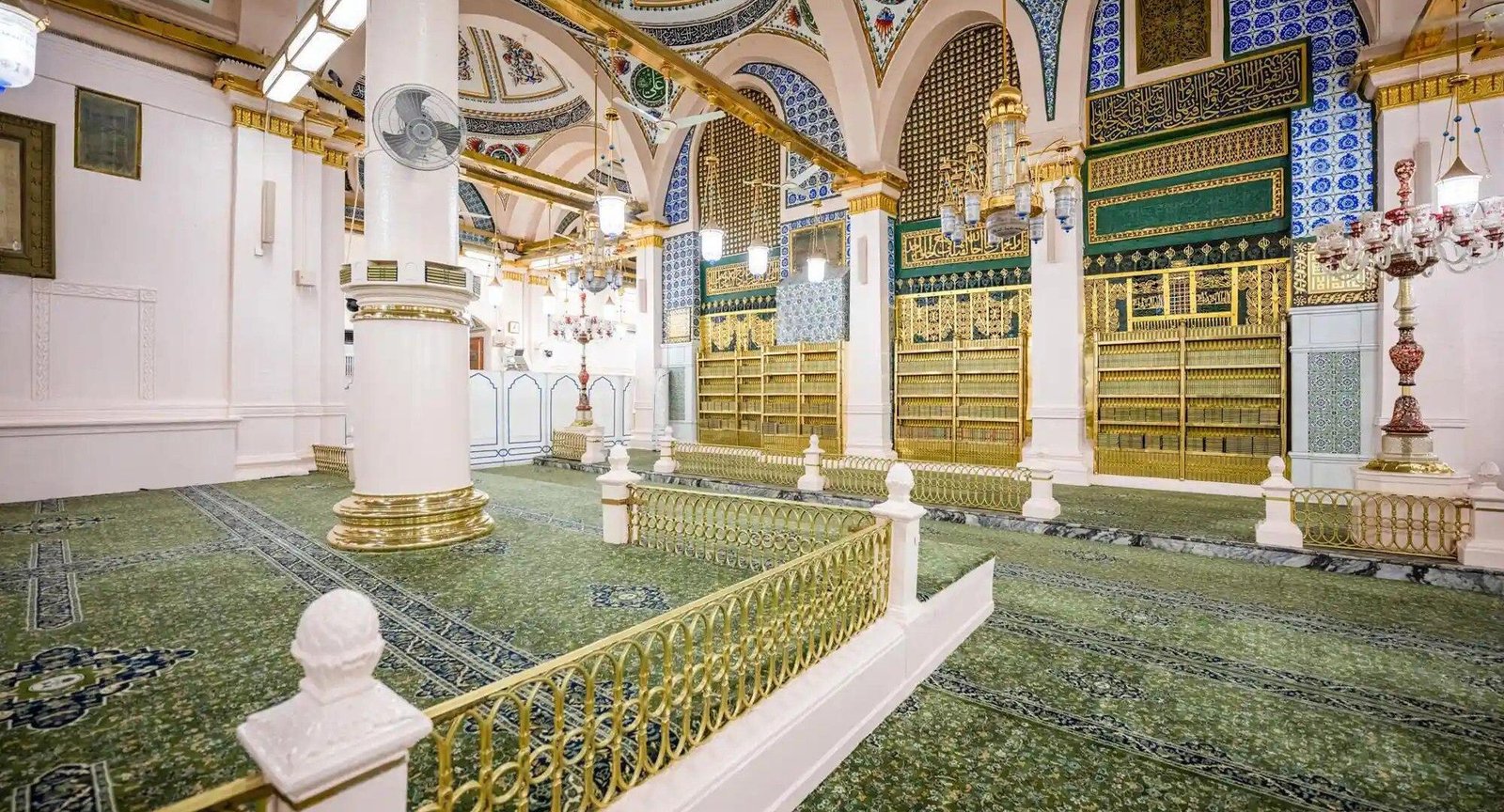
    Marking the southeastern corner of the original mosque area is the iconic green-painted dome. Directly beneath this landmark lies the sacred burial site of the Prophet Muhammad and his close companions, Abu Bakr and Umar.

    • The Garden of Paradise (Riyadhul Jannah):
    Tucked between the sacred chamber and the historic pulpit is a small, highly revered area covered in distinctive floral carpets. Worshippers strive to offer prayers in this specific zone, following the historic tradition that designates this space as a garden from heaven.

    • The Historic Baqi Cemetery:
    Sitting just outside the eastern wall of the mosque complex is Jannat al-Baqi. This vast, solemn burial ground holds immense historical weight as the resting place of numerous members of the Prophet’s family and early companions.

    💡 Read Next: Ready to trade the gleaming marble courtyards and serene spiritual atmosphere of Medina’s Prophet’s Mosque for an ancient mountain fortress built entirely of stone? Head south to Al Bahah province to scale the steep, rocky ridges and explore the hidden banana groves of the incredible 400-year-old marble village of Dhee Ayn!

    Local Attractions to Experience

    An efficient route through the expansive grounds takes roughly a few hours, ensuring you check off every major zone along the way:

    • The King Fahd Expansion Halls:
    Stroll through the breathtaking modern prayer wings to admire the geometric ceiling art, massive chandeliers, and the smooth operation of the giant rolling domes that open to vent the interior air.

    • The Northern Courtyard Walk:
    Spend your late afternoon wandering the wide pedestrian plazas lined with luxury hotels, date markets, and rows of chilled Zamzam water dispensers available to all visitors.

    • The Bab Jibril Gate Zone:
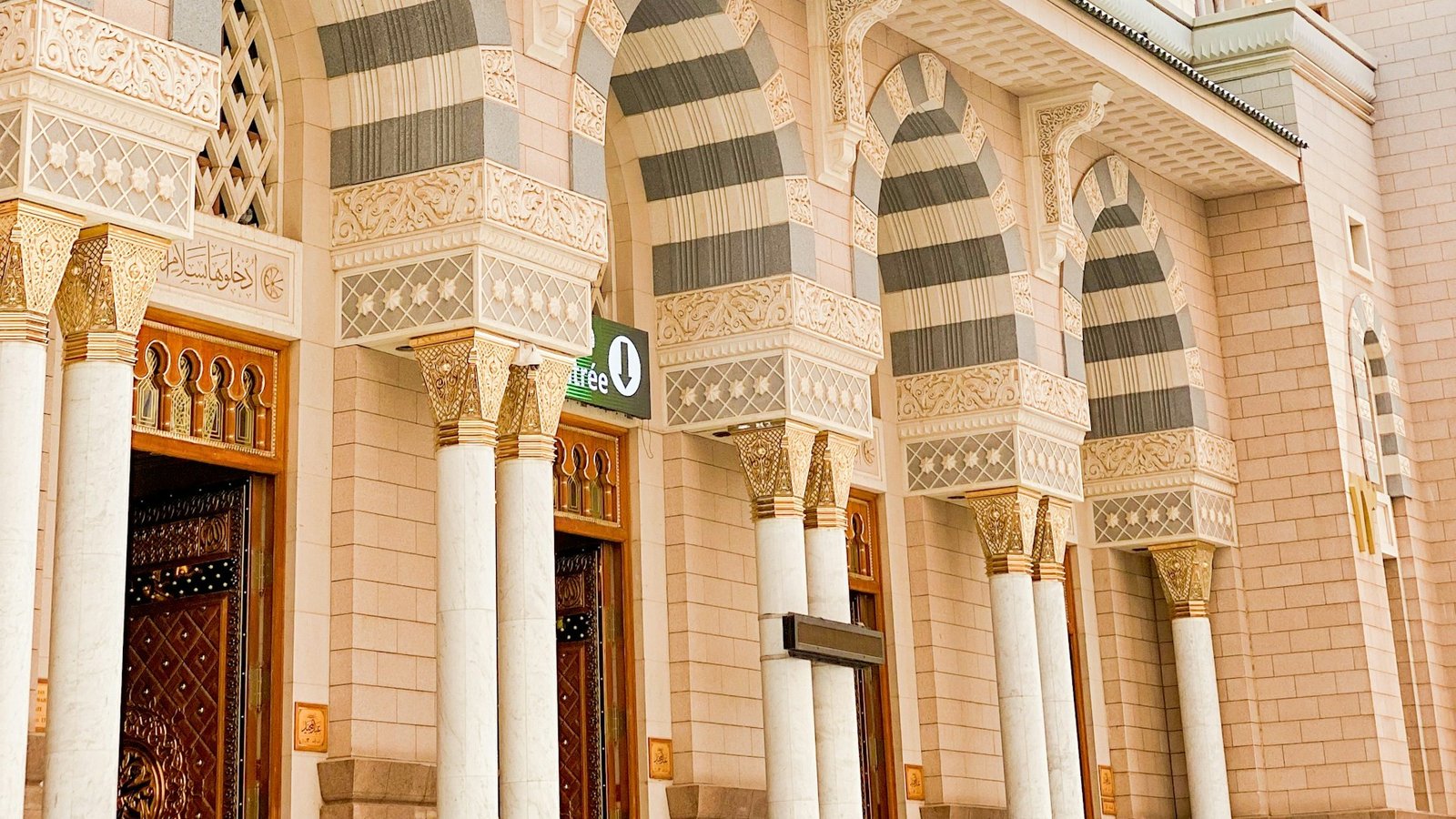
    Visit the eastern historic entrance areas where the intricate bronze calligraphy and massive wooden doors showcase the absolute pinnacle of Saudi craftsmanship.


    Check out the walking tour to Masjid al-Nabawi by Walking Oz on Youtube below! Clocking in at exactly 1 hour and 51 minutes, this 4K walking tour maps out the grand scope of the Prophet’s city, taking you past the main mosque gates and into the bustling nearby commercial neighbourhood.

    📌 Fast Facts for Your Itinerary

    📍 Address: Al Haram, Medina 42311, Saudi Arabia

    ⏰ Operating Hours: Open 24 hours daily, 365 days a year. However, specific sections like the Rawdah have strictly designated visiting slots for men and women.

    🎫 Admission Ticket Prices: Entering the Masjid al-Nabawi for prayer and general exploration is completely free of charge.

    🔒 Strict Faith Border & Sanctuary Access: Haram Border Clarification: While the central Prophet’s Mosque building and its immediate prayer courtyards are strictly reserved for Muslims only, the outer residential and commercial districts of the city of Medina are open to non-Muslim travelers.

    📱 Mandatory Nusuk Permits for Riyadhul Jannah: To step inside the highly coveted Riyadhul Jannah (Rawdah) area, all international visitors must register well in advance through the official Nusuk App. Security teams strictly check your digital permit QR code and passport at designated staging areas before allowing entry, and slots are highly limited to one visit per person every few weeks.

    • ⚠️ Practical Visiting Guardrail: Large luggage items, professional filming gear, tripods, and commercial goods are strictly prohibited inside the gates. Photography with mobile phones is widely accepted in the main halls but must remain respectful. Women must wear a loose, full-length abaya and headscarf to enter the perimeter, and all visitors must remove their shoes and place them in the provided open racks before stepping onto the indoor prayer carpets.

  • Grand Mosque of Mecca: The Center of Devotion

    Grand Mosque of Mecca: The Center of Devotion

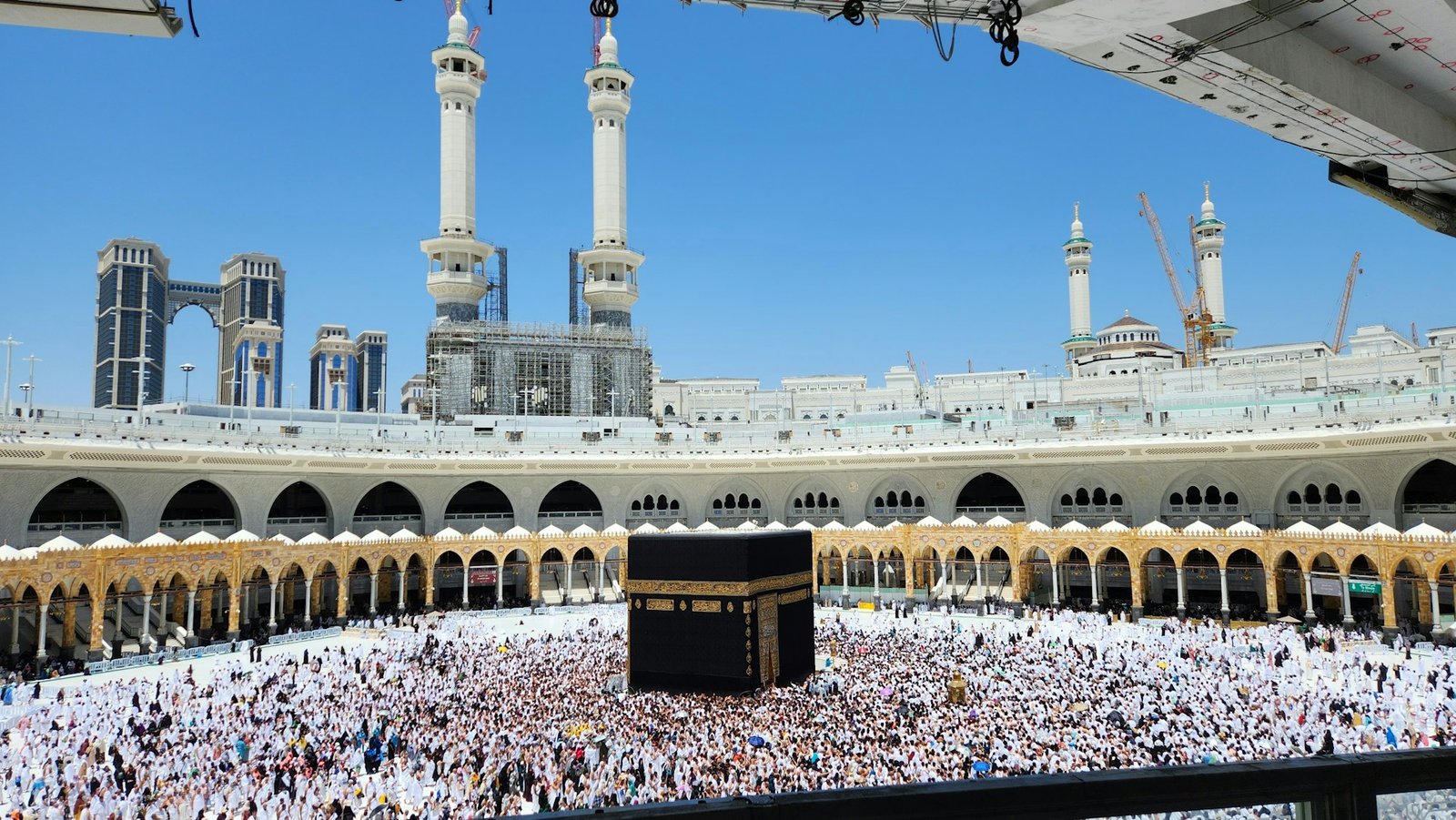
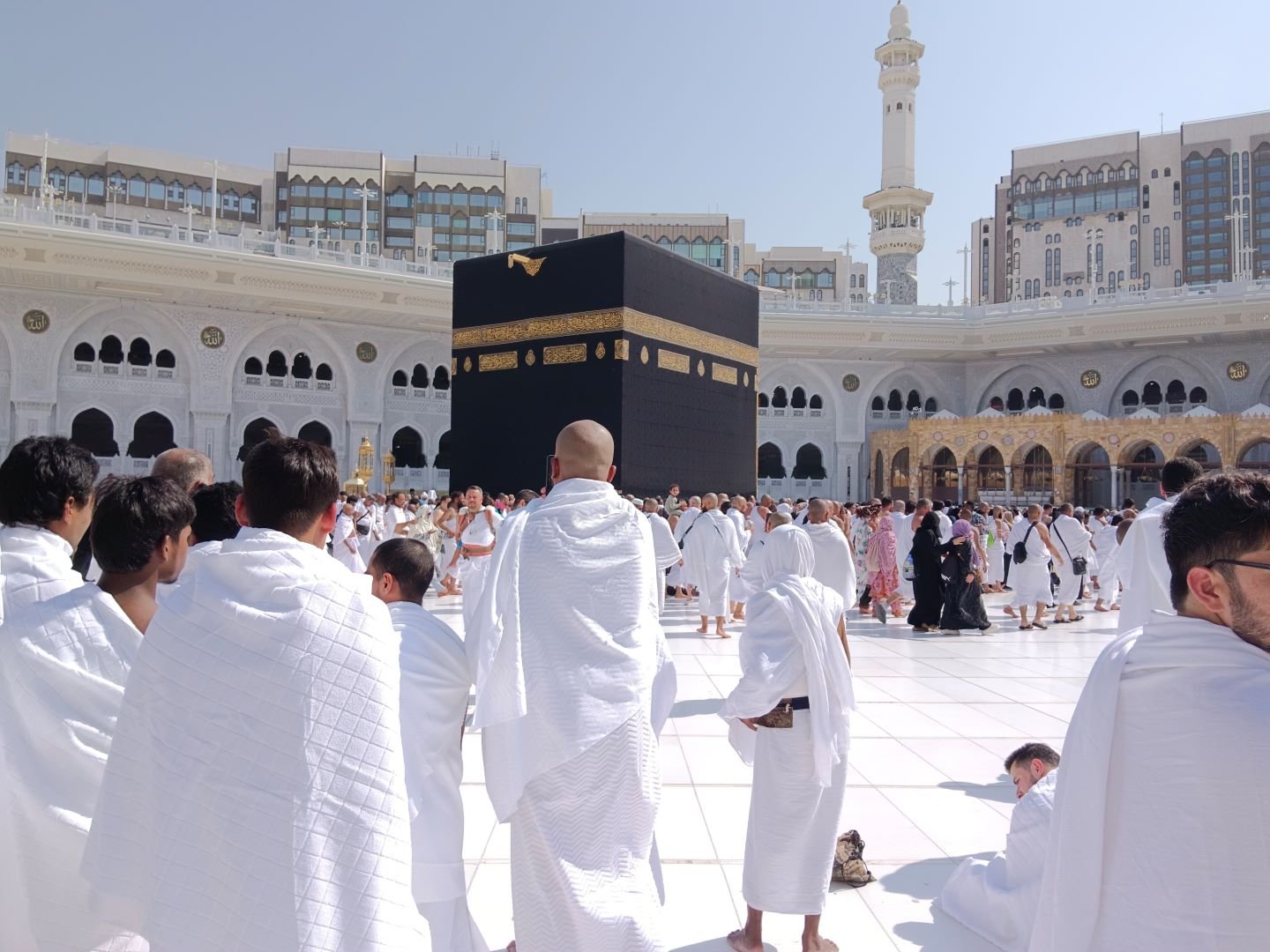
    Gazing down at thousands of white-robed worshippers flowing counterclockwise in absolute harmony and drinking cold, refreshing Zamzam water from copper taps are deeply moving spiritual experiences, but the defining anchor of the global Islamic faith sits nested within a dramatic valley of the Hejaz mountains. Dominating the landscape of the city, the Masjid al-Haram (the Grand Mosque) is an extraordinary architectural sanctuary that surrounds the holy Kaaba, drawing millions of travelers from every corner of the planet every year.

    For those interested in reviewing the deep structural timeline and historical preservation milestones of this sacred space, you can explore the comprehensive Visit Saudi Masjid al-Haram Guide, which breaks down the architectural layout of the complex.

    Constructed originally around the cubical granite house of worship built by the Prophet Ibrahim, this sprawling sacred complex has undergone massive modern expansions to accommodate over two million worshippers at a single time. Standing beside towering white minarets that pierce the desert sky, watching the golden light hit the calligraphic verses of the Kaaba’s black cloth drape, and walking the historic corridors are unforgettable moments that make this city the spiritual heart of the Muslim world.

    Architects have designed the modern layout of the Grand Mosque to masterfully handle the largest human gatherings on earth. The complex features vast, shimmering white marble floors that remain cool underfoot even in intense desert heat, soaring indoor arches lit by grand chandeliers, and multi-leveled circular balconies engineered to distribute the continuous movement of people safely around the central plaza.

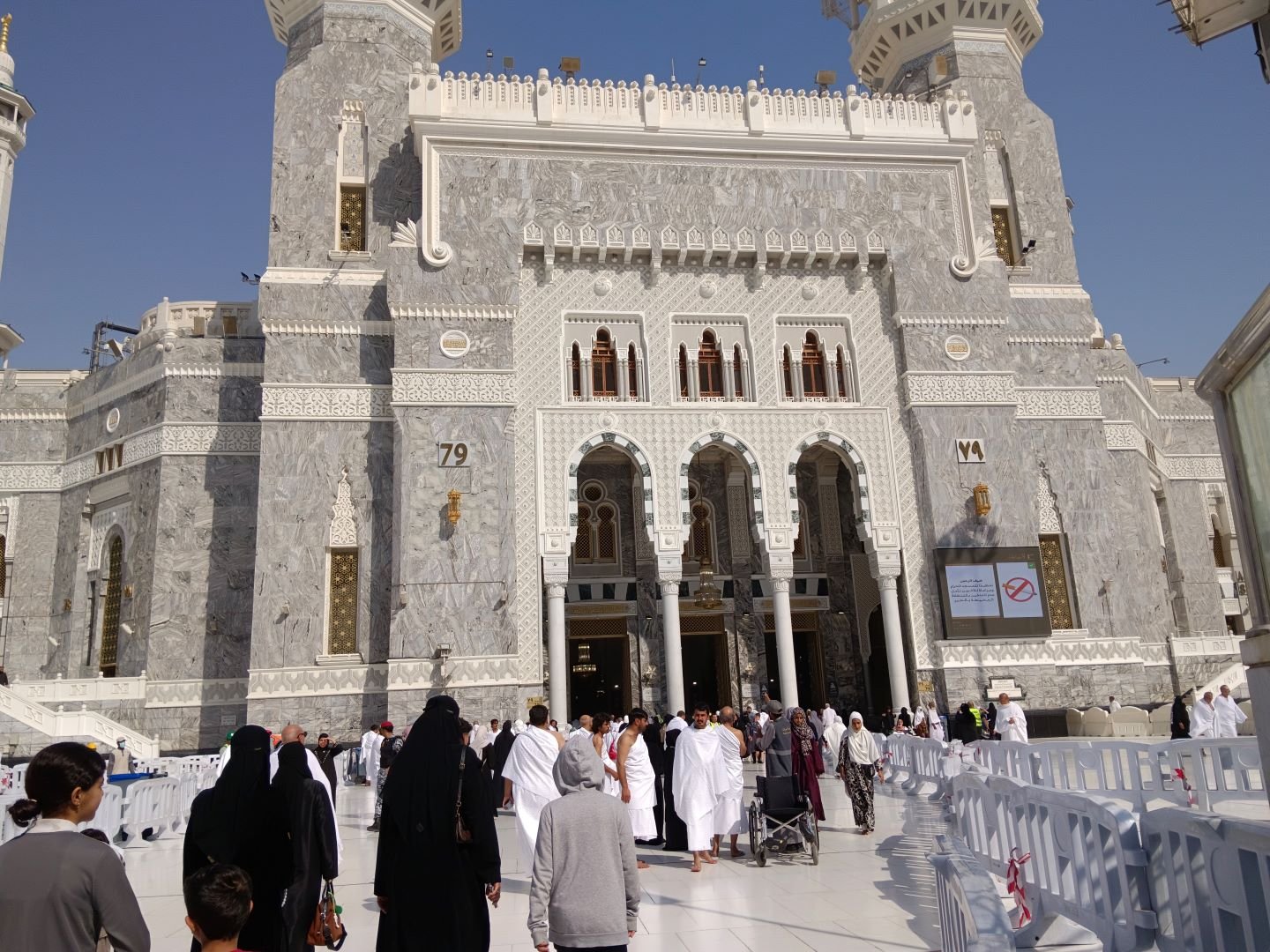
    Security teams monitor the main courtyard entrances using dynamic digital light indicators, displaying green signals when access areas are clear and shifting to bright red signs the exact moment a prayer sector hits maximum capacity.

    Worshippers coordinate their visits around the daily prayer schedule, moving down to the open-air marble plaza in the early dawn hours to catch the cool morning breeze before the intense midday heat pushes everyone into the expansive, air-conditioned indoor prayer galleries.

    The Secret to Its Charm

    Global travelers, spiritual seekers, and history enthusiasts focus their journey on a few deeply significant landmarks within the sanctuary:

    • The Holy Kaaba Structure:
    Positioned at the literal center of the courtyard is the 13-meter-high granite cube covered in the silk Kiswah cloth, hand-embroidered with brilliant gold and silver Quranic script. Worshippers complete the Tawaf by circling this structure seven consecutive times, focusing their gaze on the historic Black Stone embedded in the eastern corner.

    • The Safa and Marwa Gallery:
    Running parallel to the main plaza is a long, enclosed air-conditioned indoor corridor where pilgrims perform the Sa’i ritual. Walking or jogging between the two rocky hillsides commemorates Hagar’s historic search for water in the desert sand.

    • The Soaring Abraj Al-Bait Tower:
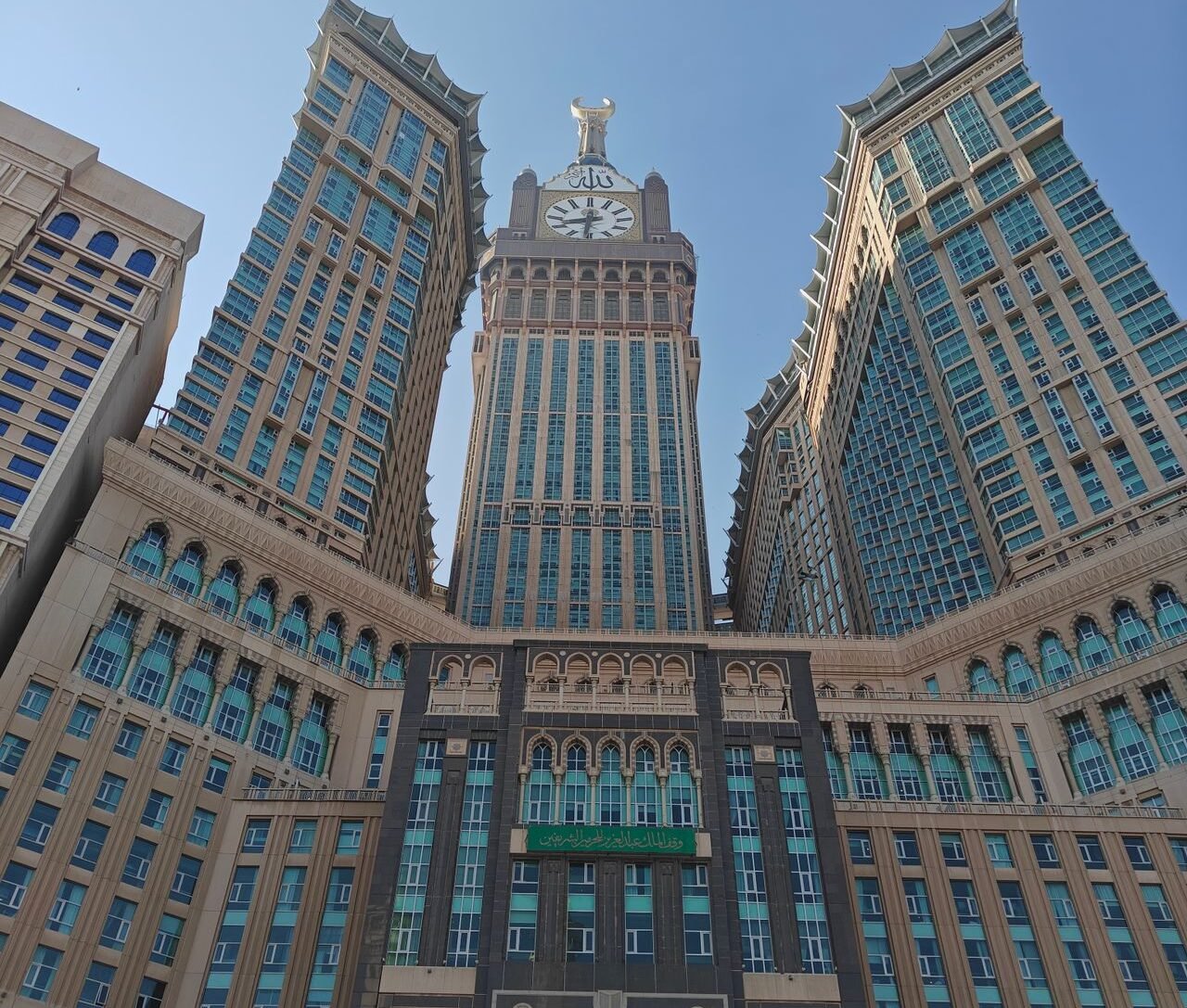
    Looming directly over the southern gates of the mosque complex is the world’s tallest clock tower. The massive structure features a specialized astronomical observatory and museum at its peak, contrasting ancient spiritual architecture with ultra-modern design.

    💡 Read Next: Ready to follow the historic trail from the towering skyscrapers and sacred, crowded courtyards of Islam’s holiest sanctuary to a sanctuary of absolute serenity? Head north into the desert to experience the tranquil atmosphere, iconic green dome, and stunning modern architecture in our ultimate guide to Medina!

    Things to Do Once You Reach Here

    Navigating the massive holy site smoothly takes roughly 2 to 3 hours for standard rituals, letting you easily experience a sequence of historic spaces:

    • The Central Mataf Plaza:
    Walk the open-air marble floor surrounding the Kaaba to witness the grand scale of the global pilgrimage up close, listening to the echoing calls to prayer.

    • The King Abdullah Extension Wings:
    Move through the newest northern sections of the mosque to see the pinnacle of modern Islamic architecture, featuring vast columned halls, giant sliding domes, and advanced crowd ventilation systems.

    • The Historic Courtyard Gates:
    Spend time near the massive Bab Abdulaziz or Bab King Fahd structures, where the intricate geometric stone carvings and colossal arched entries provide incredible backdrops for architectural photography.


    Experience a complete walking tour of Mecca, Saudi Arabia in this immersive 4K video by Walks Around City on Youtube below!

    📌 Fast Facts for Your Itinerary

    📍 Address: Al Haram, Mecca 24231, Saudi Arabia

    ⏰ Operating Hours: Open 24 hours daily, 7 days a week, throughout the entire year.

    🎫 Admission Ticket Prices: Entering the Masjid al-Haram for general prayer is completely free, and authorities never charge an admission fee.

    🔒 Strict Faith & Legal Access Border: Non-Muslim Restriction: Saudi law strictly restricts entry into the city borders of Mecca and the Grand Mosque complex to Muslims only. Dedicated highway checkpoints monitor all entry roads leading into the valley, and unauthorized entry carries severe legal penalties, heavy fines, and immediate deportation.

    📱 Mandatory Nusuk Digital Permits: To perform the Umrah pilgrimage, international visitors must download the official Nusuk App to register their passport and visa details. Worshippers must book a specific date and time slot for their rituals, as security guards check the digital permit on your phone at courtyard checkpoints before allowing entry to the central plaza.

    • ⚠️ Prohibited Items Guardrail: To maintain safety and smooth crowd flows, guards strictly ban large luggage bags, breakable glass bottles, sharp metal tools, political flags, commercial banners, and baby strollers from entering the mosque gates. Photography using professional video cameras or large tripods inside the main prayer halls is forbidden without a formal press permit. Wear highly cushioned footwear for the long walks outside the mosque, but prepare to carry a shoe bag as footwear must be removed before stepping onto the indoor prayer carpets.

  • Back in Time: A Guide to Al-Balad, Jeddah’s Living History Museum

    Back in Time: A Guide to Al-Balad, Jeddah’s Living History Museum

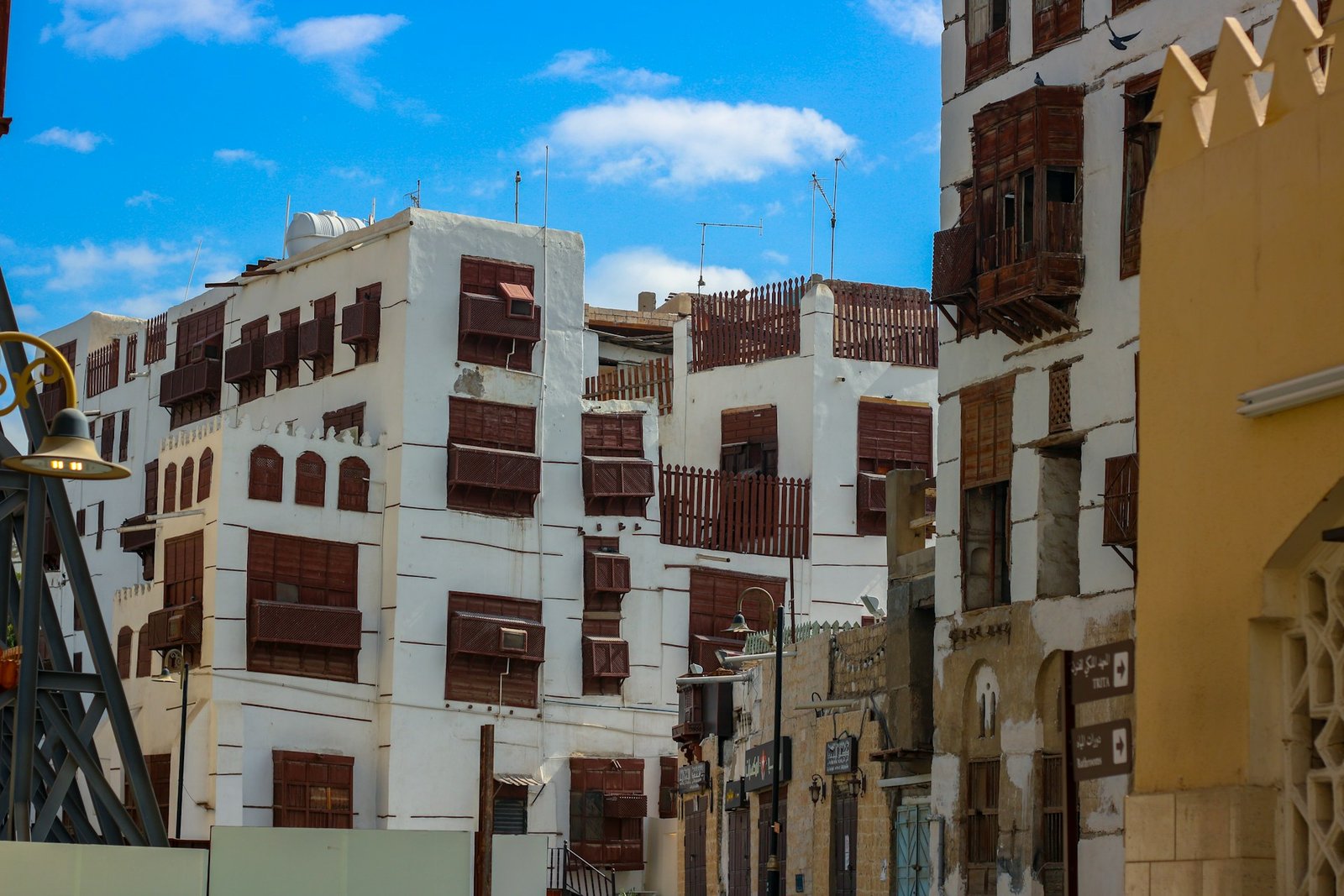
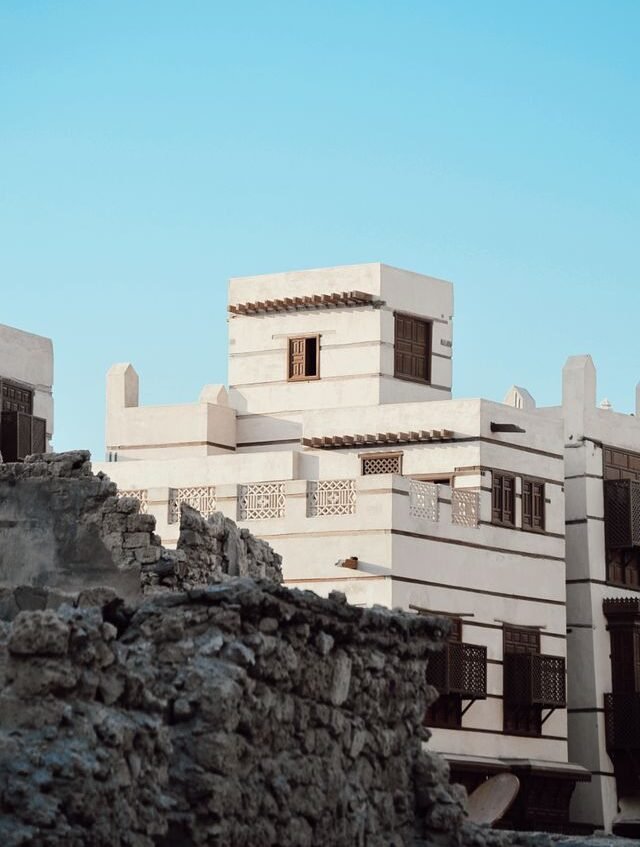
    Coral-stone architecture of the buildings in Al-Balad

    Nestled in the heart of modern Jeddah lies Al-Balad, the city’s historic old town, a mesmerizing maze of coral stone architecture, bustling souks, and centuries-old stories. Founded in the 7th century as a major trading hub and the primary gateway for pilgrims traveling to Mecca during the 3rd Caliph of the Rashidun Caliphate, Uthman ibn Affan, this UNESCO World Heritage Site is a vibrant monument to Islamic and Red Sea history.

    Whether you are a history buff, an architecture enthusiast, or a curious traveler, Al-Balad offers a sensory journey unlike any other in Saudi Arabia.

    The Architecture: Rawshan Balconies and Coral Stone

    The first thing that will catch your eye in Al-Balad is its distinctive architecture. The ancient multi-story tower houses were built using coral stone harvested from the Red Sea and reinforced with limestone.

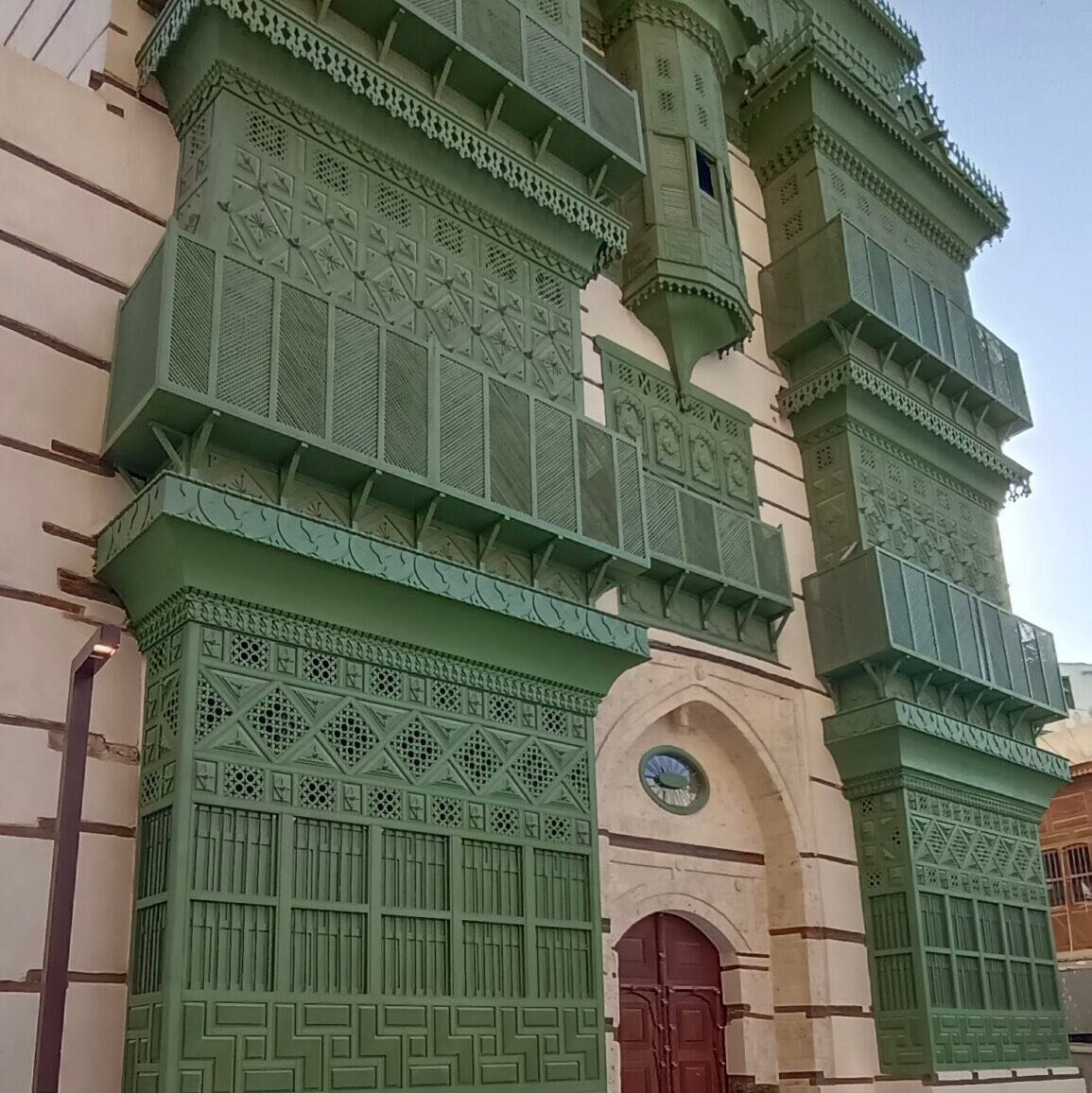
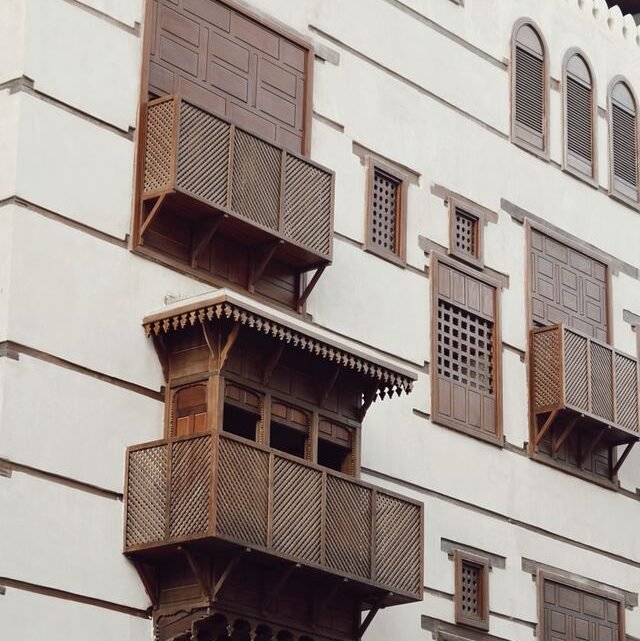
    The defining feature of these buildings is the Rawshan (plural: Rawashin)—intricately carved wooden lattice windows and balconies. These stunning architectural marvels served three brilliant purposes:

    Cooling: They caught the sea breeze and directed it into the homes, acting as a natural air conditioner.

    Privacy: They allowed residents to look out onto the bustling streets without being seen from the outside.

    Aesthetics: Painted in vibrant blues, greens, and earth tones, they transform every alleyway into an open-air art gallery.

    Top Landmarks You Can’t Miss

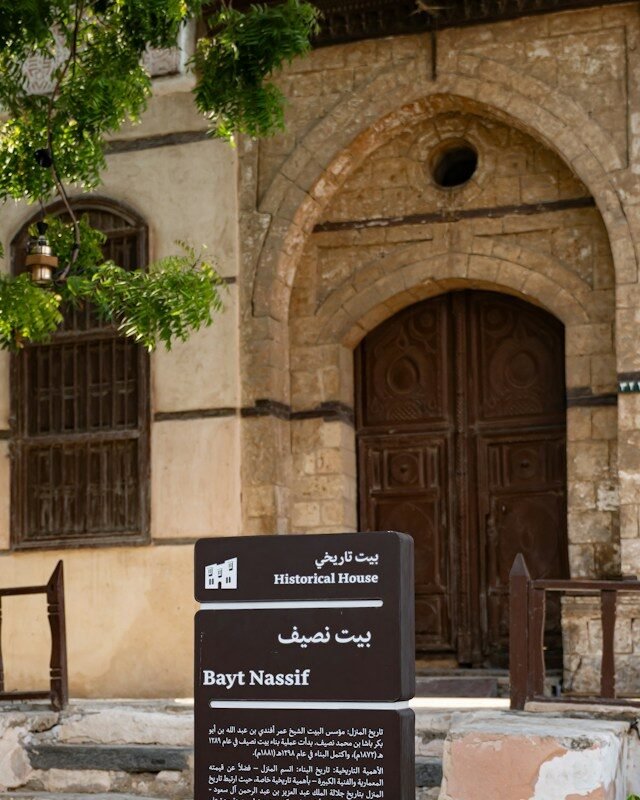
    1. Nassif House (Bayt Nassif)

    Built in the late 19th century, this 106-room mansion is one of Al-Balad’s most famous structures. It famously hosted King Abdulaziz, the founder of modern Saudi Arabia, in 1925. Look for the wide staircases inside, which were designed so camels could carry messages and supplies directly up to the upper floors!

    2. The Historic Gates

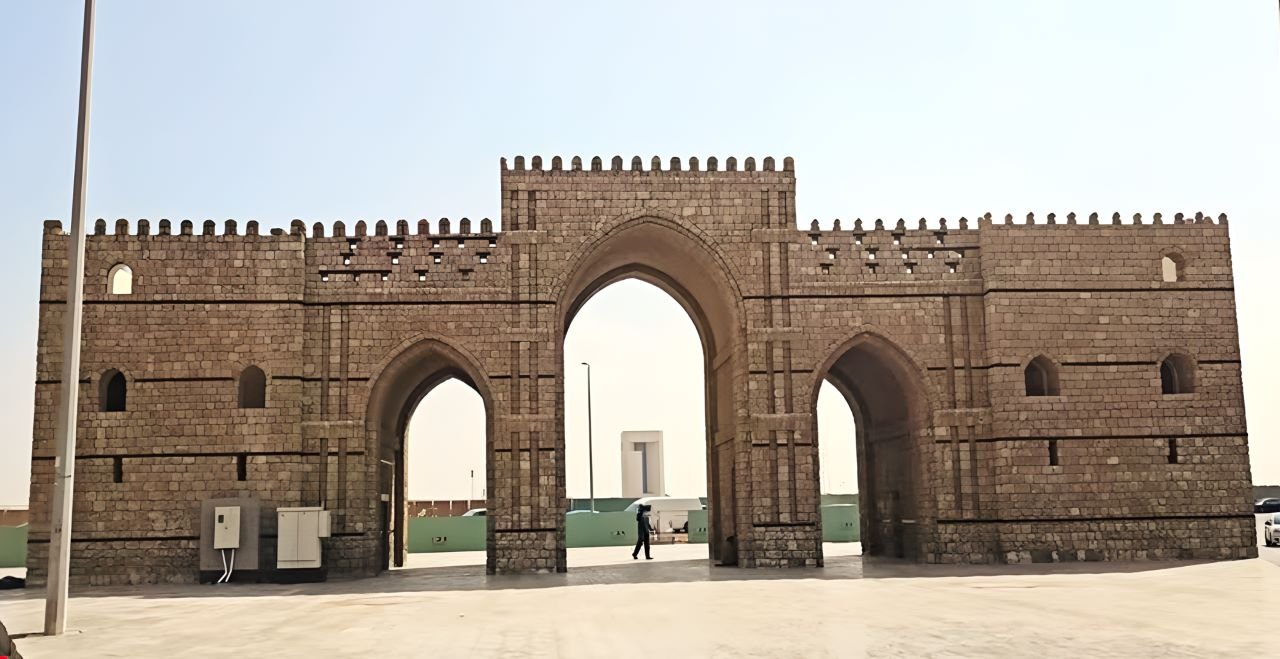
    Al-Balad was once a walled city protected by massive gates. Today, you can still visit historic entryways like Bab Makkah (the gateway to the holy city) and Bab Sharif, which still pulse with local trade.

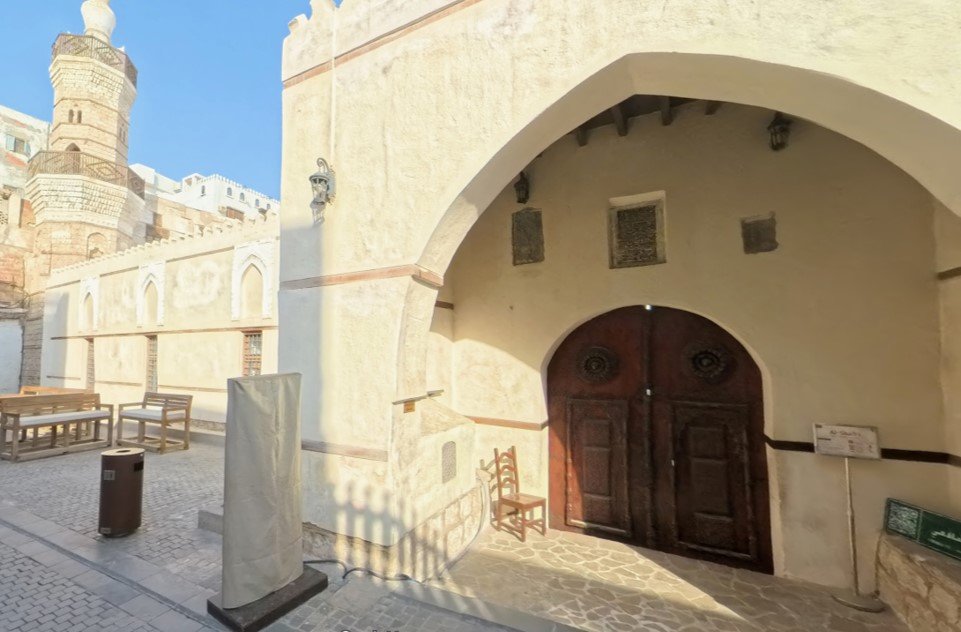
    3. Ash-Shafi’i Mosque

    As one of the oldest mosques in Jeddah, its unique minaret and serene courtyard offer a quiet space for reflection amidst the surrounding buzz of the old town.

    4. The Heartbeat of Al-Balad, The Souks

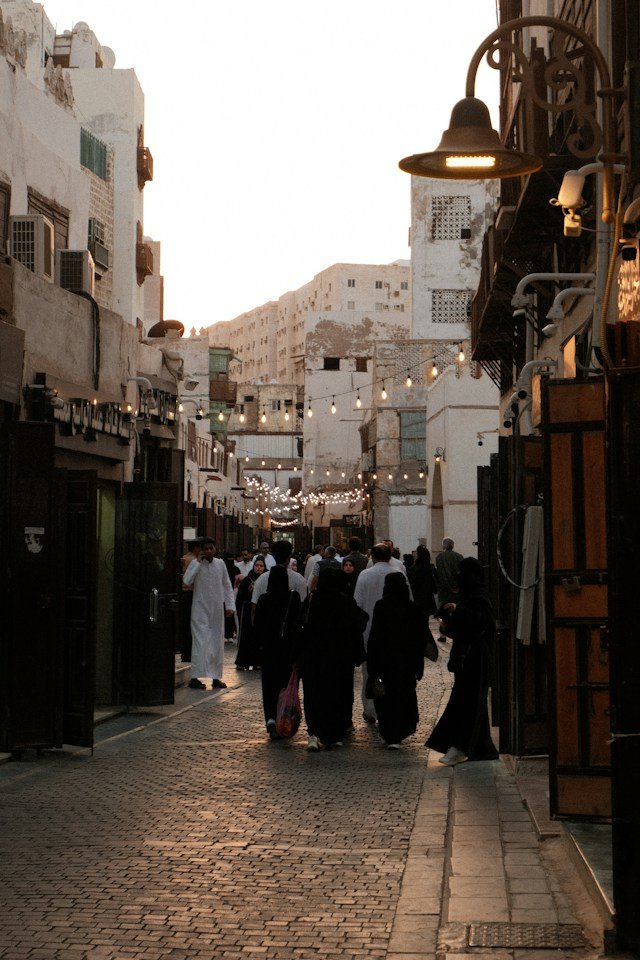
    To truly experience the soul of the old city, you must get lost in its vibrant markets. The air in the souks is thick with the aroma of oud, frankincense, roasted coffee, and exotic spices.

    Head to Souk Al-Alawi, the longest marketplace in the country, which cuts right through the heart of the district. Here, vendors sell everything from traditional clothing (thobes and abayas) to authentic leather goods and gold jewelry.

    Take a break at a local stall to try Hejazi street food. Don’t leave without tasting Mutabbaq (a stuffed pan-fried bread) or sipping on a cup of hot Saudi coffee flavored with cardamom.

    Checkout this 1-hour plus YouTube video by WalkingOZ to get an idea of the scene you might see if you’re planning to visit this ancient town.

    Al-Balad Today: A Cultural Renaissance

    While Al-Balad feels trapped in time, it is currently experiencing an incredible cultural revival. Under Saudi Arabia’s Vision 2030, massive restoration projects are breathing new life into crumbling structures, turning old mansions into boutique hotels, trendy cafes, art galleries, and cultural museums.

    As the sun sets, the old city transforms. Golden lights illuminate the wooden balconies, locals gather to play traditional board games in the squares, and the call to prayer echoes through the alleyways. It is a beautiful reminder that Al-Balad isn’t just a relic of the past—it is the living, breathing heart of Jeddah.

    Quick Tips for Your Visit

    Best Time to Visit: Late afternoon and evening. The weather is cooler, the lighting is perfect for photography, and the town truly comes alive after the Maghrib (sunset) prayer.

    What to Wear: : Dress modestly to respect local customs—loose-fitting clothing that covers shoulders and knees is recommended for all visitors.

    Footwear: Wear comfortable walking shoes. The cobblestone streets are uneven and best explored entirely on foot.