
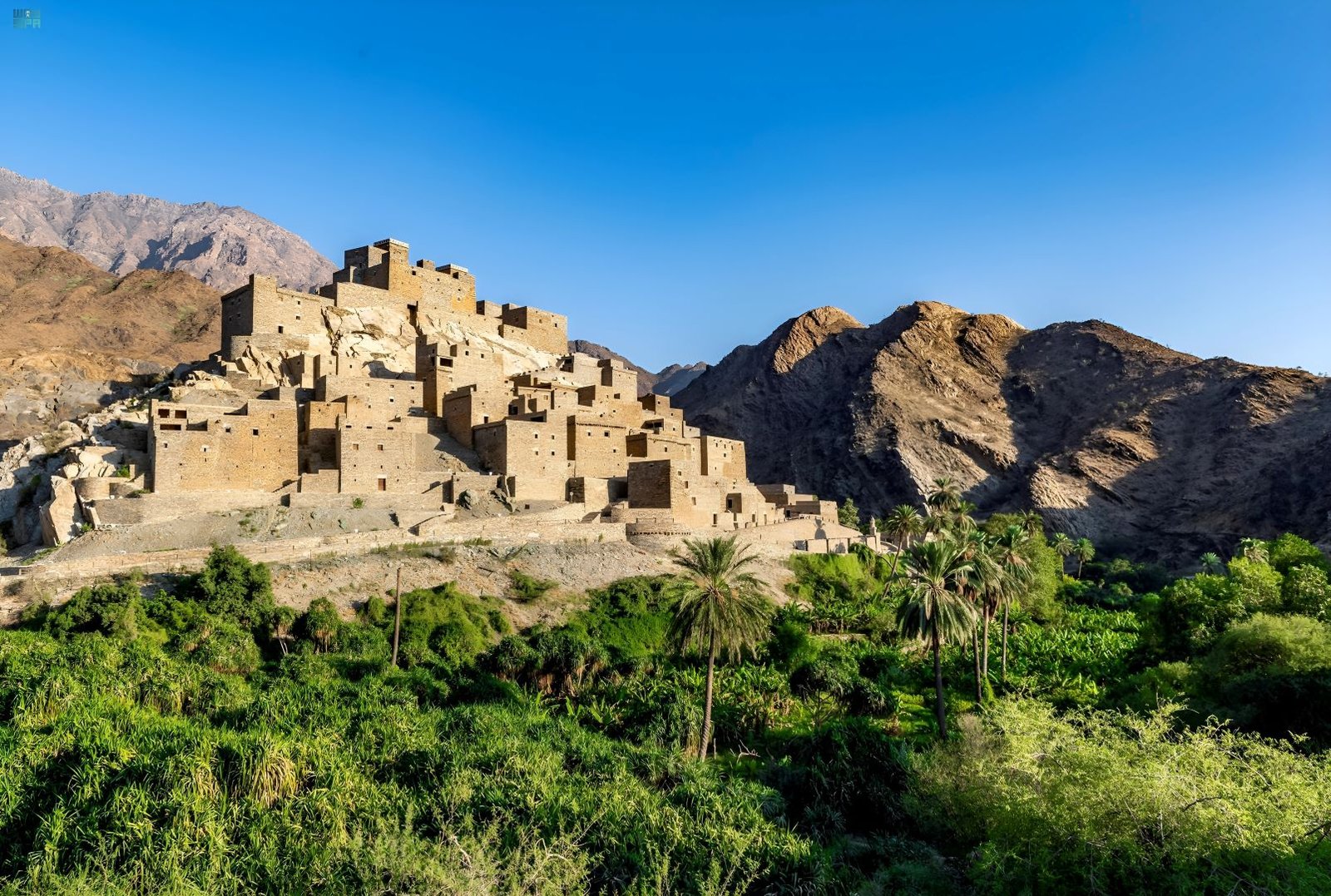
Catching your first glimpse of a towering, multi-story stone village perched dramatically on a white marble outcrop and breathing in the sweet scent of banana trees growing in a desert oasis are unforgettable experiences in the southwestern highlands. Tucked deep within the rugged mountains of the Al-Bahah Province, the historic Dhee Ayn Marble Village stands as one of the kingdom’s most jaw-dropping archaeological treasures, offering a vivid look into centuries of traditional Arabian mountain life.
Constructed over 400 years ago during the rule of the regional tribal alliances, this defensive stone citadel earns its nickname from the shimmering white quartz hill it rests upon, which contrasts beautifully with the dark slate stones used to build the houses.
Exploring the narrow, winding pathways that snake between the abandoned fortresses, listening to the continuous trickle of the ancient natural spring, and looking out over the lush green valley below are magical moments that make this mountain outpost an essential highlight of your Saudi travel itinerary.
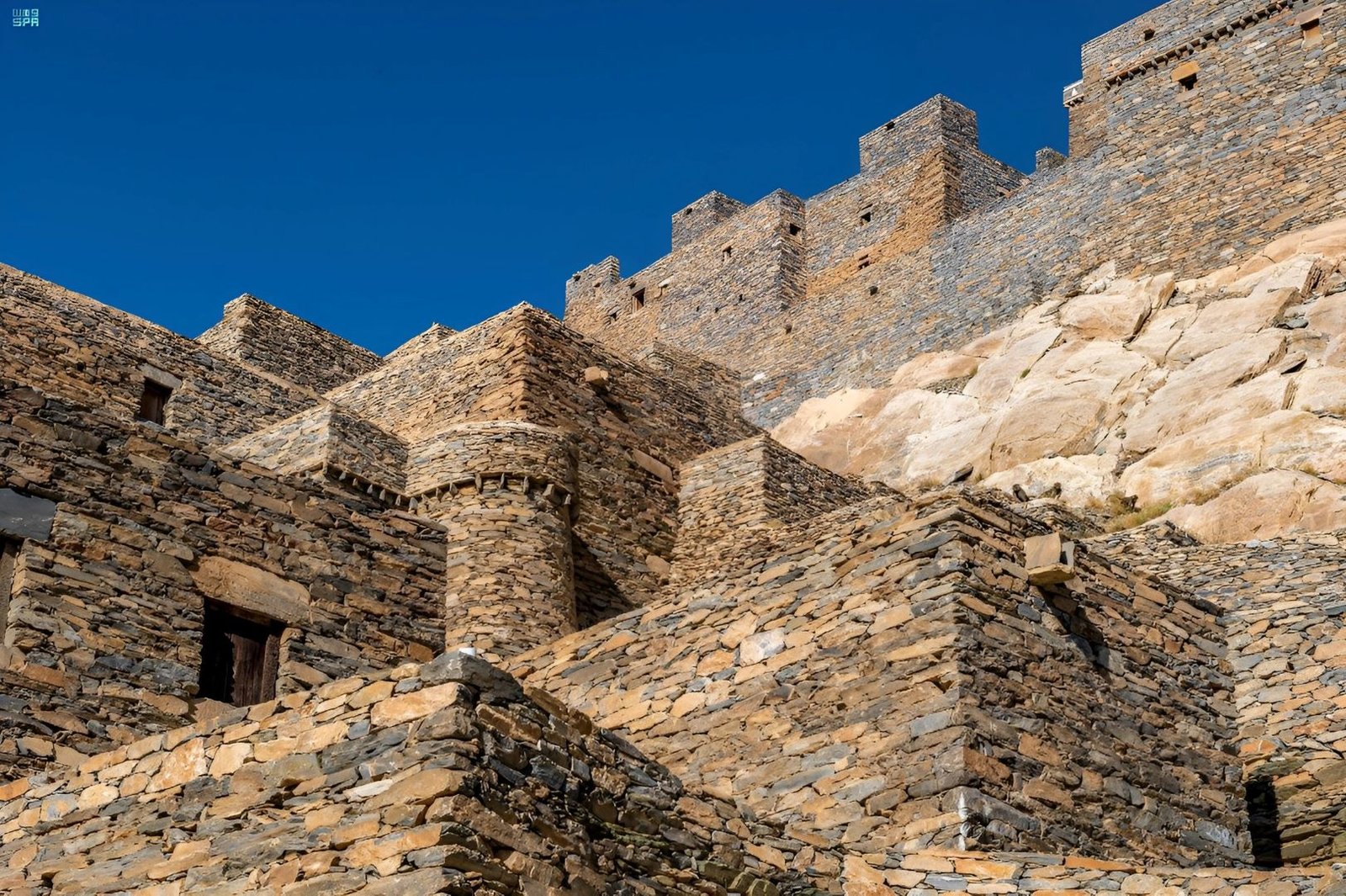
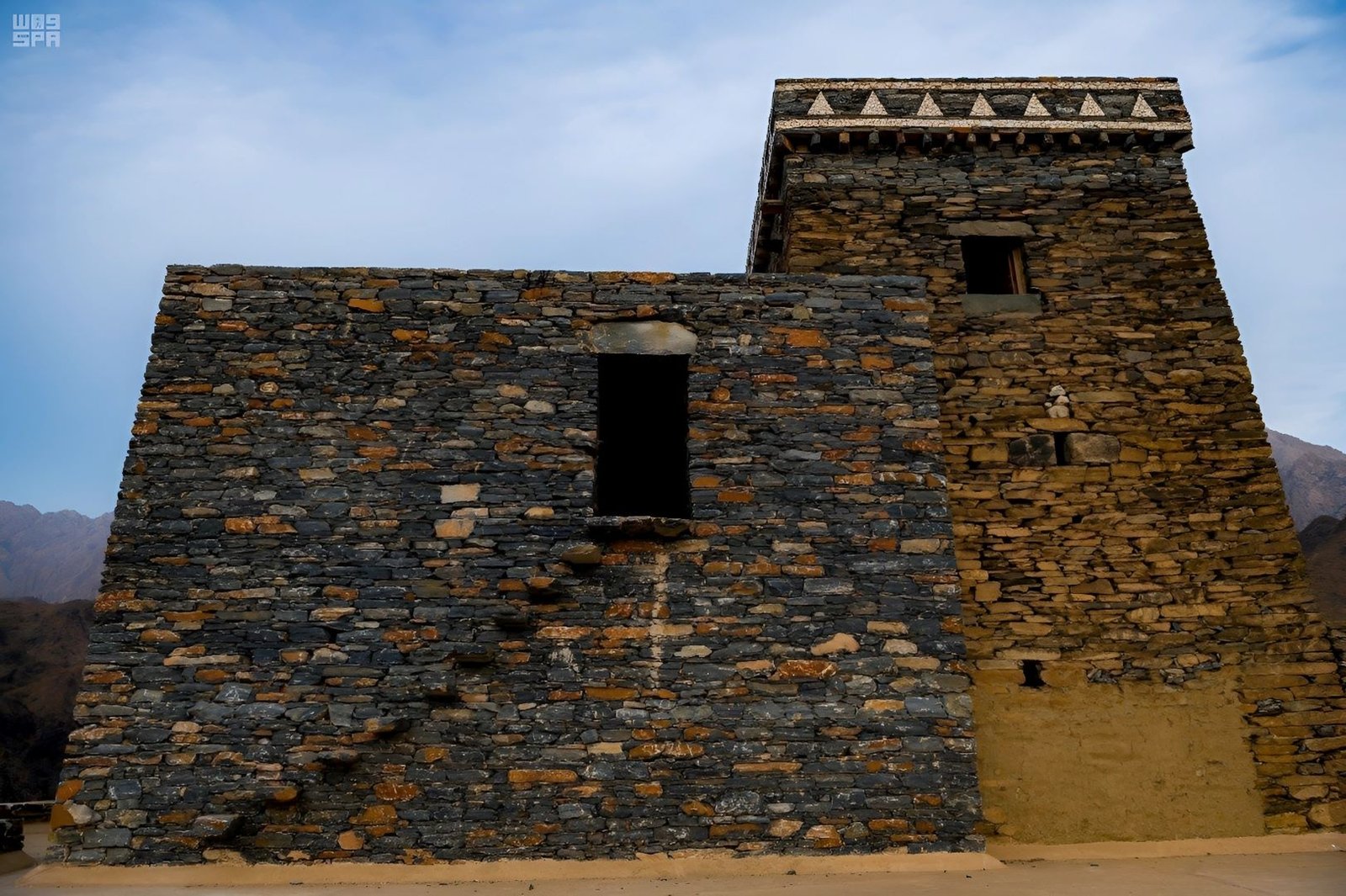
Local builders constructed the village using flat, dark stones bound together with local mud, engineering a dense cluster of nearly 50 multi-story residential towers that could withstand both harsh weather and tribal raids. The architecture features low wooden doorways, narrow slit windows designed for defense, and roofs thatched with strong juniper wood and palm fronds.
A natural, freshwater spring flows continuously from the base of the mountains, feeding a vibrant, tropical oasis filled with wild flowers, sweet basil, lemon groves, and dense groves of local bananas. Visitors plan their arrival for the late afternoon hours, taking advantage of the cooler mountain air to climb the stone stairways just as the setting sun strikes the white marble foundations, creating a beautiful golden glow over the entire valley.
Reasons Behind Its Appeal
Backpackers, history buffs, and landscape photographers focus their exploration on a few key elements within the historic heritage zone:
• The Multi-Story Slate Castles:
Dominating the face of the white hill are the interlocking stone houses, some rising up to four floors high. You can step inside the open rooms to admire the historic plasterwork and see how families shared these massive stone fortresses.
• The Permanent Freshwater Spring:
Tucked into the lush green undergrowth at the foot of the hill is the legendary water source that has kept the village alive for centuries. The crystal-clear stream cascades down a series of small rocks, filling the air with a soothing sound unique to this dry region.
• The Panoramic Upper Overlook:
Perched at the very peak of the marble ridge is a traditional stone watchtower. Climbing to the top rewards you with an uninterrupted, 360-degree view of the sweeping Bidah Valley and the dramatic, zigzagging mountain highways that slice through the surrounding cliffs.
💡 Read Next: Ready to trade the rugged stone walls, ancient mountain ridges, and banana groves of Al Bahah’s historic fortress for a masterpiece of ultra-modern urban architecture? Head to the heart of Riyadh to see a striking futuristic canopy wrap around one of the country’s most spectacular cultural landmarks in our ultimate guide to King Fahd National Library!
Things to Experience
Touring the entire historical complex smoothly takes roughly 2 hours, letting you easily experience a sequence of distinct zones:
• The Heritage Boardwalk:
Stroll through the beautifully restored lower paths to learn about traditional mountain agriculture, passing local farmers selling fresh fruit and aromatic herbs grown right in the valley.
• The Interior Mountain Trails:
Climb the winding, uneven stone paths that cut through the center of the village, exploring the hidden courtyards, narrow alleyways, and old residential wings that feel like a giant open-air museum.
• The Riverside Rest Stop:
Conclude your loop at the modern cafe pavilion built at the edge of the banana plantations, where you can sip traditional Saudi coffee and enjoy a quiet moment under the shade of the palms.
📌 Fast Facts for Your Itinerary
📍 Address: Dhee Ayn Heritage Village, Al Mukhwah Road, Al-Bahah Region, Saudi Arabia.
⏰ Operating Hours: 8:00 AM – 6:00 PM Daily.
🎫 Admission Ticket Prices: Entry tickets are priced around SAR 20 (approx. RM23) for adults, which directly supports the ongoing conservation and restoration of the stone structures.
🚗 Crucial Mountain Driving Guardrail: Transport Notice: The village sits at the base of a dramatic mountain escarpment, requiring you to drive down the spectacular, winding King Fahd Road descent from Al-Bahah city. The highway features sharp hairpin turns and steep drops; ensure your vehicle’s brakes are in perfect condition, and exercise extreme caution during rare seasonal downpours when mountain fog can reduce visibility to zero.
👟 Rugged Terrain Safety Guardrail: The pathways throughout the ancient citadel are completely original, consisting of steep, highly uneven stone steps and loose gravel without safety handrails. Wearing sturdy, high-traction hiking shoes or trail runners is absolutely essential to prevent slips while climbing the marble ridges. Bring plenty of insect repellent, as the humid tropical oasis at the bottom draws a high volume of mosquitoes around dusk.







Leave a Reply