
While southwestern China is rich in mountain landscapes, nothing mirrors the ethereal beauty of Jiuzhaigou Valley. Here, where the thunderous roar of multi-tiered travertine waterfalls echoes through ancient pine forests, you are looking directly into China’s most magical aquatic paradise—a “fairy tale” landscape of multi-colored waters and jagged, snow-capped limestone peaks.
Named after the nine historic Tibetan villages that sit scattered along its length, this high-altitude nature reserve was formed over millennia by glacial activity and heavy mineral deposits that turn the waters into liquid crystals.
If you are ready to walk along wooden boardwalks suspended over glowing lakes, marvel at a waterfall that stretches hundreds of meters wide across a forest cliff, and explore traditional Tibetan shrines draped in colorful prayer flags, here is why this breathtaking UNESCO World Heritage site is an essential bucket-list anchor for your Sichuan itinerary.
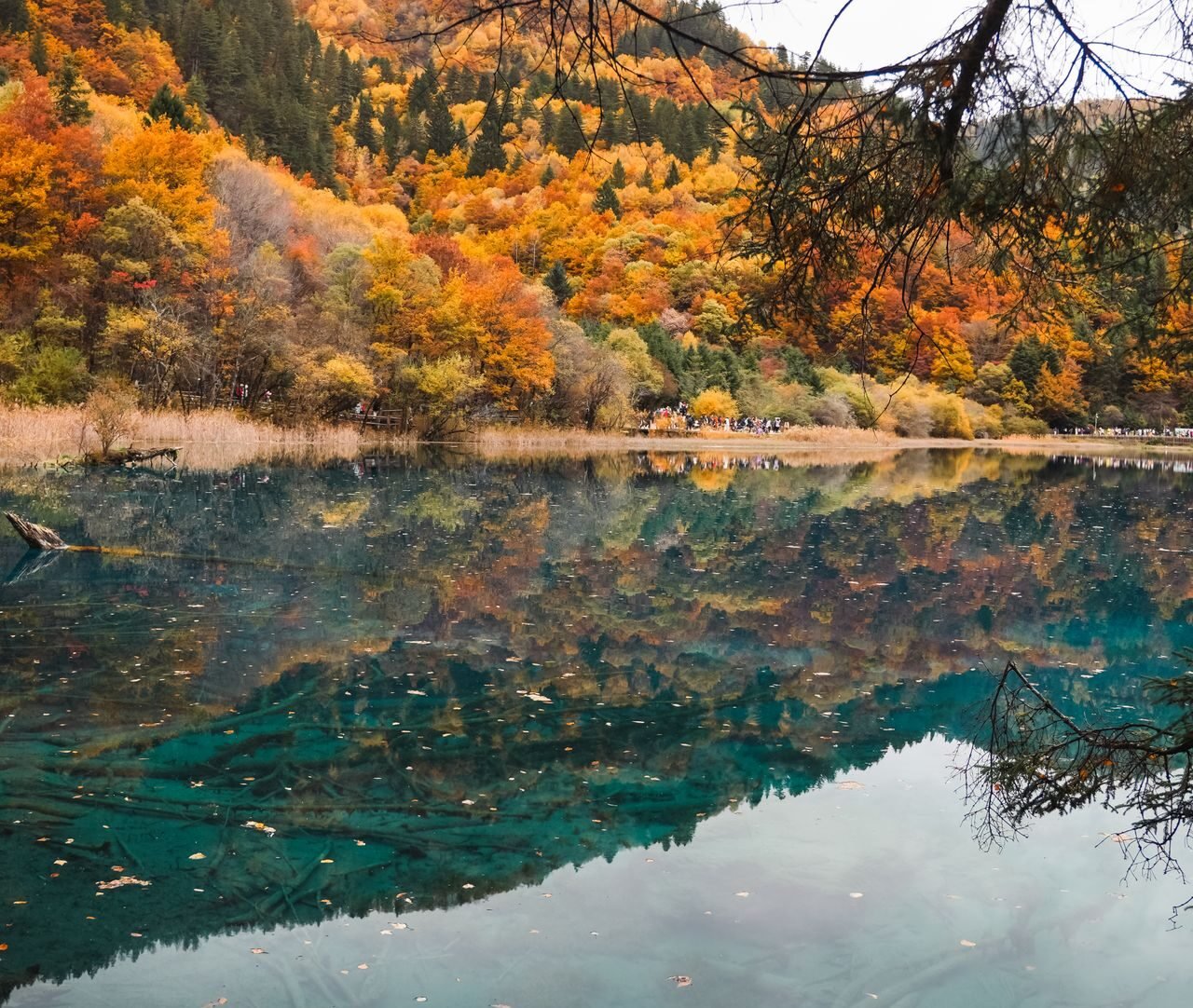
Jiuzhaigou Valley is a brilliant ecological sanctuary that functions across three main connected valleys: Shuzheng, Rize, and Zechawa. The entire park layout is cleverly managed via an eco-friendly hop-on, hop-off sightseeing bus system that transports visitors seamlessly up the mountain forks, allowing travelers to hike down the scenic trails at their own pace.
The park features lush green pine forests, clear mountain streams filled with wild fish, and dramatic viewing platforms that extend straight out over vertical drops. To maximize visibility and avoid the heavy morning crowds at the most popular overlooks, the park operates on a flexible, weather-dependent daytime timeline.
The valley features sweeping, virgin pine forests, ancient calcium-carbonate deposits that create natural stepped dams, and perfectly still waters that reflect the changing autumn foliage like giant mirrors. To witness the lakes at their absolute calmest when the mirror reflections are flawless, the park operates on a strict morning-to-evening schedule.
Catch the park right at opening to enjoy a crisp, high-altitude walk along the lower boardwalks, capturing the pristine, glassy lake colors before the midday mountain breezes ripple the surface.
Reasons Behind Its Appeal
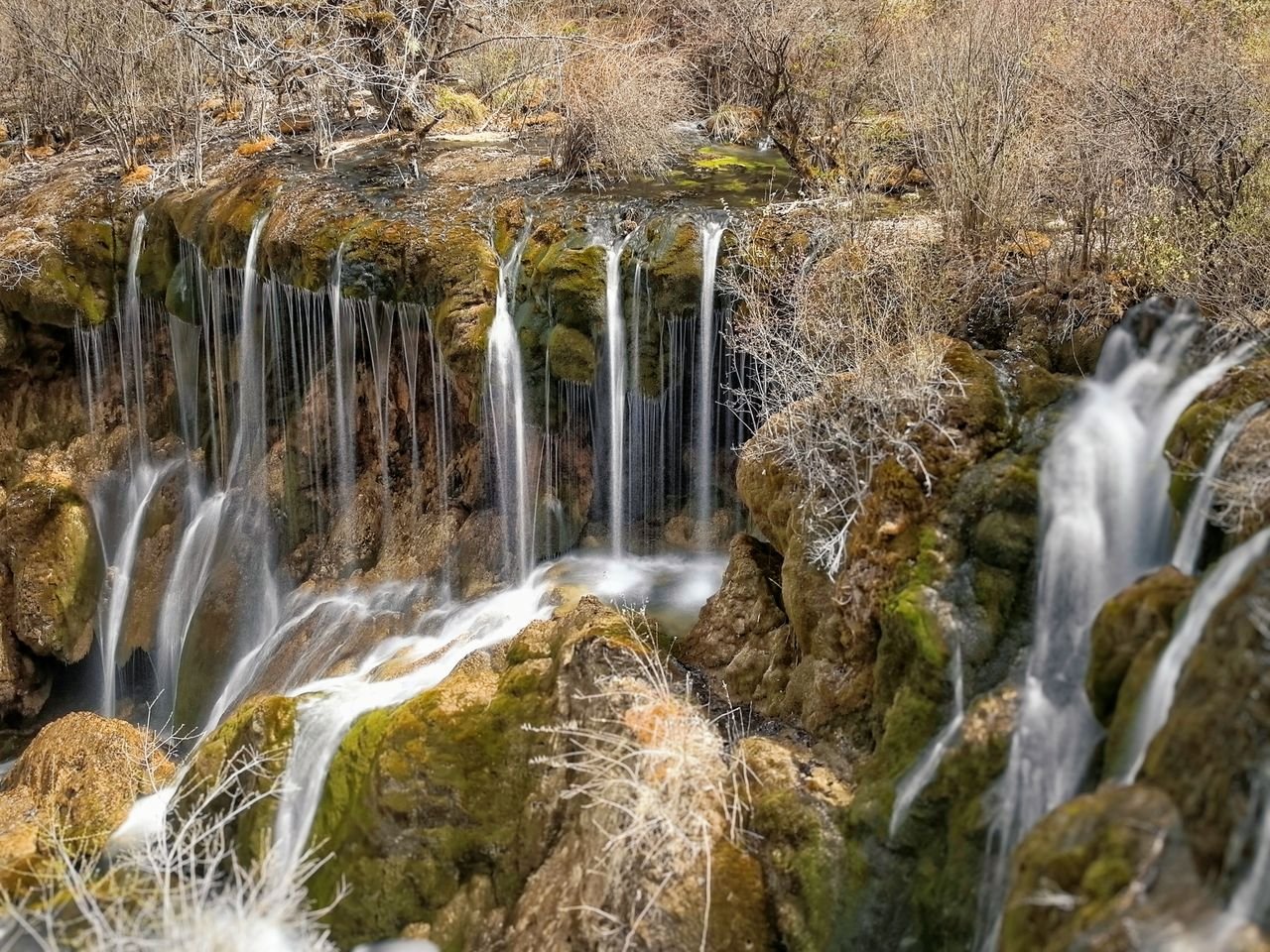
This historic wilderness of colors stands out for a few standout reasons:
• The Multicolored Five Flower Lake:
Dominating the upper Rize Valley is the spectacular Wuhua Hai. The bottom of this shallow lake is crisscrossed by ancient fallen tree trunks that remain perfectly preserved through the crystal-clear, mineral-rich water, creating a stunning palette of turquoise, yellow, and sapphire green.
• The Monumental Nuorilang Waterfall:
Standing proudly as the structural centerpiece where the valleys meet is China’s widest calcified waterfall. Spanning over 270 meters across, the roaring waters cascade dramatically down a sheer cliff covered in lush green moss and wild shrubs.
• The Massive Long Lake:
Perched at the highest point of the Zechawa Valley is Chang Hai, a deep, crescent-shaped alpine lake framed by dramatic snow-capped peaks. Lacking any surface outlets, this enormous body of water relies entirely on snowmelt and underground springs to maintain its deep blue hue.
💡 Read Next: Ready to trade the multi-tiered waterfalls and impossibly clear, colorful alpine lakes of Sichuan’s dreamscape for a dramatic landscape of fire-colored peaks? Head south to Guangdong to hike through the towering red sandstone cliffs, deep ravines, and mist-shrouded valleys of the breathtaking Danxia Mountains!
Things to Experience Here
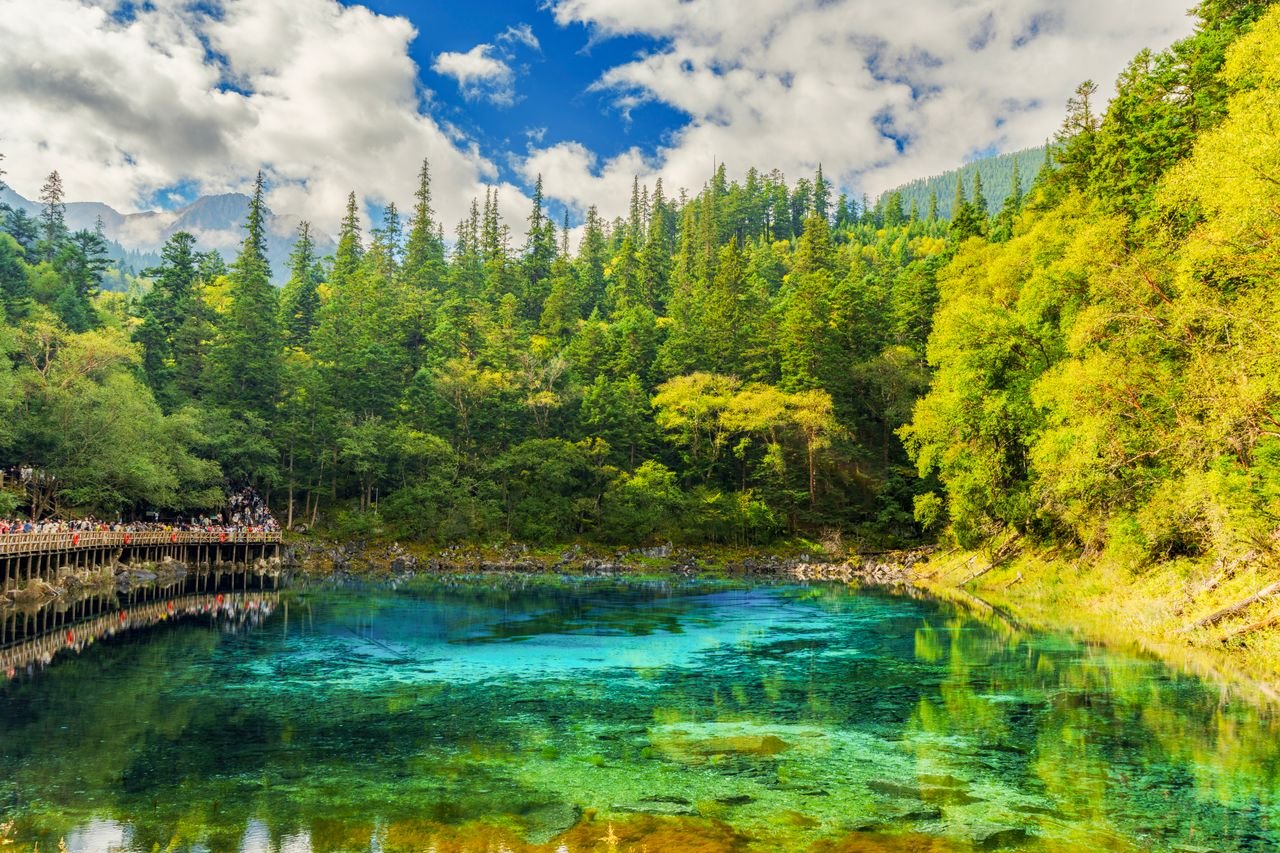
A standard journey through the Y-shaped valley takes a full day and allows you to seamlessly explore a sequence of dedicated scenic zones:
• The Rize Valley Fork:
Spend your morning touring the park’s most famous water features, walking the quiet wooden trails between Pearl Shoal Waterfall, Five Flower Lake, and the glassy expanse of Mirror Lake.
• The Shuzheng Valley Spine:
Walk down through the lower main valley to view a spectacular chain of nineteen stepped travertine lakes, passing historic wooden water mills and the traditional Tibetan village of Shuzheng.
• The Zechawa Valley Heights:
Take the long shuttle bus route up the western fork to marvel at the sheer scale of Long Lake and stroll down to the seasonal, color-shifting Five-Color Pool.
Fel free to preview the cascading waterfalls and crystal-clear alpine lakes with this immersive Jiuzhaigou travel guide by YouTube creator Adventures of Lauren & Jason.
📌 Fast Facts for Your Itinerary
📍 Address: Zhangzha Town, Jiuzhaigou County, Aba Tibetan and Qiang Autonomous Prefecture, Sichuan, China
⏰ Operating Hours: 7:30 AM – 5:00 PM Daily. The internal eco-shuttle buses run continuously throughout the day but stop service shortly after the main gates close.
🎫 Admission Ticket Prices: During the peak travel season (April to mid-November), a standard adult entry ticket costs RMB 190, plus a mandatory RMB 90 fee for the internal sightseeing bus ticket. Prices are reduced significantly during the winter off-peak months.
🔒 Strict Daily Capacity & Booking Rules: To protect the fragile water chemistry, the park enforces a strict cap on daily visitors and does not sell physical tickets at the gate. International travelers must reserve their entry slots online in advance using their passport numbers, and you must carry your physical passport to be scanned directly at the digital turnstiles for entry.
🏔️ Be Cautious at All Times: Jiuzhaigou’s main attractions sit at elevations ranging from 2,000 meters to over 3,100 meters (10,100 feet) above sea level. Pace your hikes along the boardwalks and stay hydrated to prevent altitude sickness.
Extra Rules Regarding Preservation of this Tourism Spot: The lake ecosystems are incredibly fragile; stepping off the designated wooden boardwalks, littering, or touching the water is strictly illegal and heavily penalized. Ensure you wear layered clothing, as high-altitude mountain weather changes rapidly.






Leave a Reply