Category: Indonesia

  • Uncovering the Secrets of Yogyakarta’s Water Castle

    Uncovering the Secrets of Yogyakarta’s Water Castle

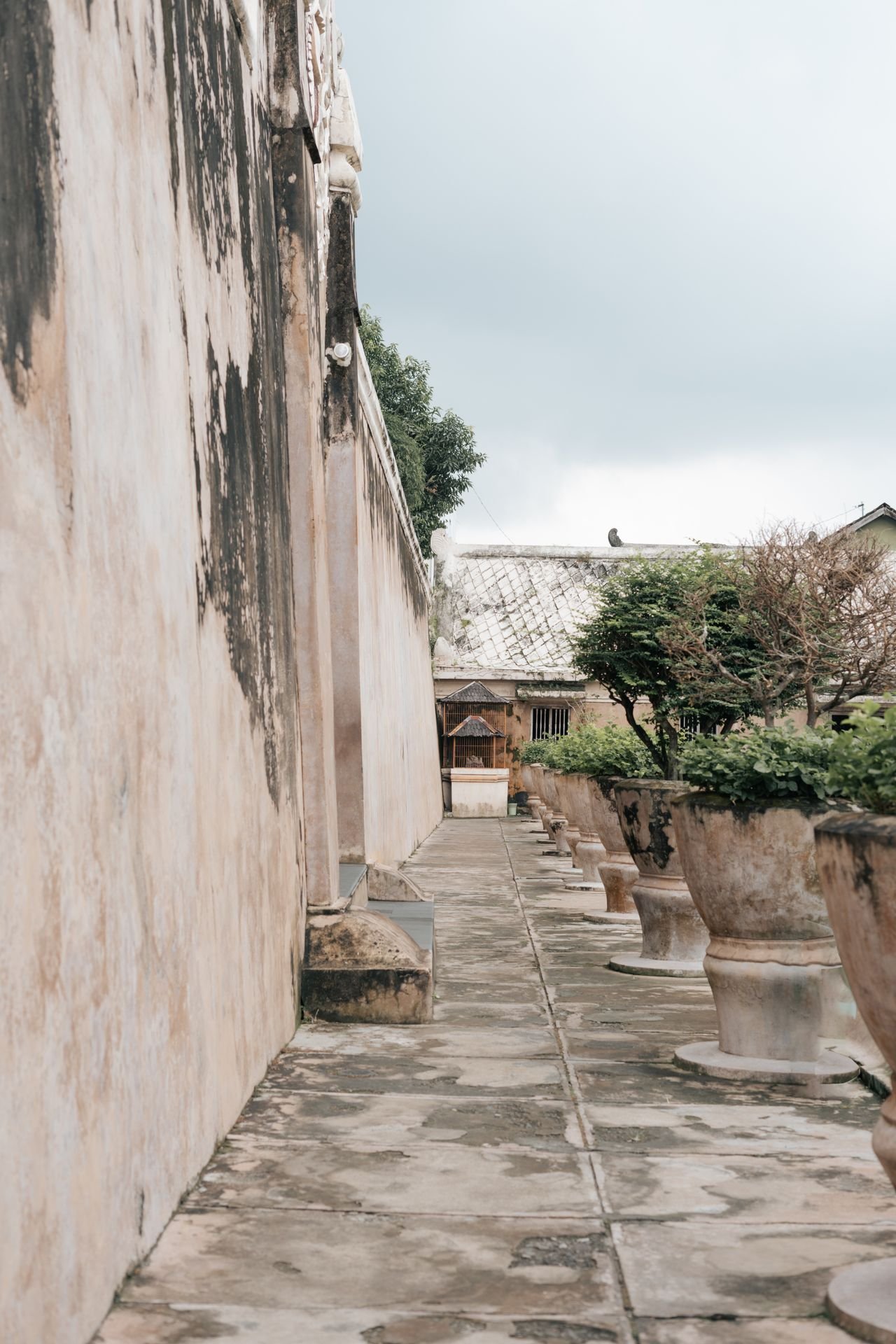
    Hidden among the narrow streets of Yogyakarta lies a historical attraction that once served as a private retreat for the royal family. Taman Sari Water Palace, a distinctive architecture the grandeur of the city’s royal past, known for its beautiful bathing pools and mysterious underground passages. Although much of the original complex no longer stands, its remaining structures continue to attract visitors interested in history, culture and photography.

    This ‘Water Palace’ offers a glimpse into the lifestyle of Yogyakarta’s sultans and their families centuries ago. From exploring the former royal bathing complex to discovering an unusual underground mosque, there is plenty to uncover as you wander through this historic site.

    The Story Behind This Royal Garden
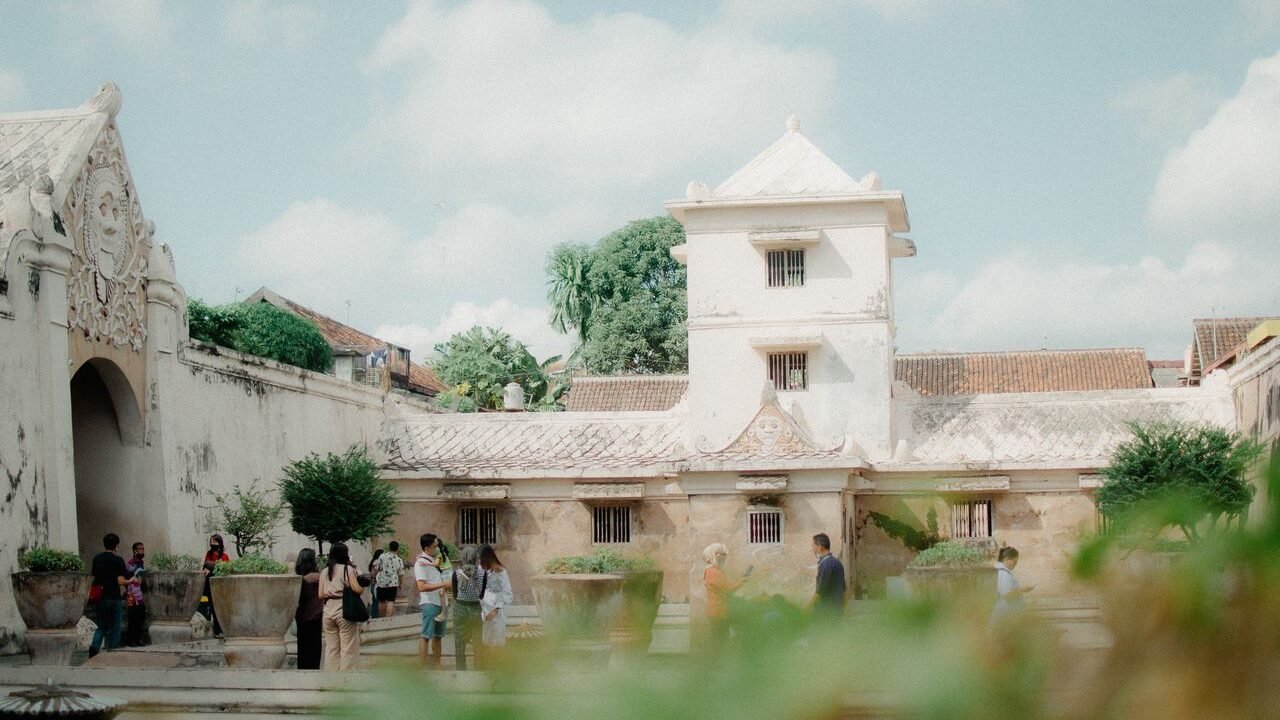
    Taman Sari was built during the reign of Sultan Hamengku Buwono I, with construction beginning around 1758 and major parts completed by 1765. The complex originally covered a much larger area, containing artificial lakes, islands, canals, gardens and buildings designed for the royal family’s leisure, spiritual activities and defence.

    Over time, earthquakes and periods of conflict damaged much of the complex, leaving only parts of its original structures intact. Restoration efforts have helped preserve several important sections, allowing visitors to appreciate its historical and architectural significance. Today, Taman Sari remains an important heritage site connected to the history of Yogyakarta’s royal court.

    What Makes Taman Sari Special?
    • A Glimpse into the Royal Lifestyle:
    The complex was designed for more than leisure, with areas dedicated to bathing, resting, meditation and protection for the Sultan and the royal family. Walking through its remaining courtyards and buildings gives visitors an idea of how different spaces served different purposes within the royal grounds.

    • Underground Passages and Hidden Spaces:
    Taman Sari is also known for its underground passages and enclosed structures. These spaces formed part of the complex’s original design and are associated with its religious and defensive functions. However, not every original passage remains accessible, so check which areas are open when you arrive.

    • A Living Heritage Neighbourhood:
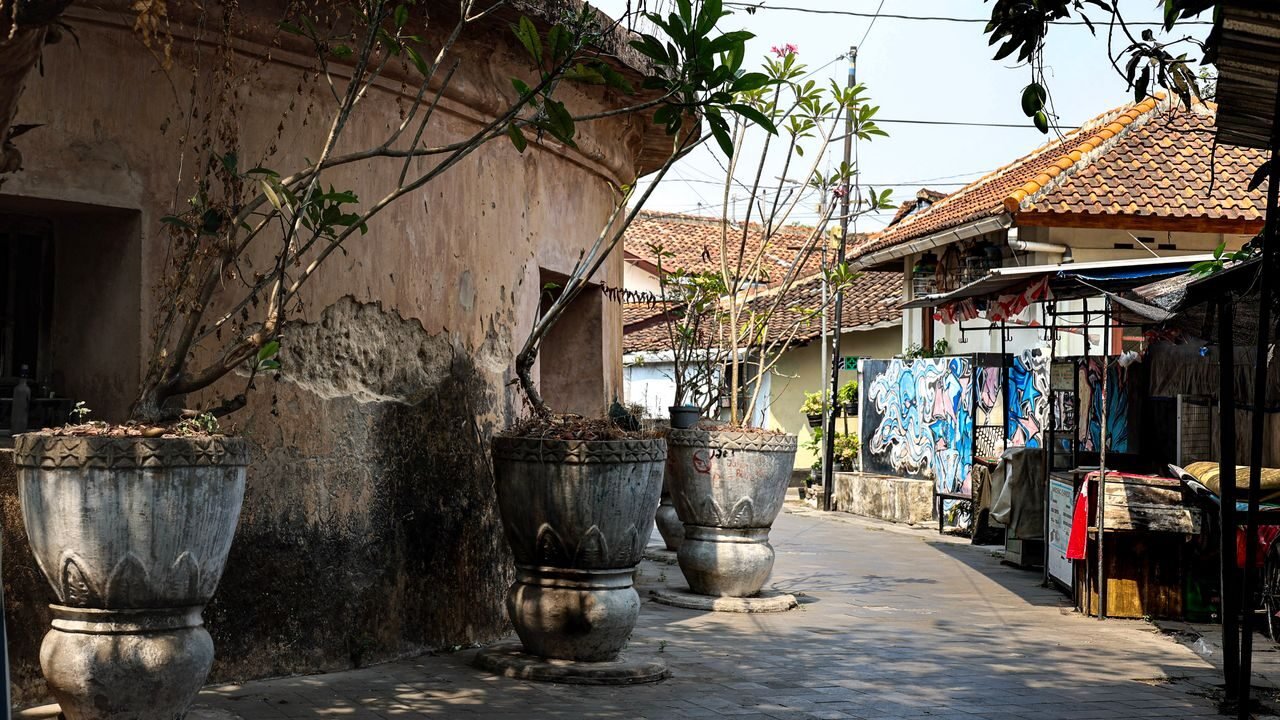
    Unlike historical attractions that stand apart from their surroundings, Taman Sari is closely connected to the local community. Residential lanes wind around and between sections of the former royal complex, creating a setting where heritage buildings exist alongside everyday neighbourhood life.

    Taman Sari’s Key Attractions
    • Umbul Binangun, The Royal Bathing Pools:
    This is one of Taman Sari’s most recognisable attractions that highlights several pools arranged within a walled courtyard, surrounded by decorative buildings, viewing platforms and distinctive water features. This helps visitors imagine how the bathing complex once functioned as part of the Sultan’s private retreat.

    • Gapura Panggung, The Historic Entrance Gate:
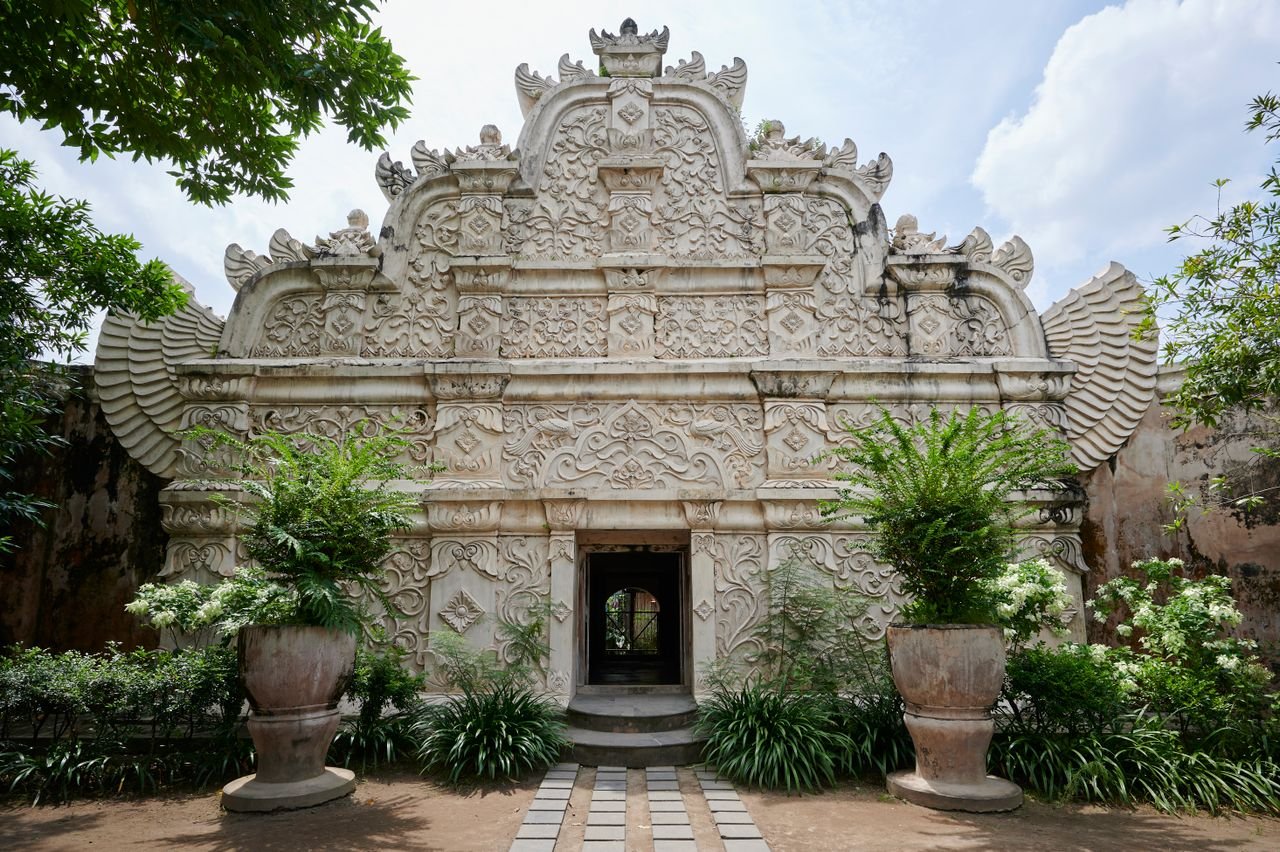
    Gapura Panggung is one of the notable gates within the Taman Sari complex. Its raised structure, decorative details and traditional design reflect the architectural character of the former royal garden.

    • Sumur Gumuling, The Underground Mosque:
    The enclosed design of this structure differs from the appearance of a typical mosque, making it one of the site’s most fascinating architectural features. Inside, a central open space is surrounded by curved walls and connected by stairways that meet at different levels.

    Your Route to Taman Sari
    Taman Sari is located in the Kraton area of Yogyakarta, southwest of the Sultan’s Palace. There are several ways on how you can get there;

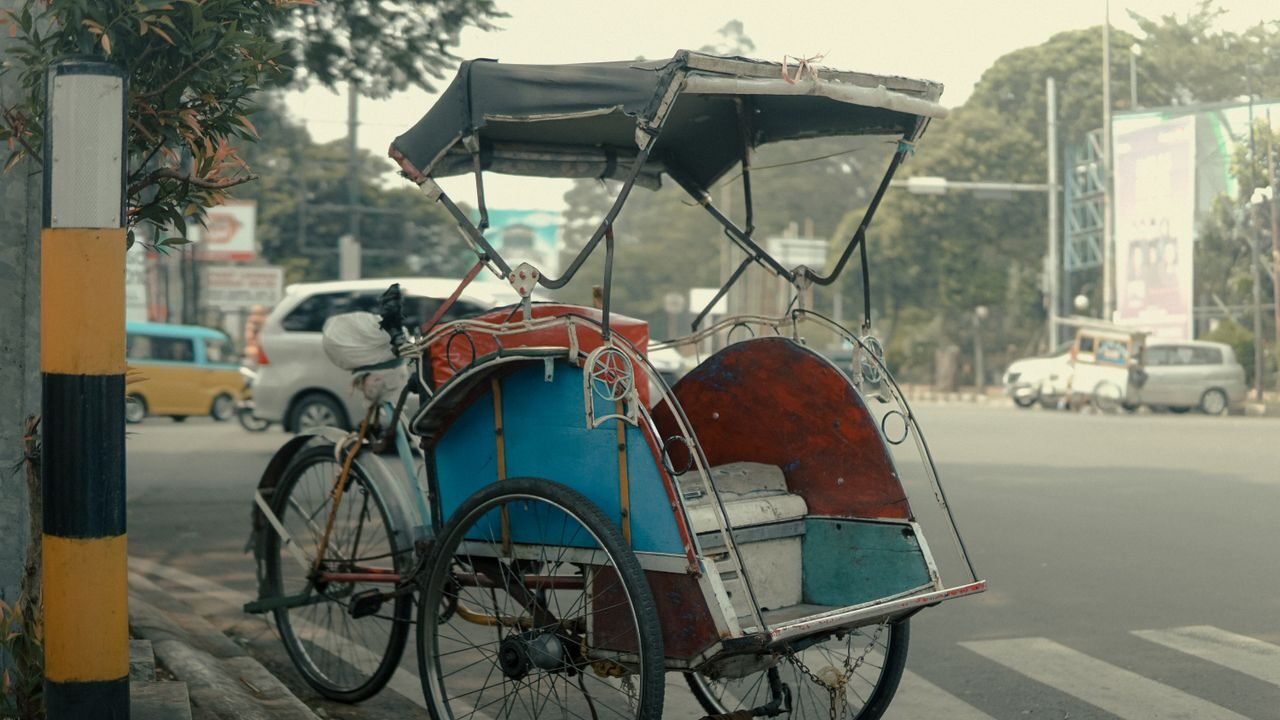
    • By becak: Traditional cycle rickshaws can be a pleasant way to travel through parts of central Yogyakarta. Agree on the fare before starting your journey.

    • By local transport: You can use local buses or other public transport serving the city centre, then continue by walking or local transport towards Taman Sari.

    • On foot from the Kraton: You can explore the surrounding historic district and continue towards Taman Sari on foot which may take about 10 to 15 minutes.

    📌 Fast Facts for Your Itinerary

    📍 Address: Patehan, Kraton, Yogyakarta City, Special Region of Yogyakarta 55133, Indonesia

    ⏰ Opening Hours and Entrance Fees: Open daily from around 9:00 AM to 3:00 PM. Admission prices can differ for Indonesian and international visitors, and certain services or guided tours may cost extra.

    📝 Reminder: Remember that local residents live around the historic complex so avoid blocking entrances or photographing people without permission.
  • Nusa Penida: Bali’s Spectacular, Untamed Island Sanctuary

    Nusa Penida: Bali’s Spectacular, Untamed Island Sanctuary

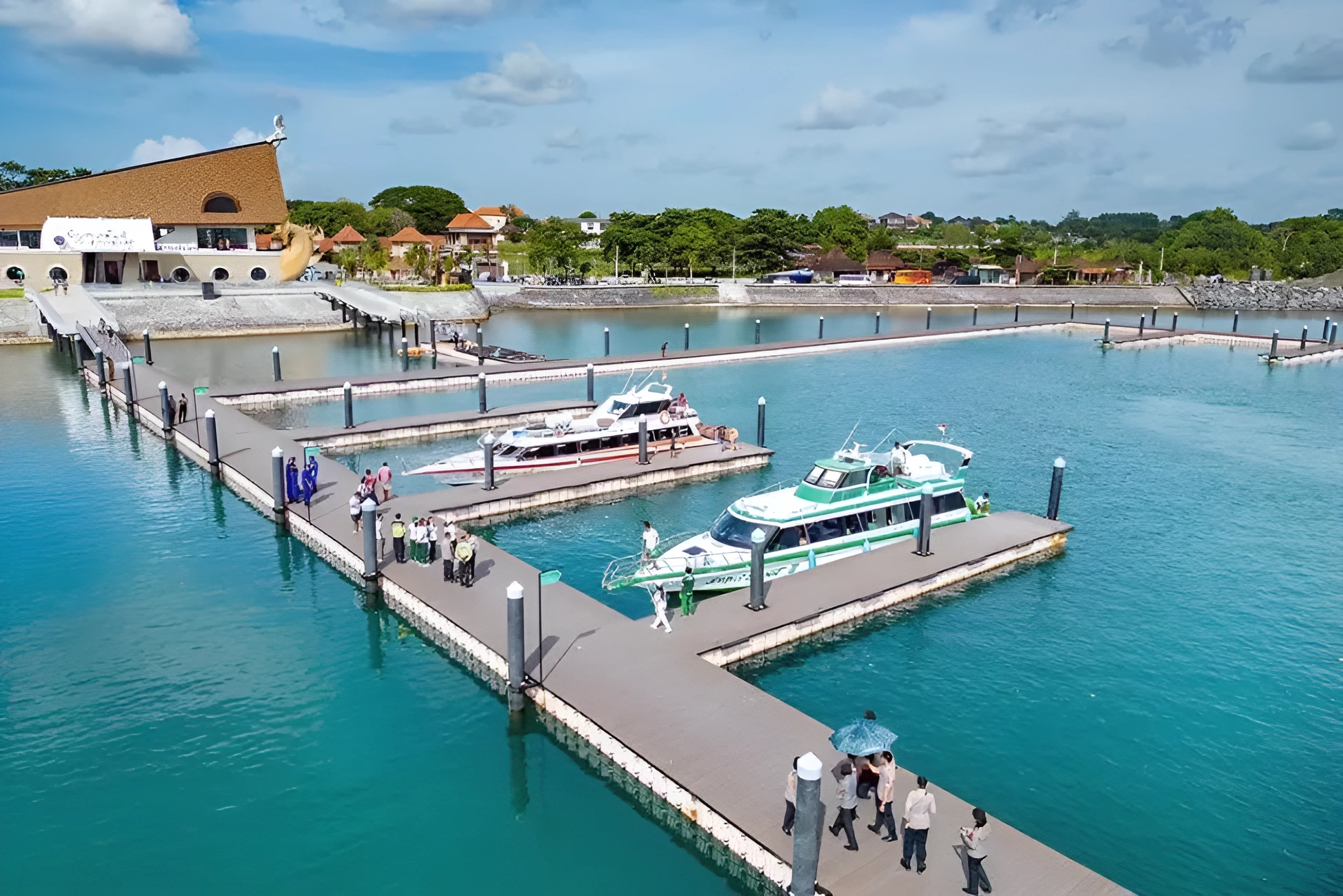
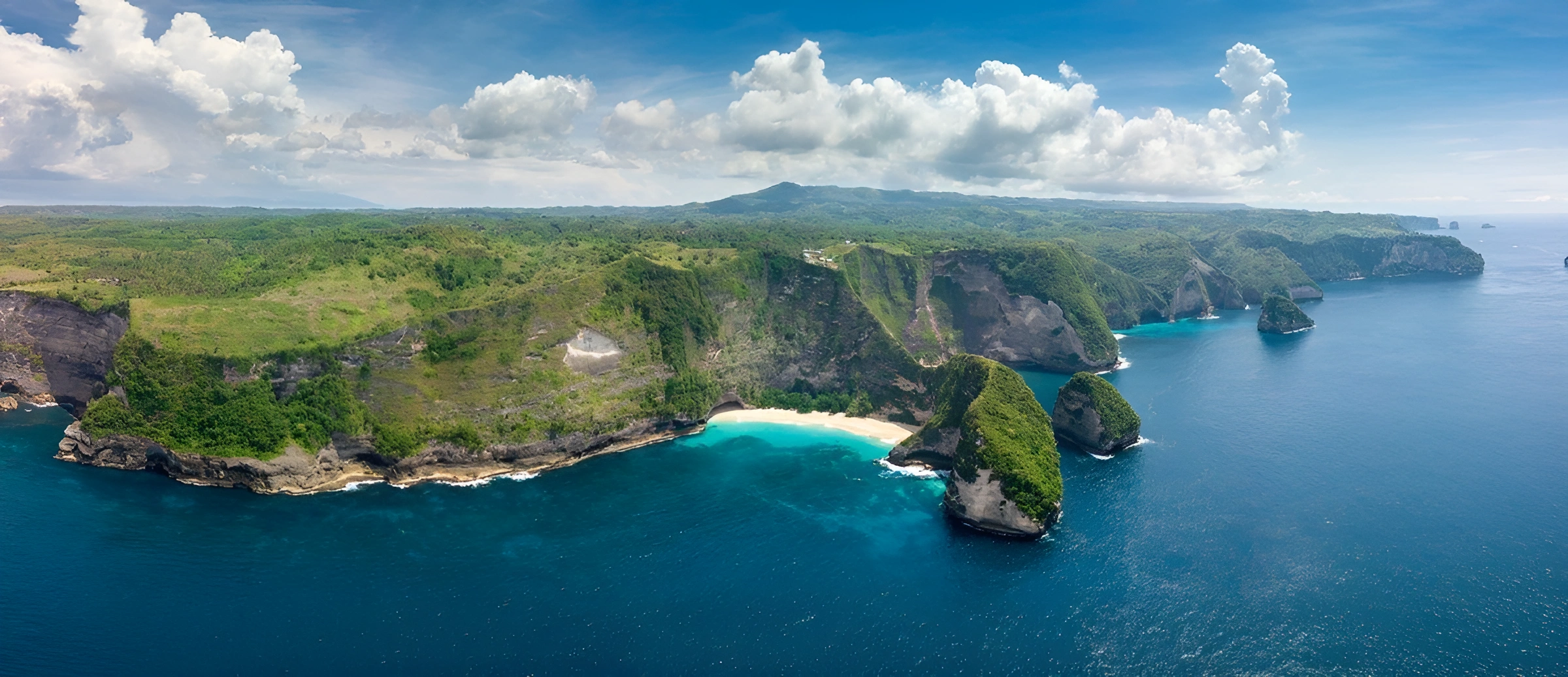
    Stepping off the sleek tourist speedboats at the bustling port of Sanur usually steers travelers toward the crowded beach clubs of Seminyak or the serene yoga studios of Ubud, but a far more raw and dramatic island frontier lies waiting just across the Badung Strait. Floating majestically as the largest of the three iconic Nusa islands, Nusa Penida is a jaw-dropping limestone sanctuary defined by towering vertical cliffs, hidden turquoise lagoons, and an rugged, adventurous energy. You can take a look at the latest island travel mandates on the Official Indonesia Tourism Portal.

    Fiercely contrasted against the highly commercialized main island, this raw paradise has experienced an unprecedented infrastructure boom under recent Indonesian tourism frameworks. It has beautifully transformed its narrow, winding island paths into accessible coastal highways while retaining its wild, epic nature-first spirit.

    Ready to conquer the world’s most famous dinosaur-shaped cliff view, descend epic staircases carved straight out of solid rock face, and swim alongside giant manta rays? Here is why this dramatic sanctuary belongs at the absolute top of your checklist.

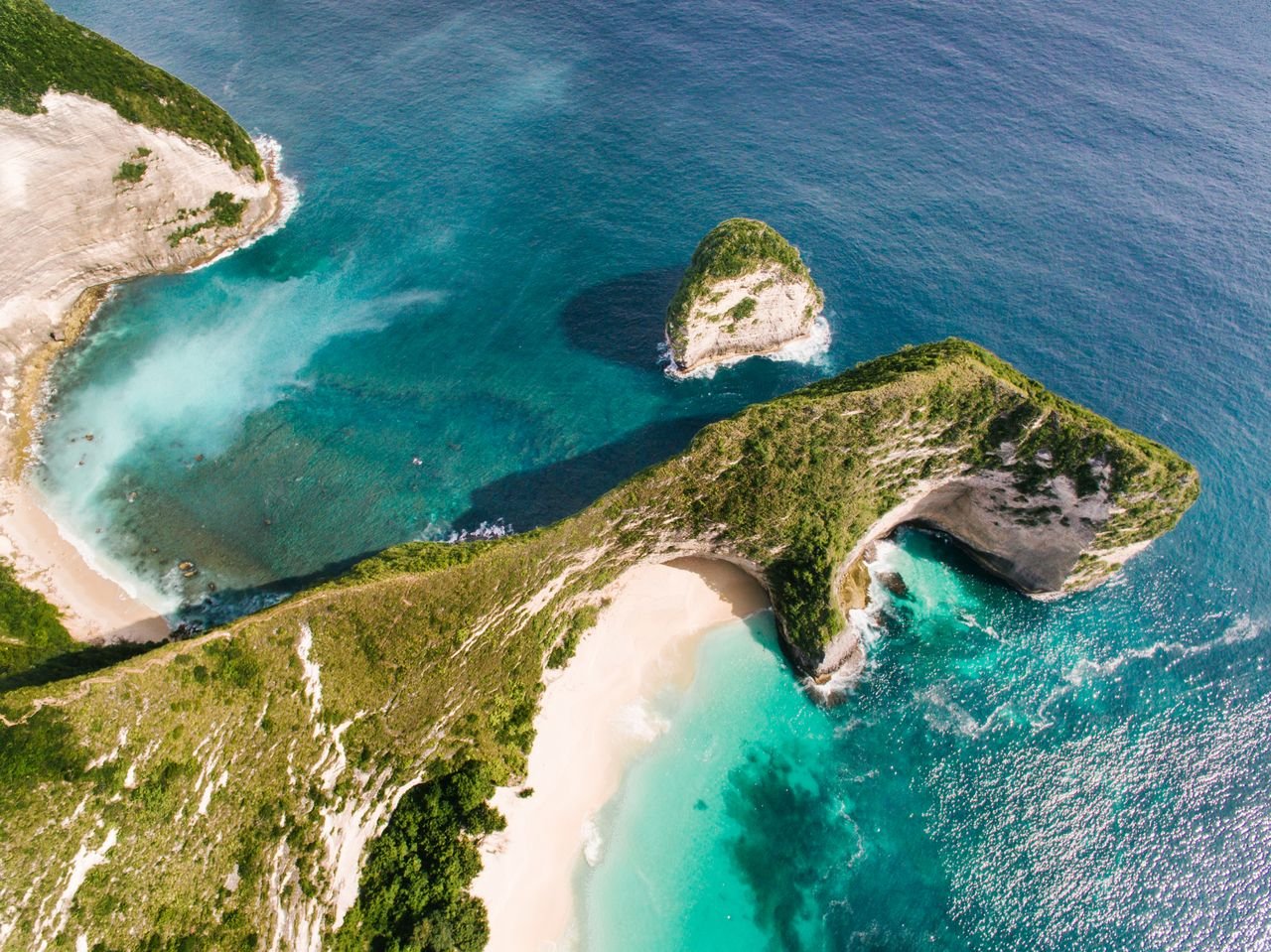
    Nusa Penida treats landscapes like a high-drama masterclass in raw, oceanic power. Unlike the flat sandy coastlines of mainland Bali, the geography here is a volcanic and tectonic battlefield of massive, towering limestone sea cliffs that drop vertically into the deep, churning currents of the Indian Ocean.

    Stepping onto the island trails puts you face-to-face with breathtaking structural topography. The interior is an undulating maze of dry, cactus-lined hills and deep jungle ravines, but the true magic unfolds along the edges. Squeeze your eyes on the sheer drops, and you will notice how the relentless waves have punched massive holes straight through coastal rock walls—creating natural bridges, emerald reflecting pools, and completely secluded crescents of powdery sand that feel completely untouched by modern civilization.

    What Makes It A Hit

    This craggy island titan continuously dominates social media feeds and captures the fascination of international globetrotters for several key reasons:

    • The Legendary T-Rex Viewpoint:
    The absolute hallmark of the island is the world-famous Kelingking Beach. The coastal headland features a bizarre, breathtaking limestone rock formation that looks exactly like the gaping jaws and curved spine of a Tyrannosaurus Rex, serving as the ultimate bucket-list photo spot.

    • The Diamond Beach Staircase:
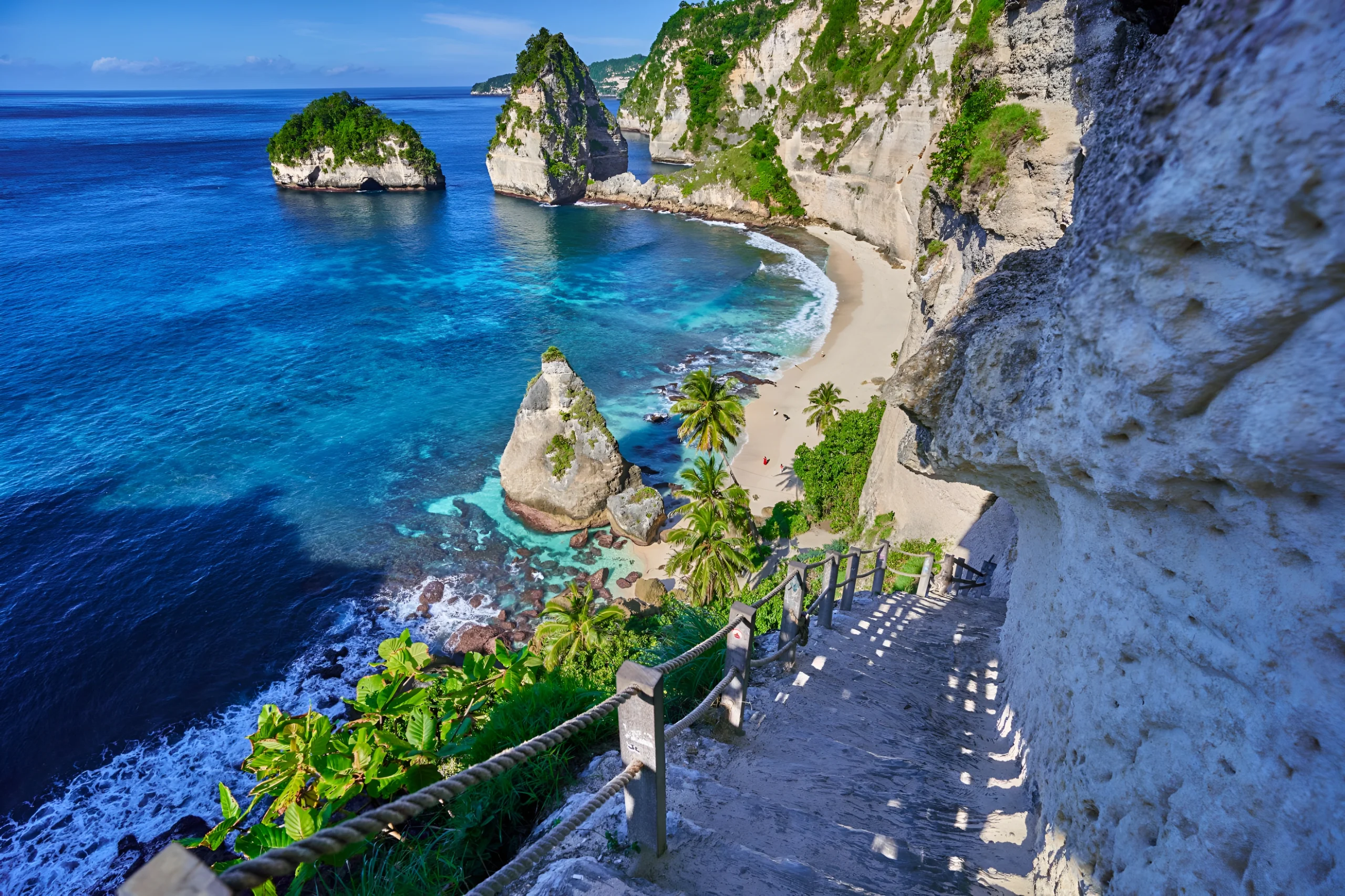
    Over on the east coast sits Diamond Beach, universally famous for its dramatic, jaw-dropping cliffside access. The community painstakingly carved a pristine white stone staircase directly into the sheer vertical cliff wall, allowing travelers to safely walk down into a postcard-perfect cove guarded by towering diamond-shaped rock stacks.

    • The Manta Point Marine Sanctuary:
    The ocean surrounding the southern cliffs is a globally revered marine protected zone. Nutritious, cold deep-sea swells rise right up along the reefs, creating an elite ecosystem where travelers can reliably snorkel and dive year-round alongside giant reef manta rays that span up to 5 meters in width. To review seasonal marine sightings and dive profiles, check the PADI Travel Nusa Penida Diving Guide.

    💡 Read Next: Ready to trade the high-drama sea cliffs and turquoise ocean lagoons of Bali’s rugged sibling for a peaceful walk through a giant, futuristic floating glass mosque? Head west across the Java Sea to check out our ultimate architectural guide to Bandung’s stunning Masjid Raya Al-Jabbar!

    Attractions to Experience

    Structuring your overland routes effectively splits the island into two distinct day loops—the wild West Coast and the photogenic East Coast:

    • Wander Into Angel’s Billabong:
    Head to the west coast to discover this spectacular natural rock infinity pool. The clear tide waters flow smoothly into a jagged limestone lagoon, letting you look straight through to the colorful sea floor while the ocean waves smash violently against the outer barrier wall.

    • Cross the Bridge at Broken Beach (Pasih Uug):
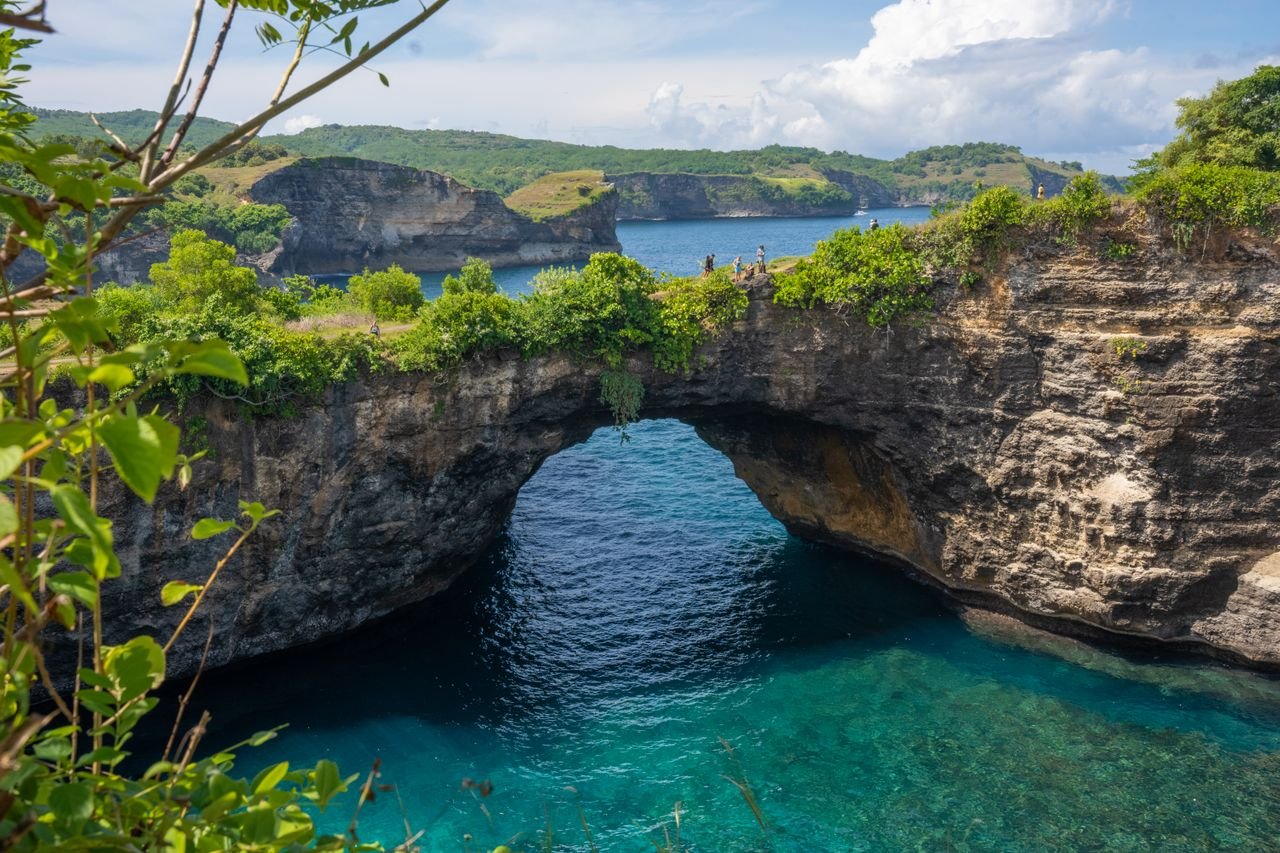
    Walk just a few paces past the Billabong to marvel at this geological wonder. The site is a massive, circular volcanic crater that has caved in, creating a perfectly round enclosed bay fed by a grand, arched natural stone bridge spanning the open sea entryway.

    • Browse the Thousand Islands Viewpoint:
    Journey to the rugged eastern edge to scale the rocky paths looking down at the Rumah Pohon Tree House enclave. The view treats you to a staggering panoramic vista of jagged emerald islets rising out of the turquoise sea, closely mimicking the scenery of Raja Ampat.

    📌 Fast Facts for Your Itinerary

    📍 Gateway Location: Sanur Harbour (Mainland Transit Terminal), Denpasar, Bali, Indonesia

    ⏰ Optimal Visiting Strategy: The island is breathtaking year-round; however, planning your overland loop for the dry season window between April and October guarantees smooth sea transits and dry, secure walking paths down the steep cliff coves.

    🎫 Mandatory Conservation Levies: Stepping onto the island requires a nominal regional tourism fee of IDR 25,000 (approx. RM7) per adult collected at the arriving ports. Individual parking and basic trail admission tokens at major viewpoints like Kelingking typically cost around IDR 5,000 to IDR 10,000.

    🛵 Pro-Tip: While renting a scooter is popular for backpackers on the main island, Nusa Penida’s inner mountain roads are notoriously steep, narrow, blind, and winding. For maximum safety and air-conditioned relief from the intense tropical sun, hire a professional private local driver with a car package for your daily loops—it is incredibly affordable, ensures you reach the coves smoothly, and lets you rest between intense cliff climbs!

  • Tawangmangu: The Beauty of Mount Lawu

    Tawangmangu: The Beauty of Mount Lawu

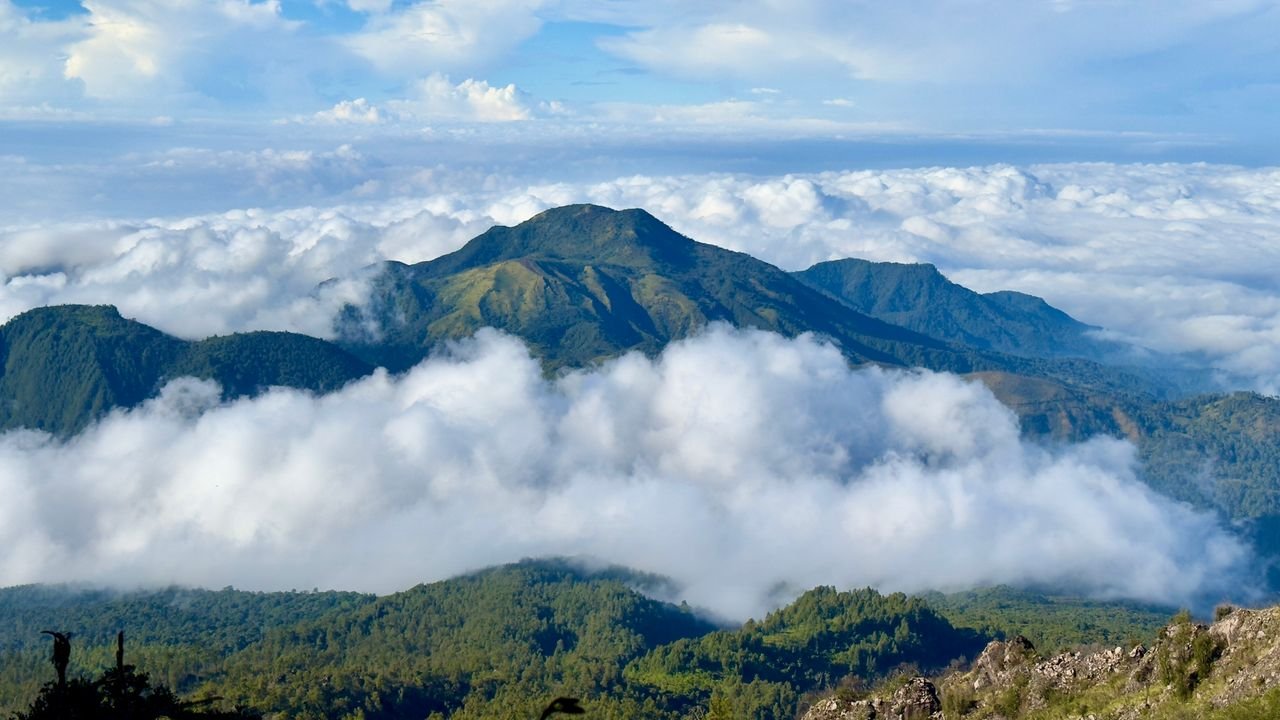
    Tucked away on the slopes of Mount Lawu in Karanganyar Regency, Central Java, Tawangmangu is known for its cool mountain air, lush greenery and beautiful natural surroundings. Its landscape combination of forested hills, flowing waterfalls, agricultural areas and scenic mountain roads offers visitors a refreshing change from the busy atmosphere of Indonesia’s larger cities.

    Despite the geology of the location, Tawangmangu is more than a place to enjoy the mountain scenery. The surrounding Karanganyar region is also home to several tea plantations and distinctive highland attractions. Whether you’re exploring natural landscapes, learning about Java’s cultural heritage or simply enjoying a cooler environment, Tawangmangu offers several experiences worth adding to your Central Java travel plans.

    What Makes Tawangmangu Worth Visiting?

    • A Refreshing Escape in the Mountains:
    One of Tawangmangu’s biggest appeals is its cooler highland environment. Its position on the slopes of Mount Lawu gives the area a different atmosphere from the warmer lowland cities of Java. Misty hills, forested surroundings and fresh mountain air contribute to its reputation as a popular weekend retreat for people seeking a break from everyday routines.

    • A Collection of Waterfalls:
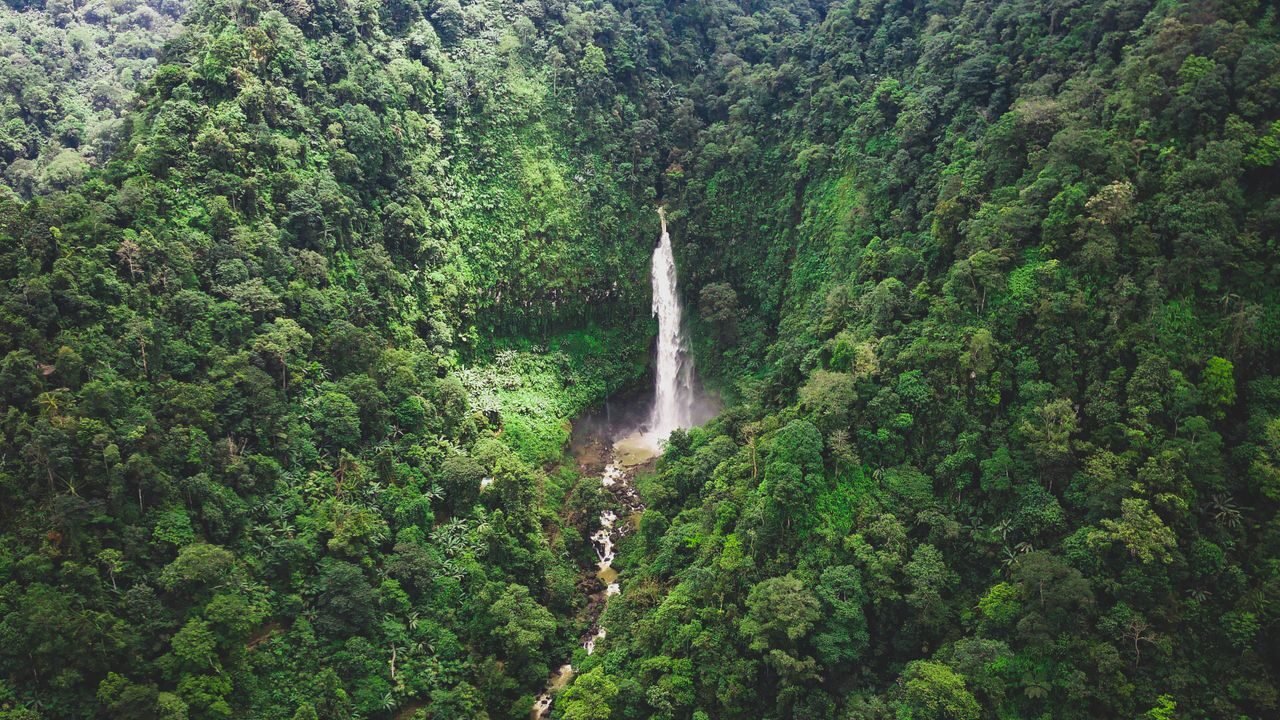
    The mountainous landscape around Tawangmangu supports around 6 to 10 distinct waterfalls, with Grojogan Sewu being the best-known. These waterfalls give Tawangmangu a distinctive highland character, where the sounds of rushing water and the cool forest atmosphere provide a refreshing contrast to the busier lowland areas of Central Java.

    • Scenic Tea Plantations and Highland Villages:
    The wider Karanganyar highlands feature green tea plantations, agricultural landscapes and villages that reflect the area’s connection with the land. Kemuning Tea Garden, located in the neighbouring Ngargoyoso area, is a popular addition to trips around Tawangmangu. Its rolling rows of tea bushes provide a different landscape from the forest trails and waterfalls closer to town.

    Places to Visit Here

    • Grojogan Sewu Waterfall:
    Standing at around 81 metres tall, Grojogan Sewu Waterfall plunges down a rocky cliff surrounded by thick tropical greenery, creating a striking scene against the forested slopes of Mount Lawu. Despite the name that means ‘a thousand waterfalls’, the waterfall is not made up of a thousand separate cascades. It is also related to a well-known myth, that unmarried couples who cross the bridge together may eventually break up before reaching marriage.

    • Kemuning Tea Garden:
    For a different side of the highlands, head towards Kemuning Tea Garden in the neighbouring Ngargoyoso area. The green rows spread across rolling slopes, creating a scenic landscape that contrasts with Tawangmangu’s forested waterfall areas. The surrounding area also has cafés offering visitors a place to pause for refreshments while enjoying the views.

    • Sakura Hills Tawangmangu:
    Sakura Hills is a themed tourist park that combines mountain scenery with Japanese-inspired decorations and photo spots. Located in the western slope of Mount Lawu, it offers a more designed visitor experience than the region’s natural waterfalls and historic temples. The park feature facilities such as themed photography areas, Japanese-style costumes and other recreational attractions.

    📌 Fast Facts for Your Itinerary

    📍 Trip from Solo (Surakarta): Takes about 1-2 hours by car or public bus across a distance of roughly 40 kilometers east up the slopes of Mount Lawu

    ⏰ Best Time to Visit: The dry season from April – October for the best visibility, and comfortable conditions for hiking Mount Lawu or visiting waterfalls like Grojogan Sewu Waterfall

    🎫 Pro-Tip: Make sure to check the opening hours and fees included. Entry prices and operating schedules may change, especially during holidays or local events.

  • A Journey Through Time at Indonesia’s National Museum

    A Journey Through Time at Indonesia’s National Museum

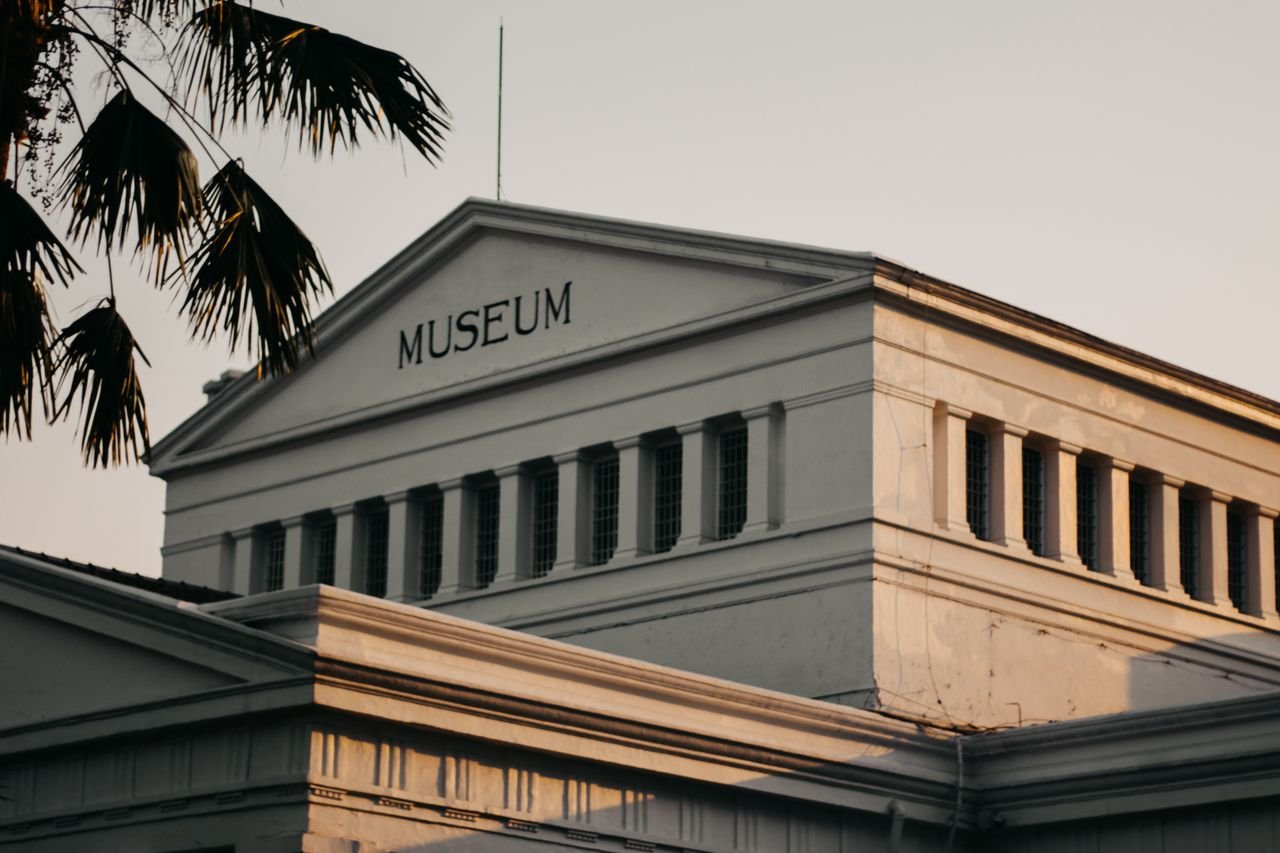
    Exploring Jakarta does not have to be all about shopping centres, modern landmarks and busy city streets. If you would like to experience a different side of the capital, consider visiting the National Museum of Indonesia. This cultural attraction introduces visitors to the country’s fascinating past through collections of historical artifacts, archaeological discoveries and traditional objects.

    The museum provides a closer look at the many cultures and civilisations that have influenced Indonesia throughout the centuries. You can learn about ancient kingdoms, admire traditional craftsmanship and discover how different communities developed their own customs and ways of life. It is a worthwhile addition to your itinerary if you want to balance city sightseeing with a little history and cultural exploration.

    The History Behind the National Museum of Indonesia

    The National Museum of Indonesia traces its origins to 24 April 1778, when a Dutch scholarly organisation was established in Batavia, now Jakarta, to study science, history and culture. As its collection grew, a dedicated museum building was constructed in 1862 and opened to the public in 1868.

    After Indonesia gained independence, the museum became an important institution for preserving the country’s heritage. Officially named the National Museum in 1979, it continues to showcase historical artefacts and archaeological discoveries that reflect Indonesia’s rich past and cultural diversity.

    What Makes This Museum Worth Visiting?

    en.wikimedia.org

    • Indonesia’s Diverse Cultural Heritage:
    Indonesia consists of thousands of islands, each with its own traditions, languages and cultural influences. The National Museum offers an opportunity to explore this diversity in one place through displays of traditional clothing, ceremonial objects, weapons, household items and other cultural artifacts.

    • Experience an Interactive Museum Visit:
    The National Museum has introduced updated exhibition spaces and interactive experiences to make history more accessible to modern visitors. One of its highlights is ImersifA, an immersive multimedia experience that uses visual and audio elements to present aspects of Indonesian history and culture in a more engaging format.

    • Stories Behind Historical Objects:
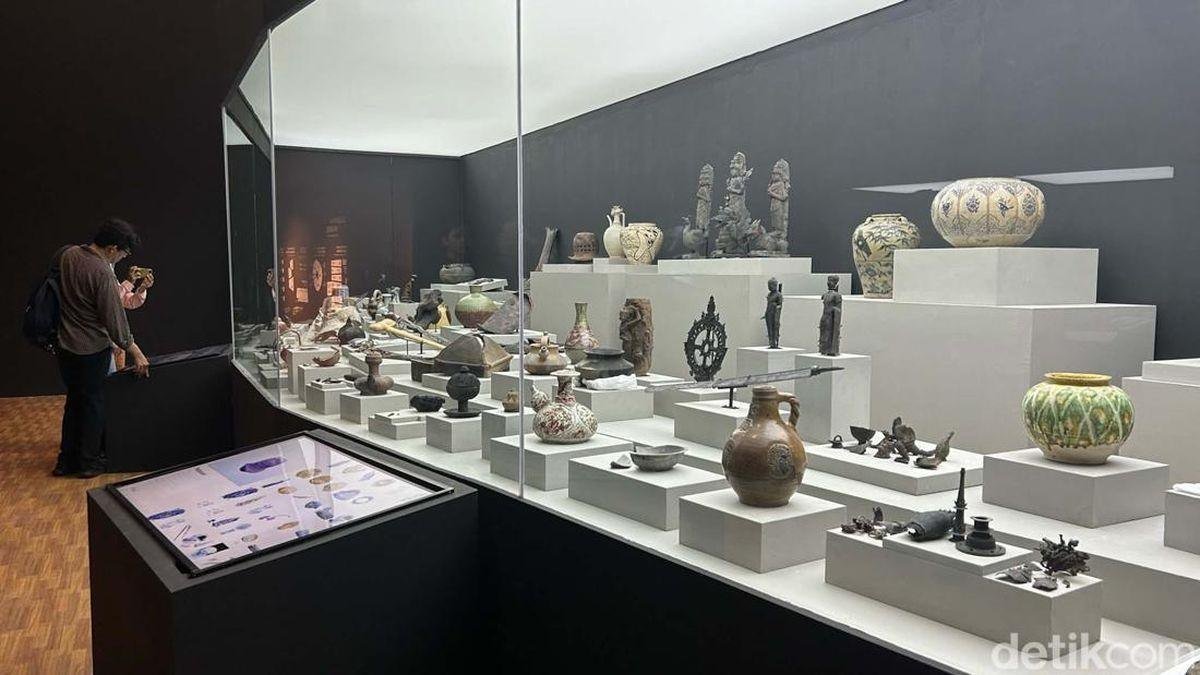
    Beyond grand statues and valuable artefacts, smaller objects can reveal fascinating details about everyday life in the past. The museum’s collections include ceramics, coins, jewellery, traditional tools and historical items that reflect trade, craftsmanship and changing social customs.

    Must-See Exhibits at the National Museum

    commons.wikimedia.org

    • The Bronze Elephant Statue:
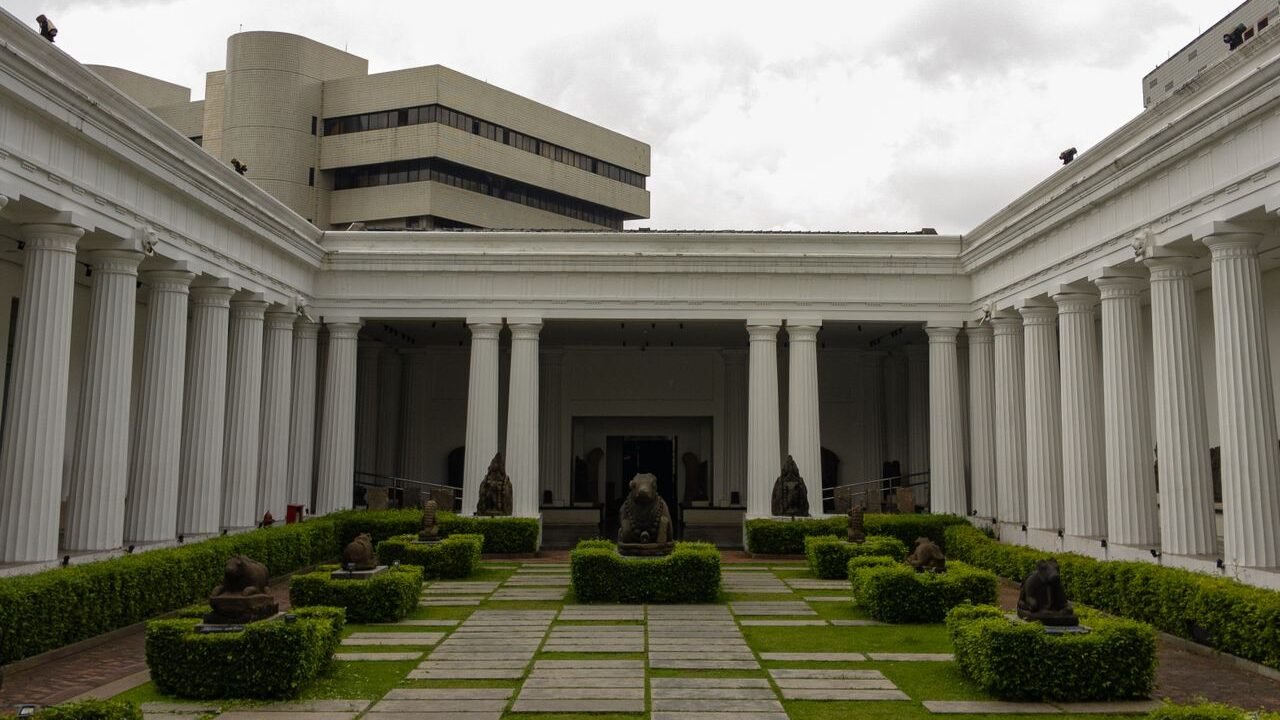
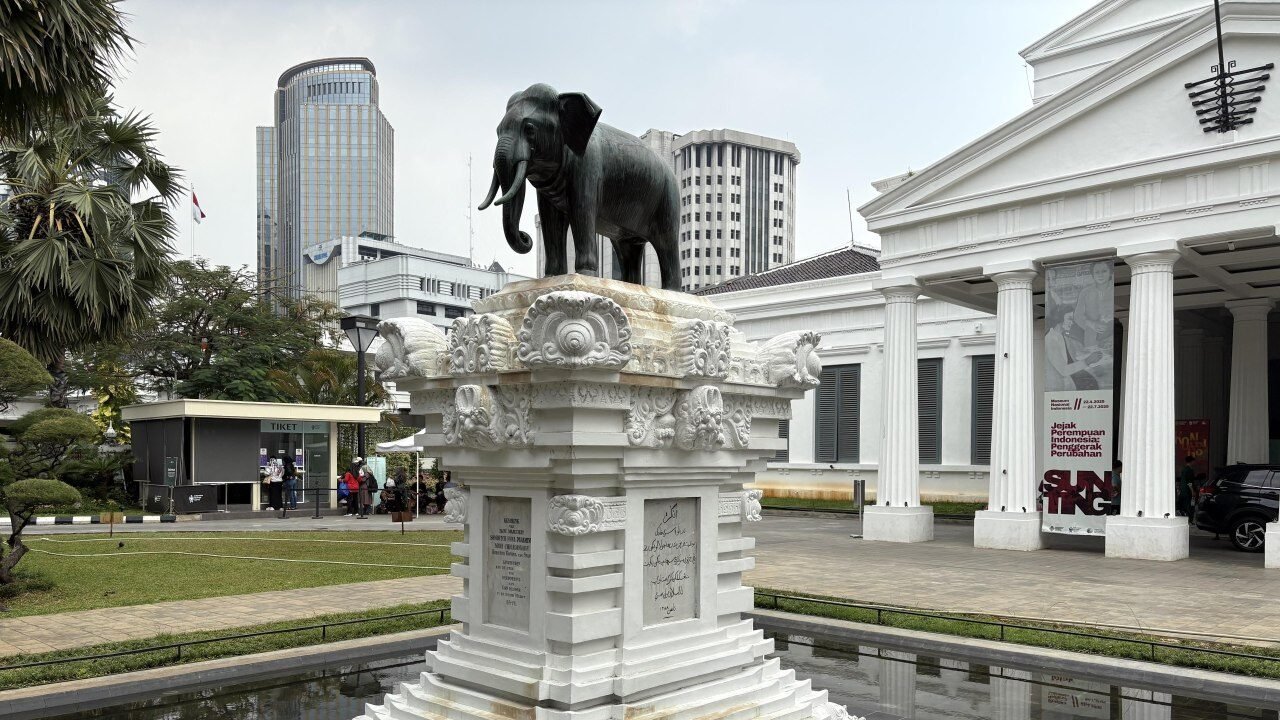
    Before entering the exhibition galleries, take a look at the bronze elephant statue in the museum courtyard. This well-known landmark is the reason many people call the building Museum Gajah. The statue is a reminder of the museum’s long history and its connections with the wider region.

    • Traditional Textiles and Cultural Objects:
    Indonesia is well known for its textile traditions, including batik and woven fabrics produced by communities across different islands. The museum’s cultural collections help visitors appreciate the variety of materials, patterns and techniques used in traditional clothing and decorative items.

    • ImersifA Immersive Gallery:
    ImersifA offers a more modern museum experience. Its multimedia presentation combines visual effects and sound to create an engaging way of learning about Indonesian history and culture. Consider checking the latest ticket conditions since the experience may require a separate ticket in addition to the regular museum admission.
    Check out this video by AA Notes on Youtube for a closer look at the experiences that await you.

  • The Gili Islands: Three Gems in the Indonesian Sea

    The Gili Islands: Three Gems in the Indonesian Sea

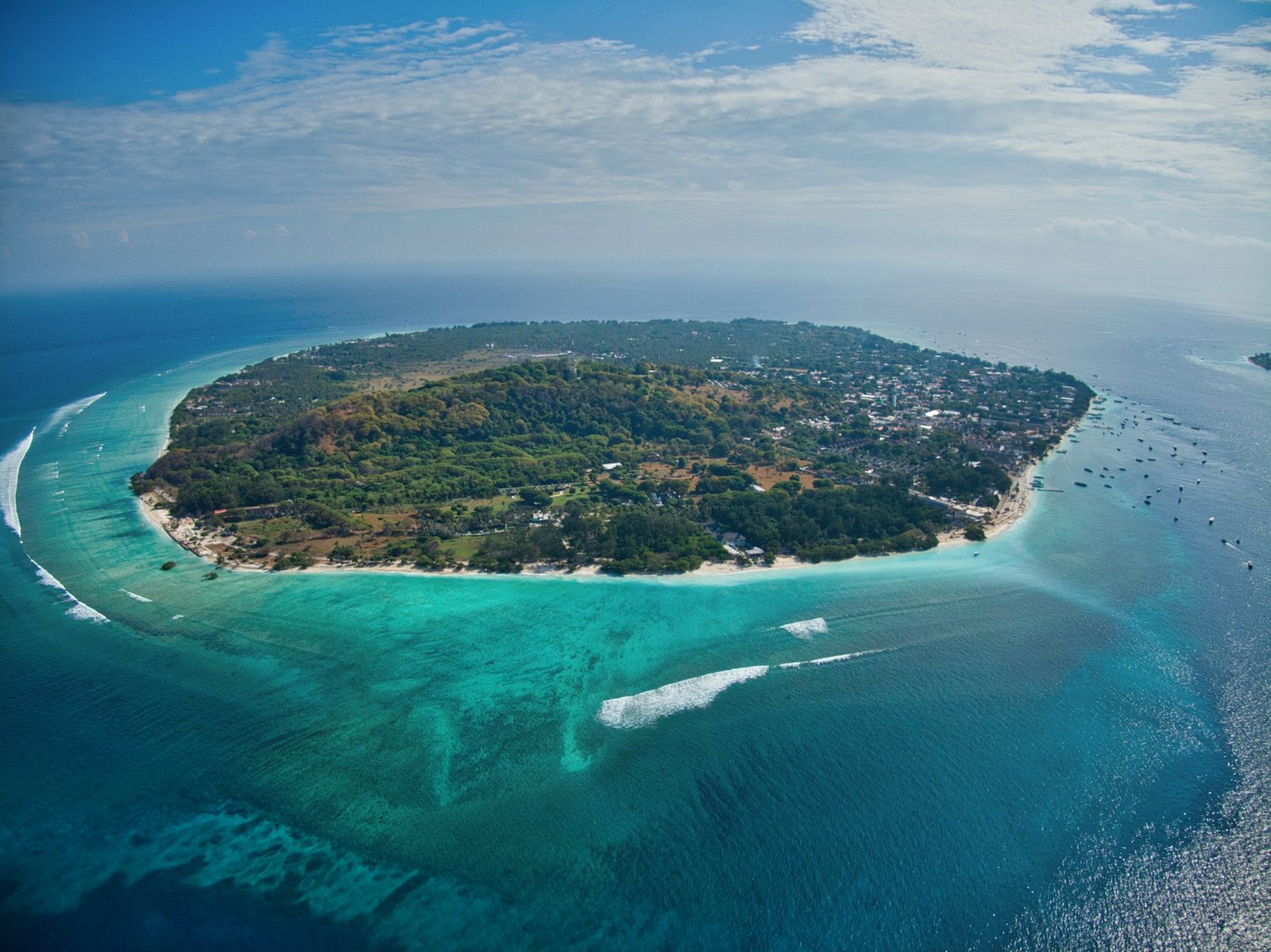
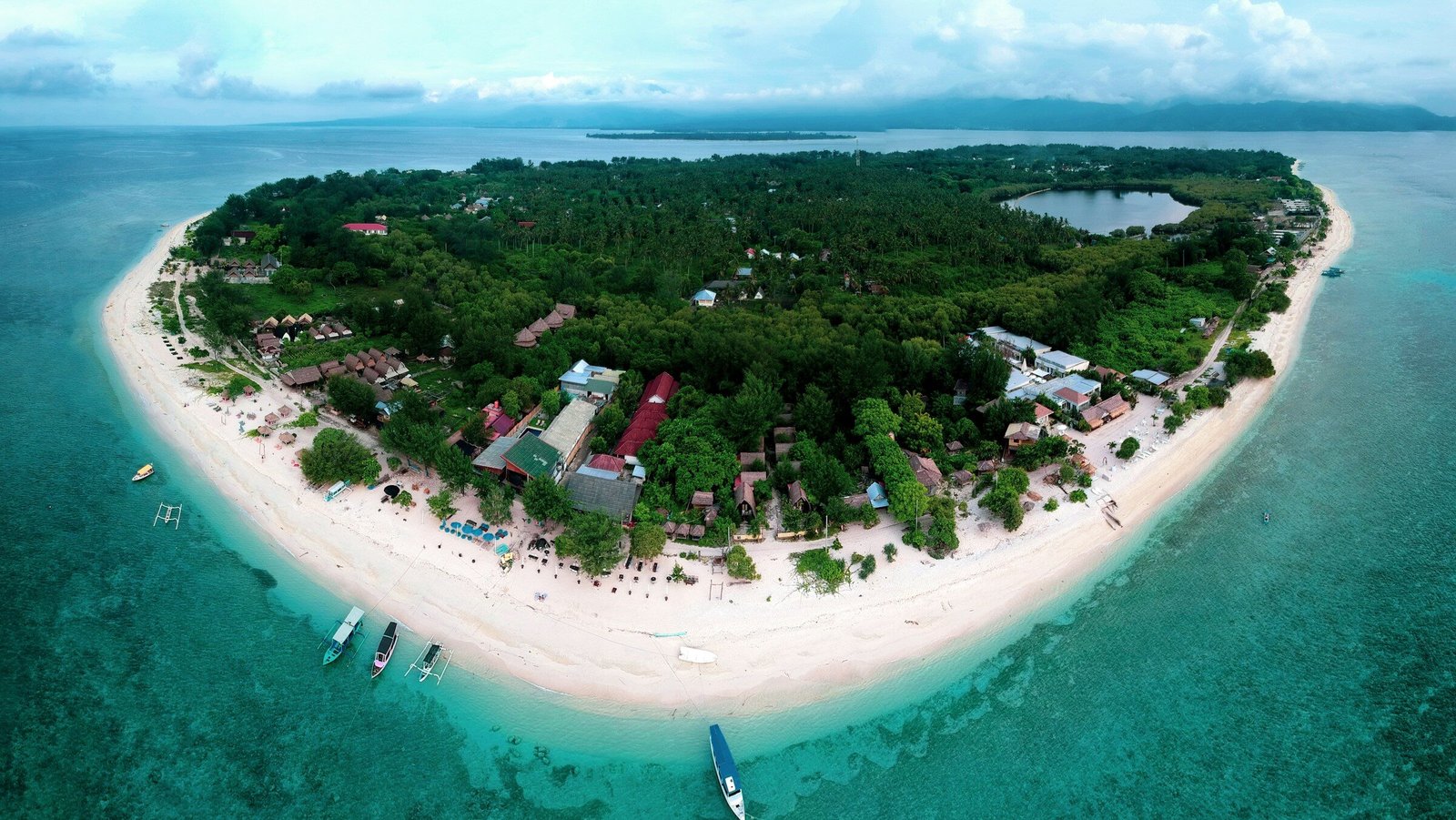
    The Gili Islands are a popular island destination off the northwest coast of Lombok, Indonesia. Known for their clear waters, sandy beaches and opportunities for snorkelling and diving, they are an appealing choice for travellers who want to enjoy a tropical holiday surrounded by nature.

    The destination is made up of three main islands: Gili Trawangan, Gili Meno and Gili Air. Although they are located close to one another, each offers a different atmosphere and range of experiences. Understanding their differences can help you decide which island best suits your travel plans.

    What Makes The Gili Islands Special?

    • Turtle Sanctuary:
    The waters surrounding the Gili Islands are widely known as the “turtle capital of the world” due to their thriving populations of wild Green and Hawksbill sea turtles. The islands’ coral reefs and seagrass beds provide food and shelter for these marine animals, while the surrounding waters form part of a wider ecosystem shared by Bali and Lombok.

    • Underwater Sculpture Garden:
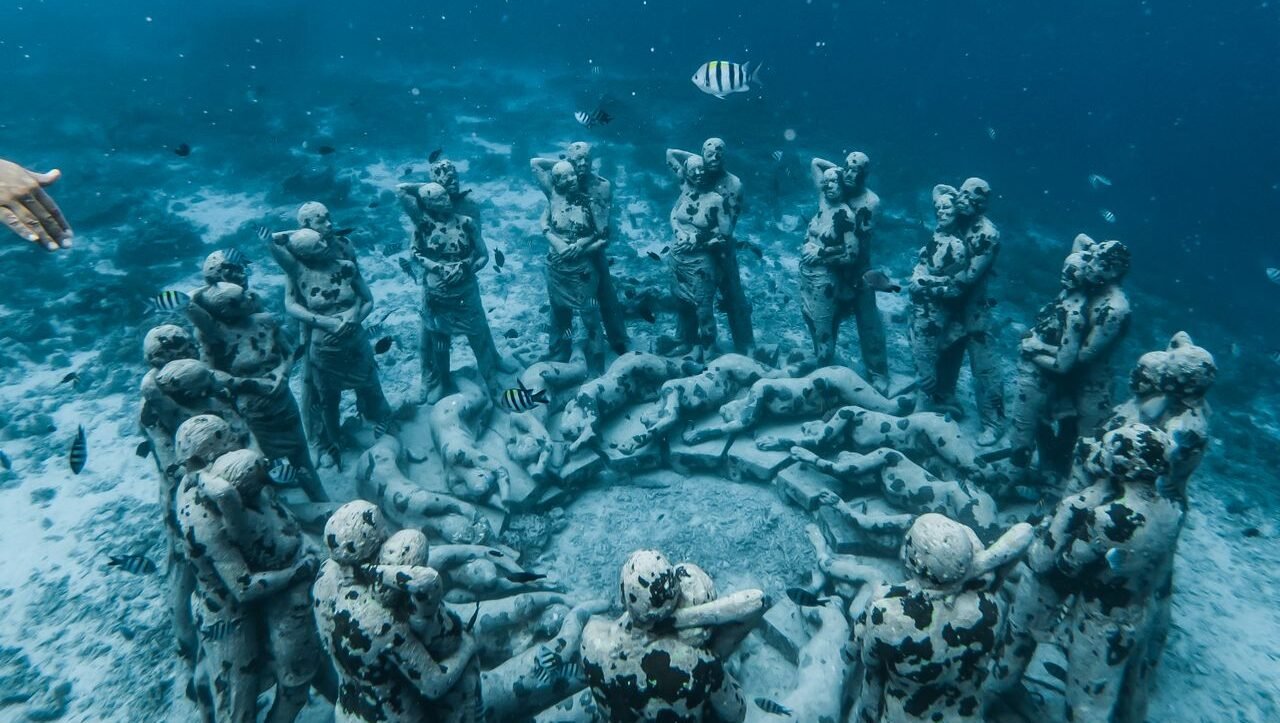
    ‘The Nest’ is one of the Gili Islands’ most distinctive landmarks. Located near Gili Meno, this underwater sculpture installation was created by a British artist, Jason deCaires Taylor in 2017. It features 48 life-sized human figures arranged in a circular formation on the seabed that symbolises the connection between humanity and nature.

    • Motorized Vehicle-free Environment:
    Unlike many popular island destinations, the Gili Islands have developed without conventional cars or motorbikes as part of everyday transport. Motorized vehicles such as cars, motorbikes and trucks are completely banned by local regulation across all three islands. To keep the islands quiet, safe, and free of pollution, the only way to get around is by walking, cycling or using a traditional horse-drawn cart (cidomo).

    Get to Know The Gili Islands

    Although the islands share similar tropical scenery, each has its own character. Choosing the right one can make a difference to the kind of holiday you enjoy.

    • Gili Trawangan:
    The largest and liveliest of the three islands, attracting travellers who enjoy a more social and active atmosphere, accompanied by a wider selection of accommodation, restaurants, beach bars and diving centres. The island is a good choice for groups of friends, solo travellers and anyone who wants plenty of activities alongside their beach holiday.

    • Gili Meno:
    This island is generally the quietest of the three islands. Its slower pace makes it appealing to couples and honeymooners who enjoys leisure beach walks, peaceful afternoons and snorkelling excursions. Visitors can also explore the underwater sculpture garden, ‘The Next‘.

    • Gili Air:
    Between the lively atmosphere of Gili Trawangan and the quieter setting of Gili Meno, this island offers a middle ground. It has beachside cafés, restaurants, accommodation and diving centres, while retaining a laid-back island feel. It is also the closest of the three islands to mainland Lombok.

    Things to Experience

    • Snorkel Around Coral Reefs and Sea Turtles:
    Join a guided boat trip to explore coral reefs and tropical fish or swim alongside wild green and hawksbill sea turtles feeding on seagrass. Some tours visit several spots around the three islands in a single trip, while others focus on particular areas.

    • Visit the Underwater Sculpture Garden:
    If you want an experience that feels different from a typical beach holiday, make time for The Nest near Gili Meno. The circle of human figures beneath the water creates an unusual sight, especially when viewed from above while snorkelling.

    • Try Island-Hopping:
    One of the best ways to appreciate the Gili Archipelago is to explore more than one island during your stay. Public boats and private transfers connect the islands, making it possible to visit all three in one trip. However, staying overnight allows you to explore at a more leisurely pace.

    (Reminder: Touching,chasing marine animals within the Gili Islands is

    📌 Fast Facts for Your Itinerary

    📍 Trip from Lombok: It takes just 5 to 15 minutes by speedboat from northern Lombok harbors, and about 45 minutes via the public slow ferry

    ⏰ Best Time to Visit: During the dry season from May to September that offers a balance of sunny weathers, calm sea and managable crowds.

    💡 Pro Tip: Always check your boat schedule since services can be affected by weather and sea conditions. Confirm your departure time and harbour in advance, and avoid booking a flight too soon after your return boat journey.

  • Glodok Chinatown: Jakarta’s Hidden Heritage Food & Cultural Hub

    Glodok Chinatown: Jakarta’s Hidden Heritage Food & Cultural Hub

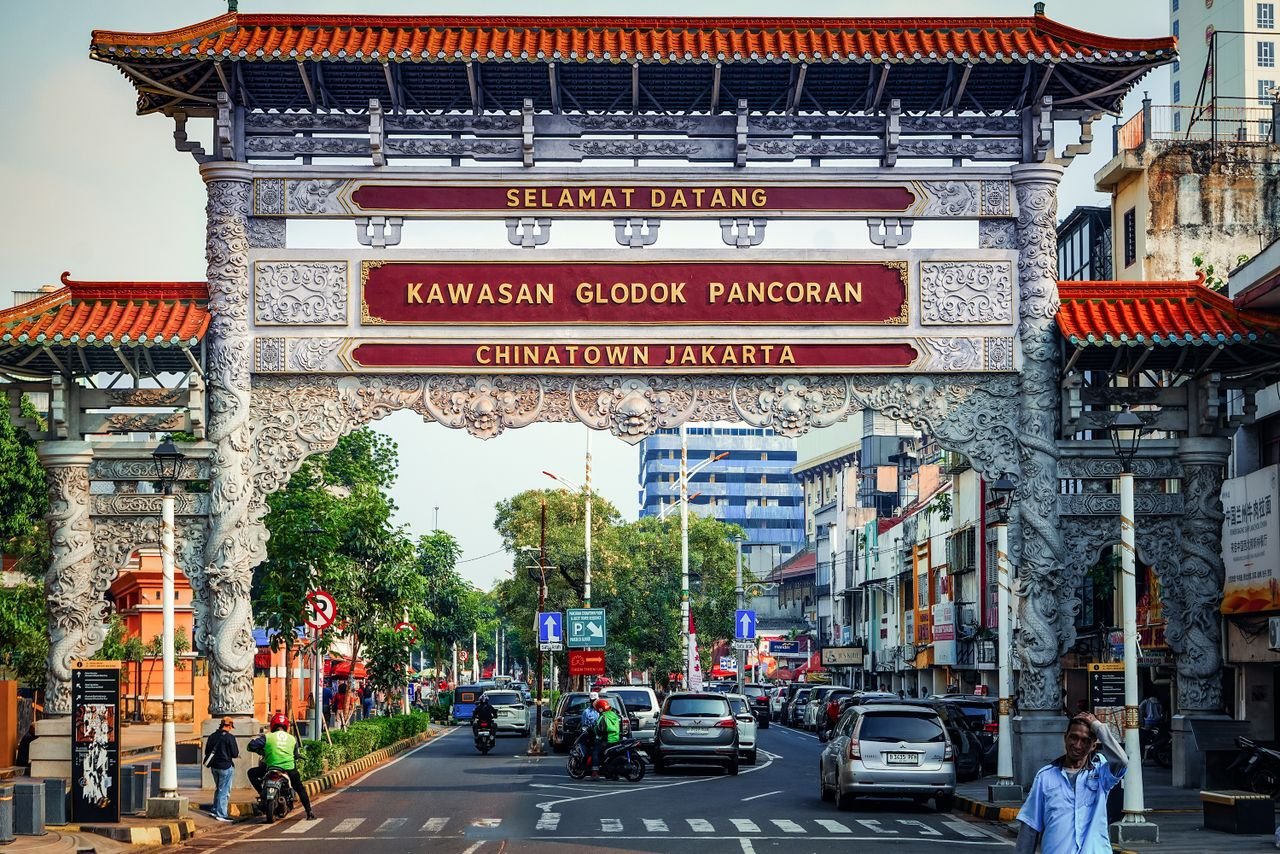
    Trading the towering modern steel skyscrapers of central Jakarta for a walk down the narrow, spice-scented alleyways of the old city center unveils a completely different side of the Indonesian capital. Dating back to the Dutch colonial era of the 1740s, Glodok Chinatown is the oldest and largest Chinese enclave in Indonesia, serving as a high-energy maze of historic temples, hidden wet markets, and legendary culinary gems.

    Anchored beautifully right on the edge of the old Batavia district, this lively neighborhood has completely revitalized its heritage infrastructure. Fusing deep Peranakan culture with vibrant modern street-style community squares, it is a bustling, aromatic playground where old-school medicine shops sit right beside trendy, youth-led coffee bars.

    If you are ready to wander down secret food alleys, stand inside incense-filled shrines built centuries ago, and dive into Jakarta’s best street food, here is why Glodok deserves a premier spot on your itinerary.

    Glodok Chinatown is a thrilling, multi-sensory journey through time that stands out sharply against Jakarta’s glassy corporate blocks. The district was originally created by the Dutch East India Company following the historical unrest of 1740, confining the city’s Chinese population to this commercial pocket outside the old walled city.

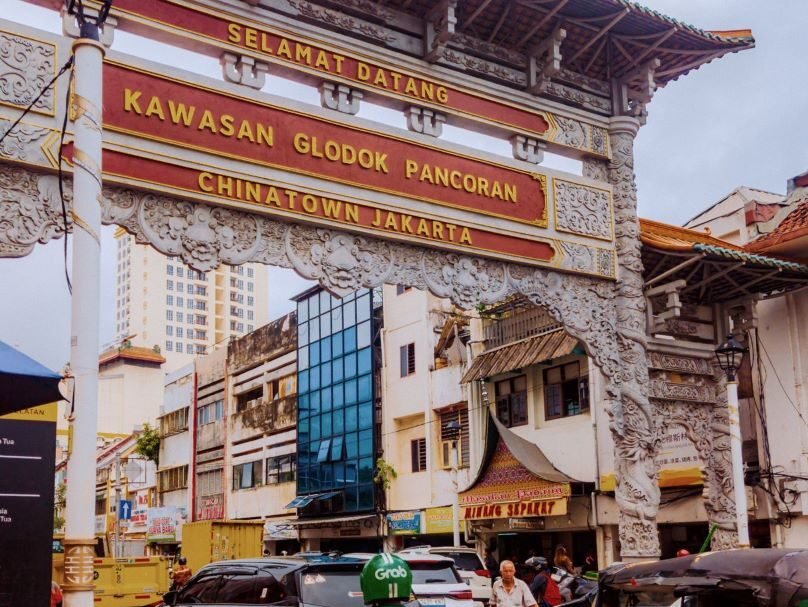
    Stepping into the neighborhood today rewards you with an incredibly fluid architectural and cultural tapestry. The main thoroughfare of Jalan Pancoran is a lively, open-air marketplace filled with red-tiled roofs and strings of lanterns. Ducking off the main road pushes you directly into tight, historic wet markets like Petak Sembilan, where vendors trade everything from fresh herbal teas and exotic produce to traditional calligraphy brushes, while the deep, comforting hum of chanting monks echoes from nearby Taoist and Buddhist sanctuaries.

    The Reasons Behind Its Hype

    source: indonesianomads.com

    This historic cultural enclave continuously captures the imagination of foodies, photographers, and history buffs for several key reasons:

    • The Ultimate Fusion Food Hub:
    Glodok is universally legendary for its culinary diversity. It serves as a living archive of Chinese-Indonesian (Peranakan) cuisine, where centuries-old family recipes are prepared side-by-side with local Betawi street snacks.

    • The Petak Enam Revival:
    Keeping the neighborhood highly attractive for younger travelers, the community recently launched Petak Enam di Kalilio—a gorgeous, open-air heritage courtyard built inside an old building. It blends classic Chinese architecture with modern indie food stalls, live acoustic music, and highly photogenic design corners.

    • The Upgraded Glodok MRT Station:
    Navigating to this historic northern zone has become incredibly fast and smooth. With the continuous multi-phase expansion of the Jakarta MRT system, travelers can easily hop on a train from central areas like Bundaran HI and step off right into the heart of the Chinatown precinct, completely bypassing Jakarta’s notorious street traffic. Feel free to review the official MRT Jakarta portal to look up live fares, train frequencies, and network maps to plan your journey.

    💡 Read Next: Ready to trade the sensory food alleys and vibrant red temples of Jakarta’s Chinatown for a majestic, translucent marvel floating on a massive lake? Head east across Java to explore our ultimate guide to Bandung’s futuristic Masjid Raya Al-Jabbar!

    What You Can Experience Here

    source: megapolitan.antaranews.com

    Structuring your morning or late afternoon walking tour across the district yields a stellar sequence of cultural and lifestyle stops:

    • Pay Respects at Jin De Yuan (Vihara Dharma Bhakti):
    Settle into the district’s oldest Taoist temple, built originally in 1650. It remains the spiritual heart of the community, featuring gorgeous sweeping roof ridges and elaborate wood carvings wrapped in columns of soothing incense.

    • Sip History at Pantjoran Tea House:
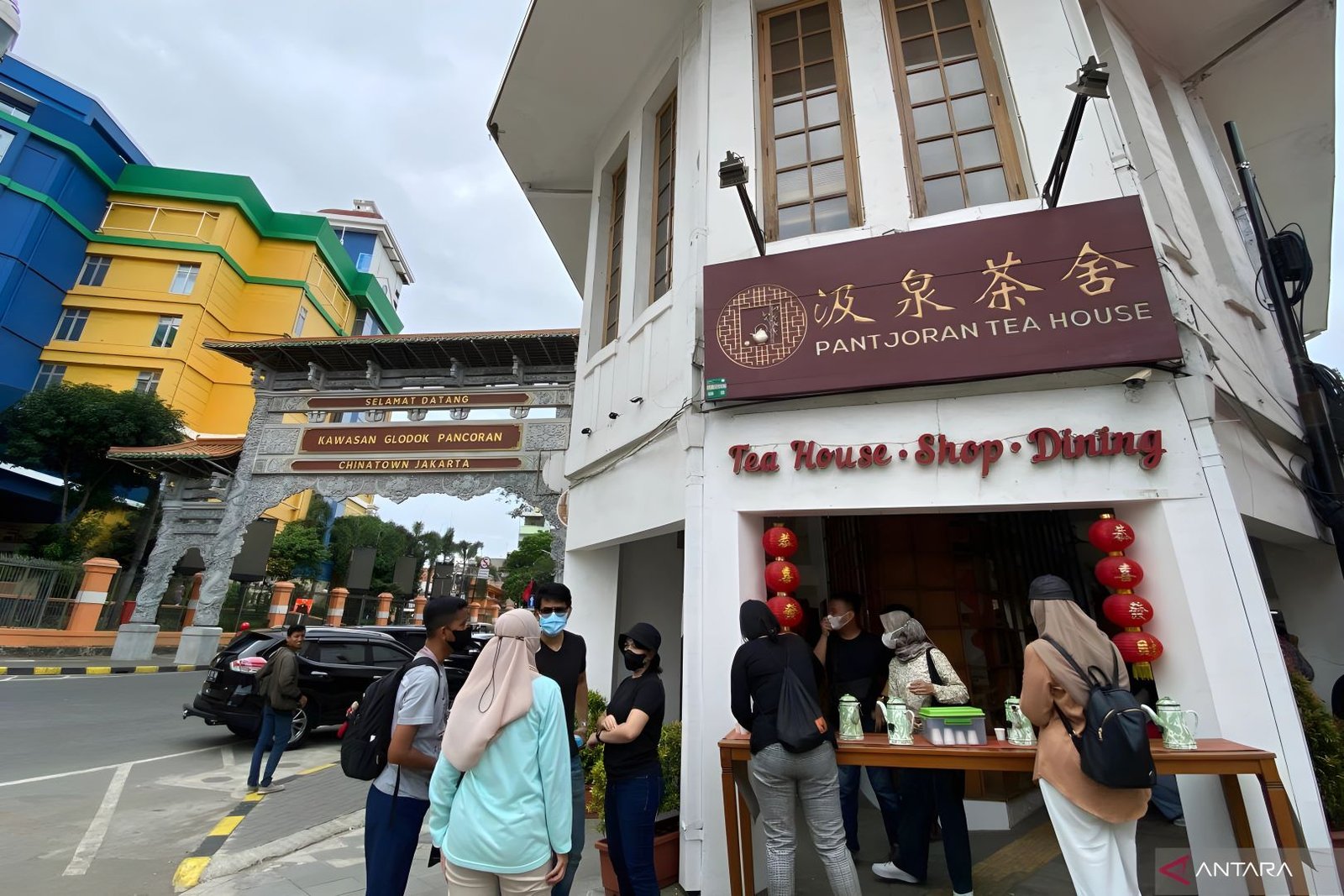
    Stop right at the gateway corner to visit this beautifully restored historic building. True to a decades-old neighborhood tradition known as Patekoan, the tea house sets out free pots of hot herbal tea outside its doors daily for parched travelers and workers passing by. Click here to read the Glodok’s fascinating and deeply satisfying background story that will definitely enrich your visit.

    • Explore the Gang Gloria Food Trail:
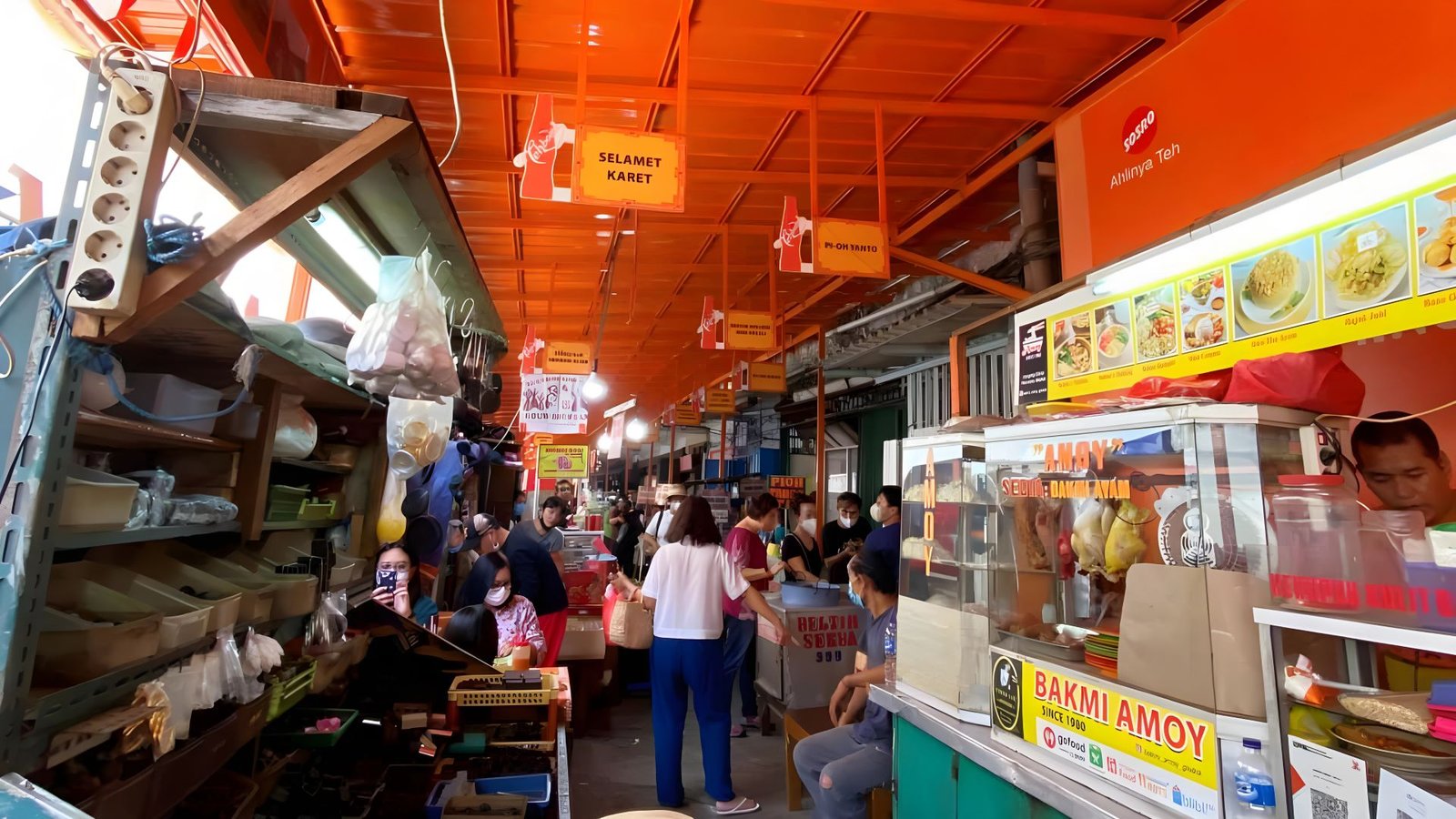
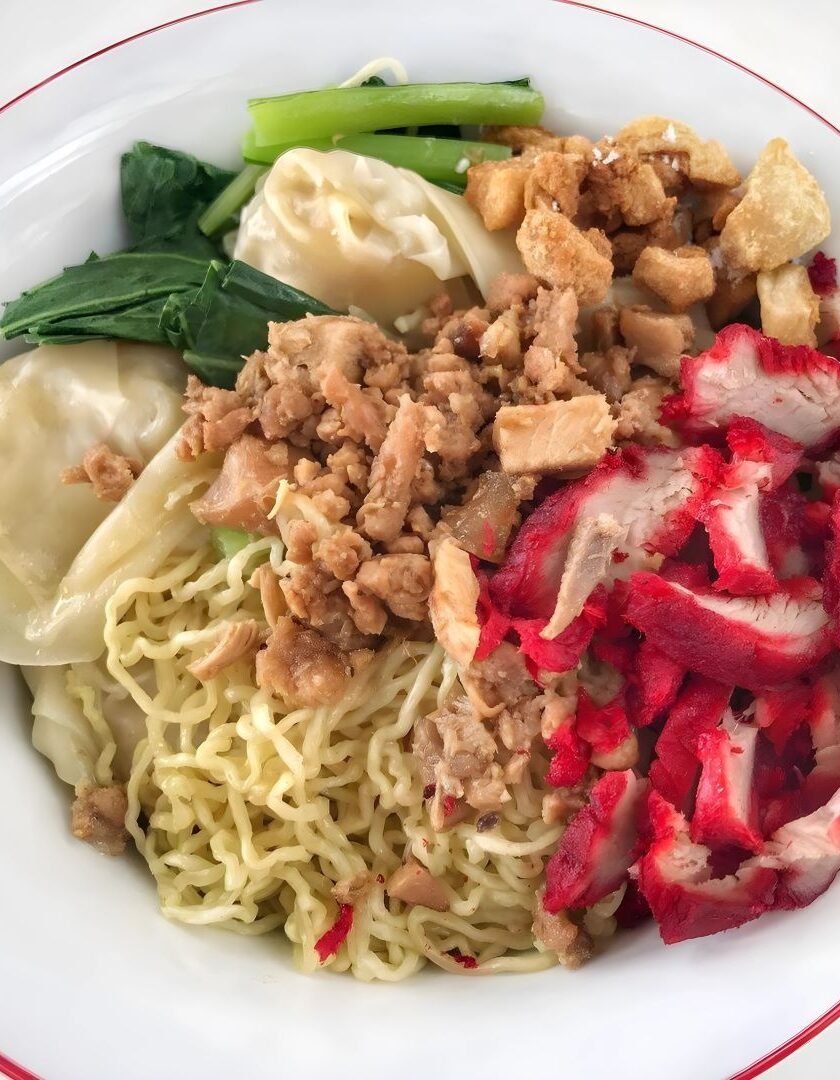
    Squeeze into Gang Gloria, the absolute holy grail for Jakarta street food hunters. Here, you can sample legendary culinary items like Bakmie Amoy (savory tossed noodles), crisp Cakwe (fried dough twists), and the iconic, robust brew at Kopi Es Tak Kie—a legendary coffee shop serving locals since 1927.

    source: nibble.id

    📌 Fast Facts for Your Itinerary

    📍 Address: Jl. Pancoran, Glodok, Taman Sari, Kota Jakarta Barat, DKI Jakarta 11120, Indonesia

    ⏰ Operating Schedule: While the historic temples generally welcome visitors from 6:00 AM to 4:00 PM, the street food stalls along Jalan Pancoran and the modern lifestyle hubs like Petak Enam stay vibrant and active from 8:00 AM until 9:00 PM daily.

    🎫 Admission Fee: Walking through the Chinatown arches, exploring the markets, and entering the historic temple courtyards is 100% free for everyone.

    🥾 Pro-Tip: Glodok is best explored completely on foot, and the alleys can get highly chaotic with scooters and market carts. Plan your visit for early morning to beat the midday tropical heat, wear comfortable walking shoes with good grip, and ensure you keep plenty of small Indonesian Rupiah (IDR) cash notes on hand, as many traditional food vendors in Gang Gloria prefer cash over digital cards!

  • Fatahillah Museum: A Glimpse Into the History of Old Batavia

    Fatahillah Museum: A Glimpse Into the History of Old Batavia

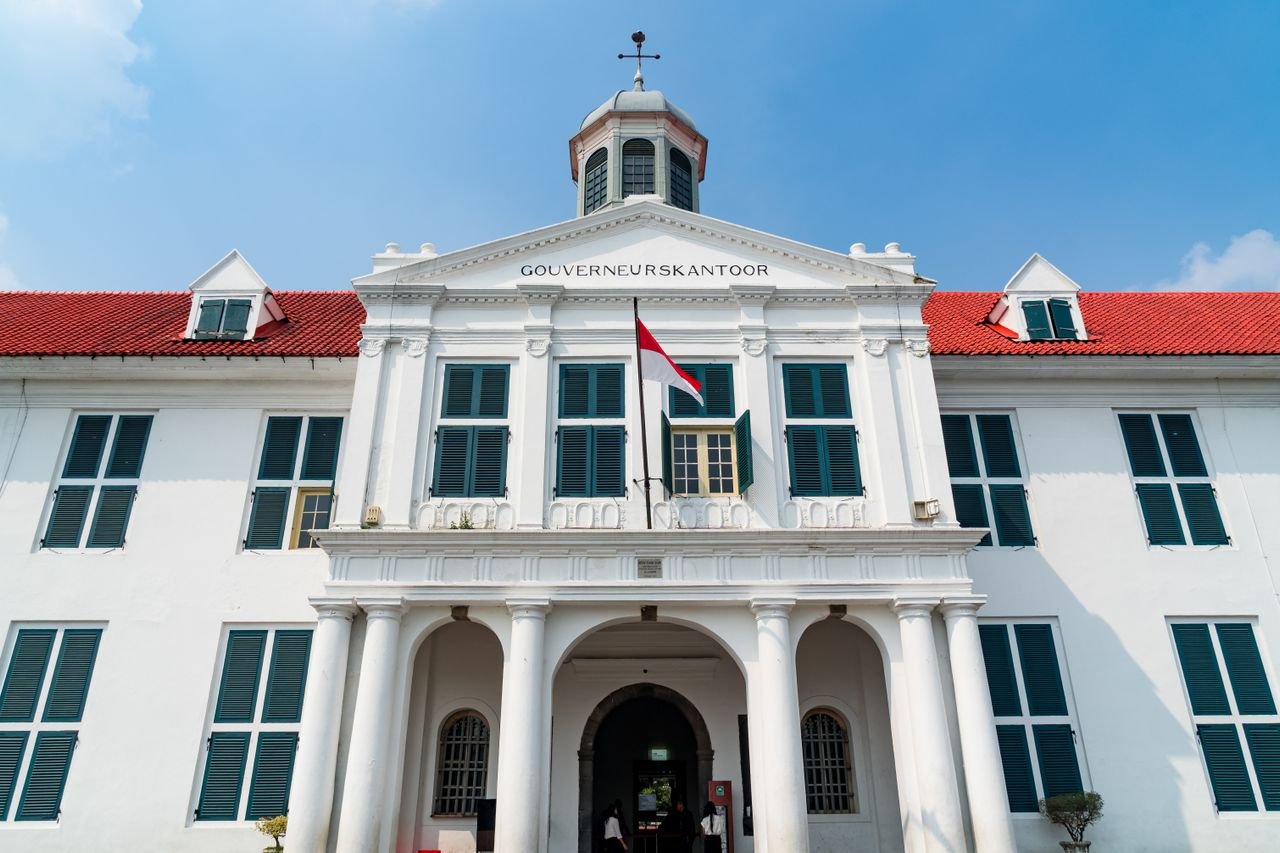
    Want to explore a different side of Jakarta beyond its shopping malls and modern city skyline? Fatahillah Museum is a great place to start! Located in the historic Kota Tua district, this museum takes visitors back through the city’s past, from its early settlements and trading history to the colonial era and its development into Indonesia’s capital.

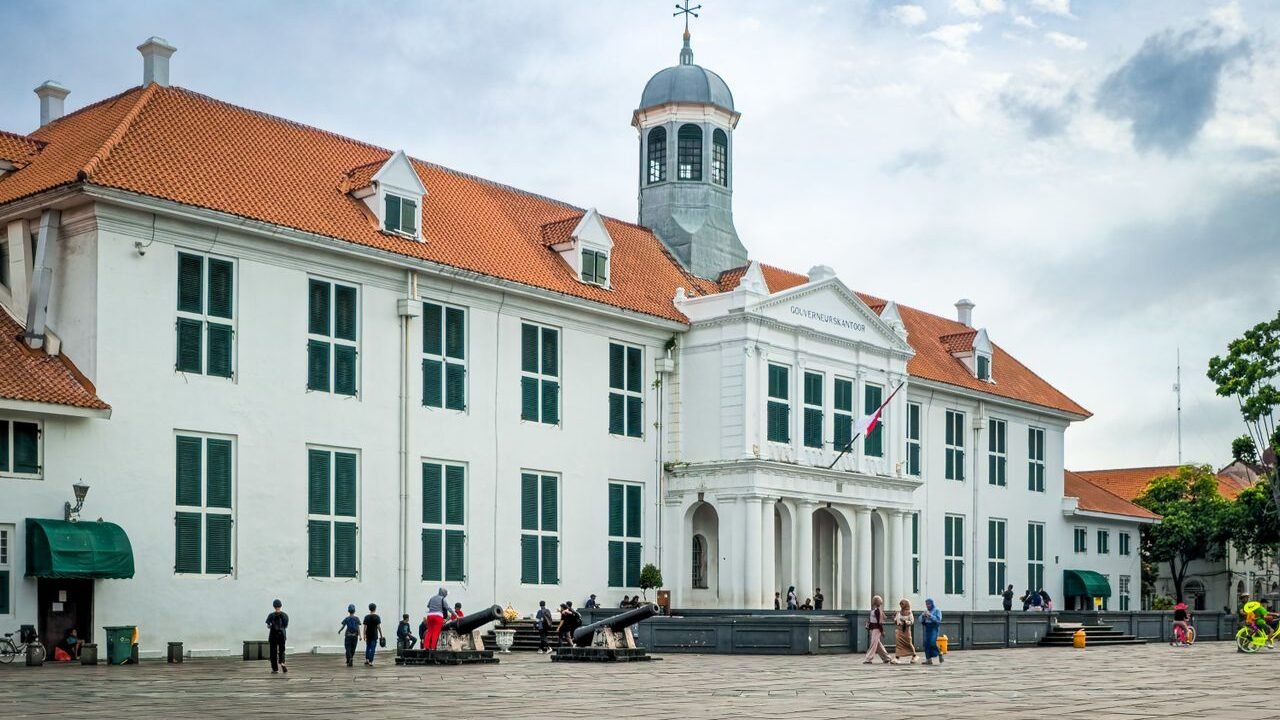
    Housed in a grand old building surrounded by historic streets and charming colonial architecture, the museum offers more than just a collection of old objects. It also provides a closer look at the events, cultures and influences that helped shape Jakarta into the bustling city it is today.

    The History Behind Fatahillah Museum

    Fatahillah Museum was built between 1707 and 1710 during Dutch colonial rule, when Jakarta was known as Batavia. The building originally served as the city’s town hall, handling administrative and judicial matters. Its grand design reflected Batavia’s importance as a major centre of Dutch colonial government.

    After serving various purposes over the years, the building was officially opened as the Jakarta History Museum on 30 March 1974. Today, it houses historical artefacts and archaeological collections that trace Jakarta’s development through different periods, allowing visitors to discover the stories behind the city and its colonial past.

    Highlights of Fatahillah Museum

    m.kumparan.com

    • Distinctive Dutch Colonial Architecture:
    The museum’s building is one of the most recognisable landmarks in Kota Tua. Its large façade, symmetrical layout, tall windows and central roof structure reflect the European architectural influences associated with colonial-era Batavia.

    • Antique Furniture and Historical Artifacts:
    Visitors can find a variety of objects that reflect the social and cultural life of earlier Jakarta, from antique furniture and ceramics to inscriptions and archaeological finds.

    • Underground Dungeons & Water Prisons:
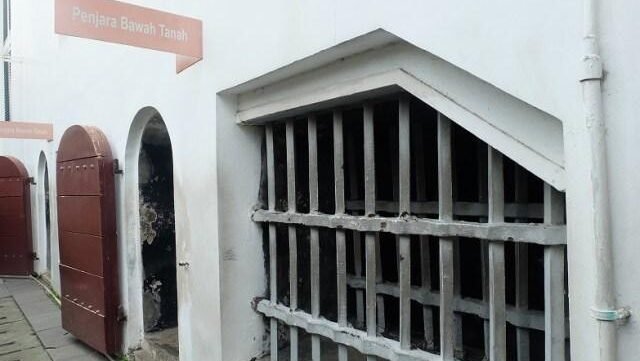
    This is one of the most memorable features of Fatahillah Museum that offers a glimpse into the harsher side of Batavia’s colonial history. Beneath the former town hall, visitors can witness the dark, cramped prison spaces where people were detained under Dutch rule.

    How to Get There

    wikipedia.com

    There are several ways to reach the museum:

    •By KRL commuter train: Travel to Jakarta Kota Station, then continue on foot towards the Kota Tua heritage district.
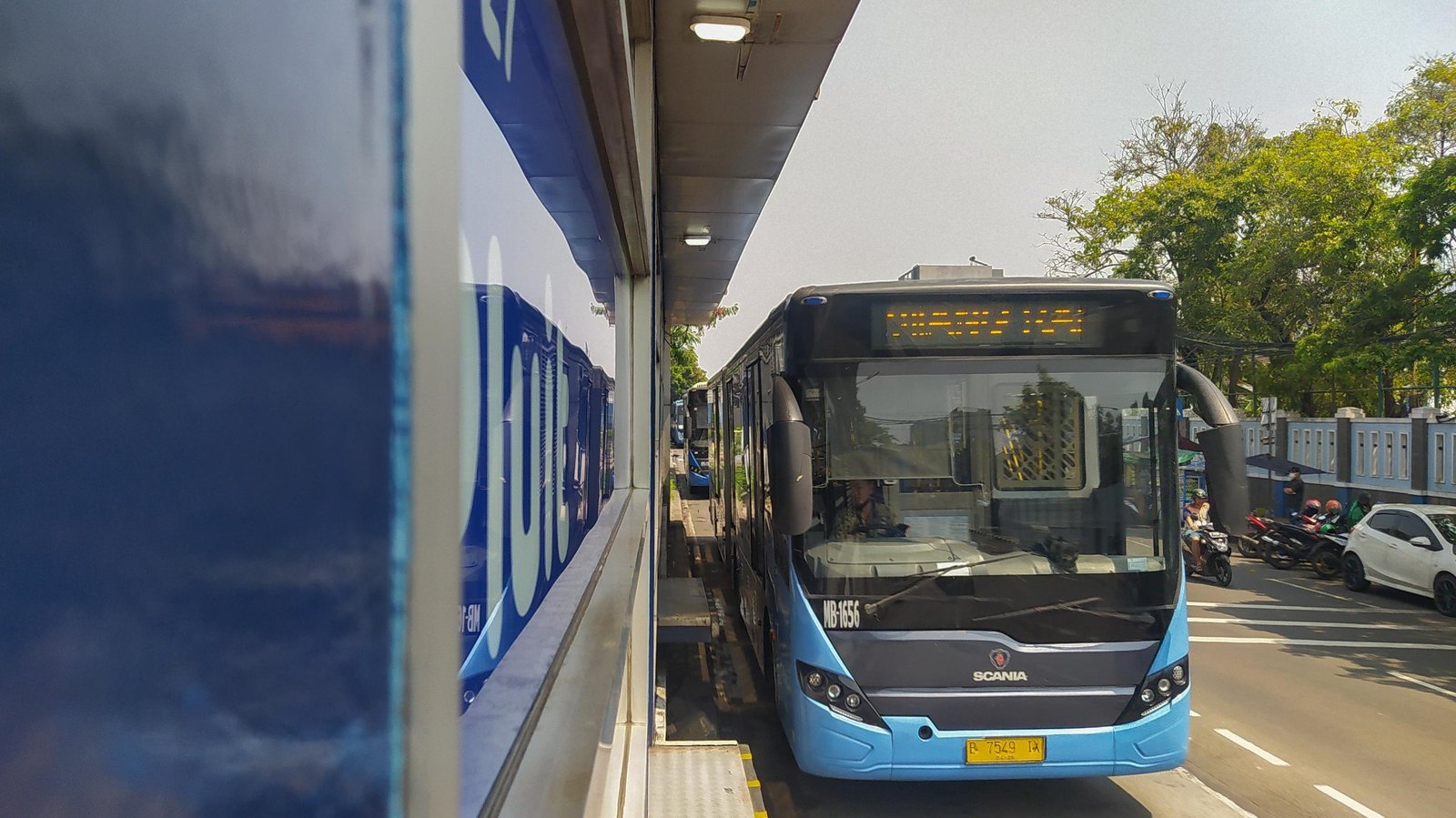
    •By TransJakarta bus: Use a route serving the Kota Tua area, such as Corridor 1, and follow local directions to the museum.
    •By taxi or ride-hailing service: Request drop-off near the museum or Taman Fatahillah. Traffic conditions can affect travel time.

    📌 Fast Facts for Your Itinerary

    📍 Location: Jalan Taman Fatahillah No. 1, Pinangsia, Taman Sari, West Jakarta, Indonesia.

    ⏰ Opening Hours: Tuesday to Sunday, 9:00 AM to 3:00 PM, and closed on Mondays. Checking the latest schedule before visiting is highly recommended since some listings may show different closing times on weekends

    📸 Pro-Tip: Confirm the museum’s photography rules with staff, especially if you plan to use professional equipment.

  • Unveiling Wae Rebo: Flores’ Mystical Village in the Clouds

    Unveiling Wae Rebo: Flores’ Mystical Village in the Clouds

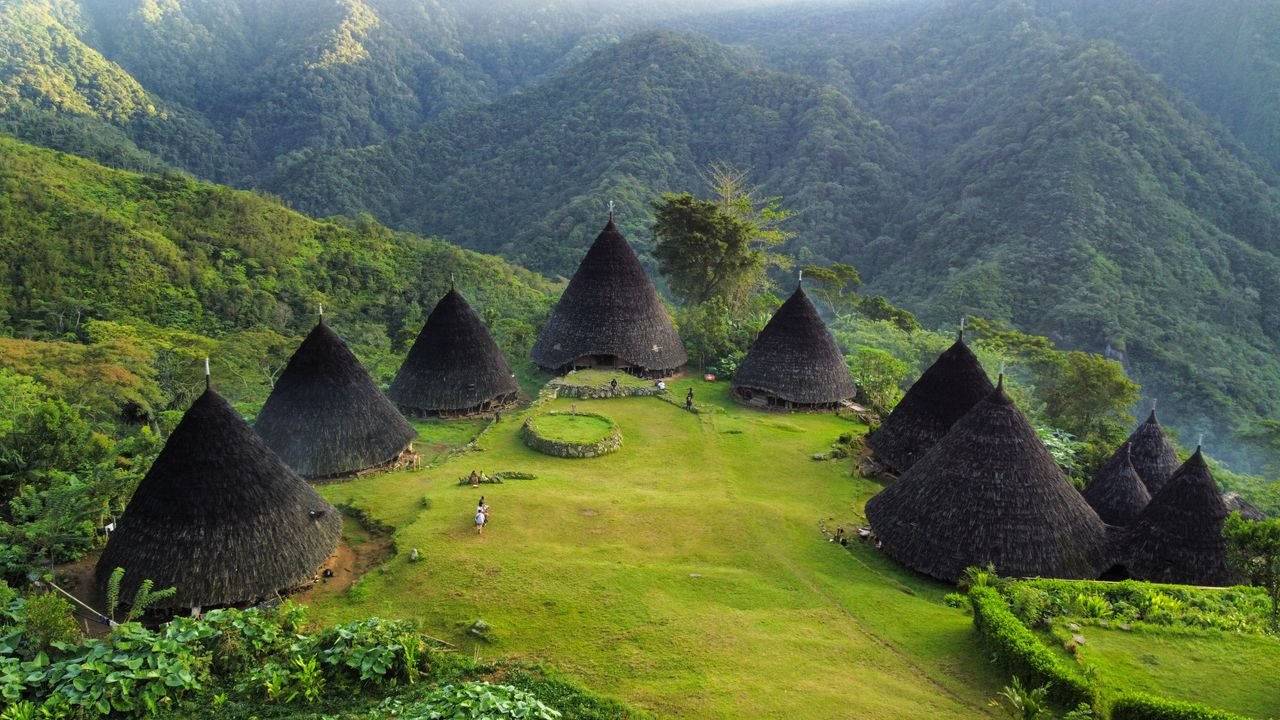
    Stepping off the luxury liveaboard dive boats in Labuan Bajo typically routes travelers to pristine coral reefs or sun-drenched savannahs. Conversely, the true cultural heart of Flores lies hidden high within a misty volcanic valley. Perched at an altitude of 1,200 meters in the rugged Manggarai highlands, Wae Rebo Village is a jaw-dropping, UNESCO-awarded eco-sanctuary that stands as one of Indonesia’s most secluded traditional treasures.

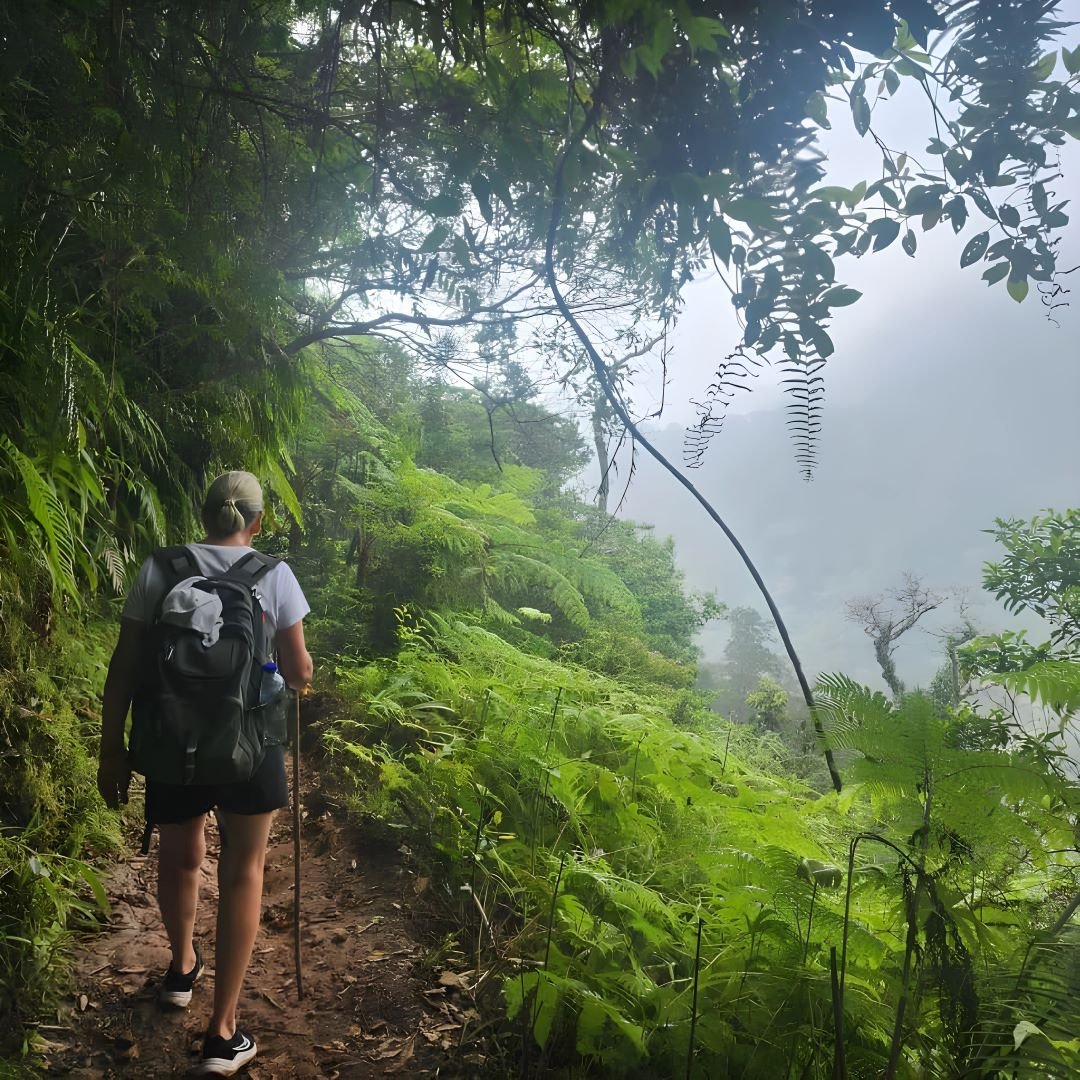
    Inhabited by the indigenous Manggarai tribe for over 18 generations, this remote village is famously dubbed the “Village Above the Clouds” due to the dramatic fog that pours over the surrounding mountain ridges each day. Because the village is completely inaccessible by conventional roads, visiting requires a multi-hour mountain trek through primary rainforest.

    If you are ready to ditch your mobile signal, sleep inside a towering thatched roundhouse, and immerse yourself in pure ancestral living, here is why this magical sanctuary should be your next stop.

    source: getyourguide.com

    Wae Rebo is set inside a dramatic, bowl-shaped mountain valley surrounded by dense tropical forests and the steep slopes of the Pocoroko mountains. Because the community is fiercely dedicated to environmental conservation, the entire precinct functions as a completely unpolluted, self-sustaining ecosystem rich in unique vegetation, singing mountain birds, and wild mountain orchids.

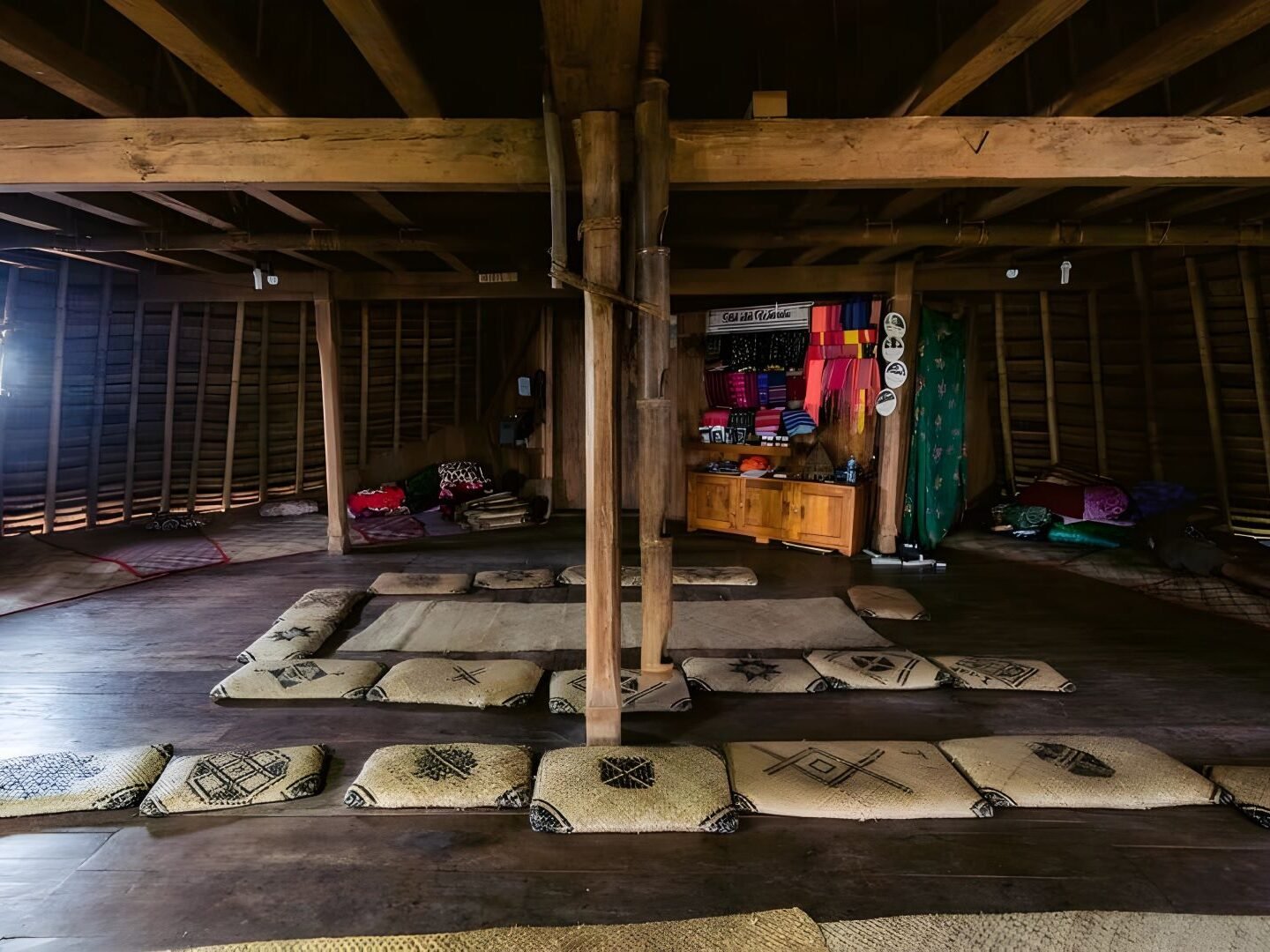
    The defining visual marvel of the village is its architecture. Wae Rebo features an unbroken circle of exactly seven conical, five-story houses known as Mbaru Niang. Hand-built entirely from local timber and thick bamboo without a single metal nail, these structures are wrapped in heavy layers of lontar palm thatch that stretch from the roof apex nearly all the way to the grassy floor. For a detailed breakdown of what each of the five levels represents—from the Lutur living quarters up to the sacred Hekang Kode peak—explore the Indonesia Travel Wae Rebo Architectural and Destination Guide. Additionally, the center of the village is anchored by a sacred stone altar (compang), which acts as the absolute spiritual core for the entire 1,200-person community.

    Why It Is Popular

    source: medium.com

    This hidden highland community stands as a global beacon for sustainable heritage preservation, drawing eco-travelers for several massive reasons:

    • The UNESCO Top Honor:
    Wae Rebo gained international fame after winning the prestigious Award of Excellence at the UNESCO Asia-Pacific Heritage Awards. This honor explicitly celebrated the community’s successful cooperation in rebuilding their ancient Mbaru Niang structures using entirely traditional methods.

    • The Sacred Wael Lu’u Welcome:
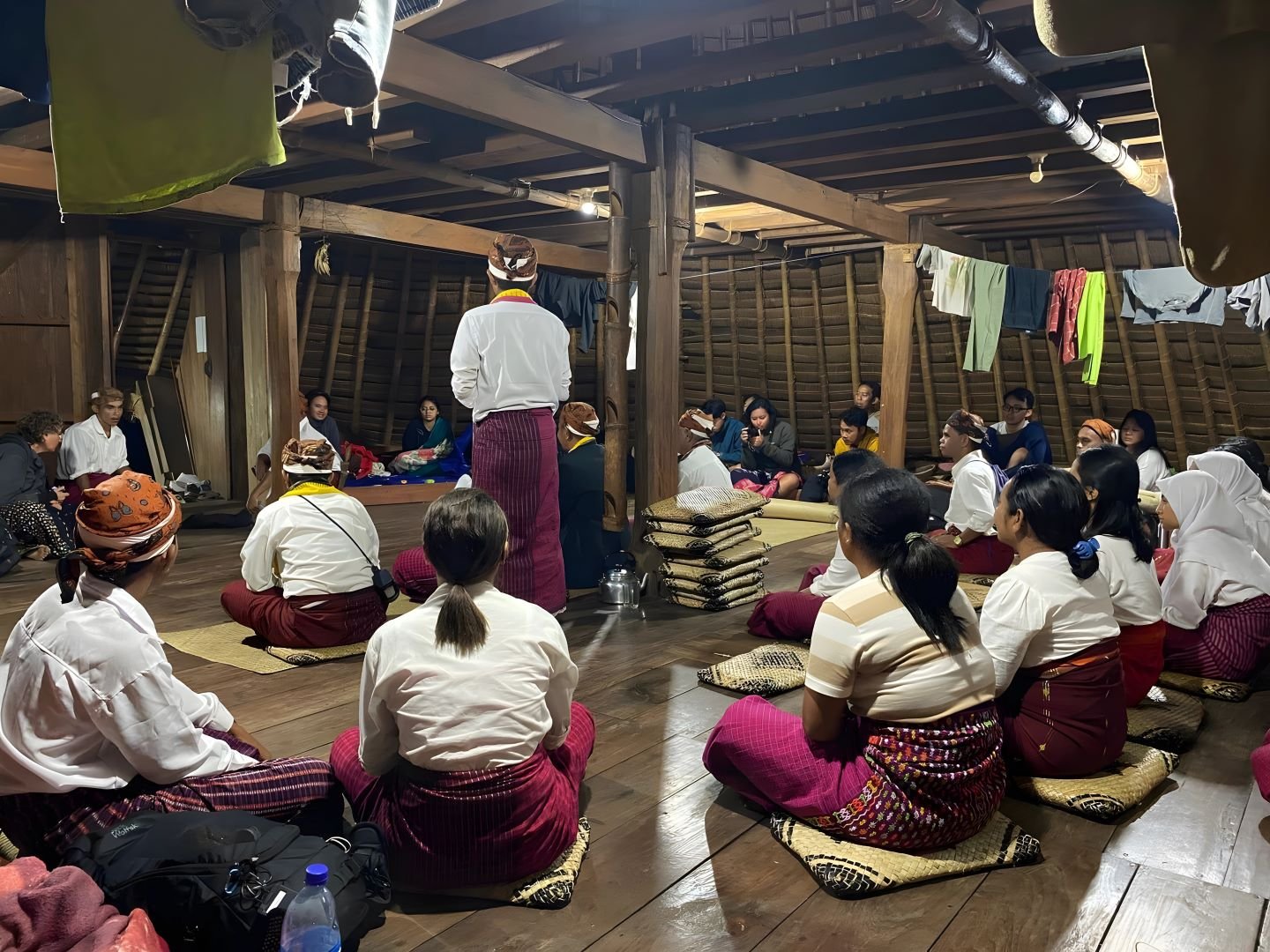
    You cannot simply wander into the village to take photographs. Every visitor is formally guided to the main chief’s house to undergo a mandatory ancestral permission ceremony (Wael Lu’u) where the village spirits are asked to bless and protect you during your stay.

    • World-Class Organic Arabica Coffee:
    The village is globally famous among coffee connoisseurs. The primary economy of the mountain farmers relies on harvesting premium Arabica and Robusta beans shade-grown right in the surrounding forests, which are dried by hand on mats in the center plaza. For those interested, you can learn more about how ecotourism directly helps fund the village welfare and agricultural preservation, look through the Komodo Guide Wae Rebo Cultural Landscape Assessment.

    💡 Read Next: Ready to trade the misty, cone-shaped thatch roofs of Flores’ isolated mountain village for the soaring domes and centuries of empire-shifting history? Head across the continents to Turkey to witness the breathtaking fusion of Christian mosaics and Islamic calligraphy in our ultimate guide to the Hagia Sophia Mosque in Istanbul!


    Local Things to Experience Here

    source: getyourguide.com

    Committing to a two-day, one-night overland trip deep into the Manggarai district rewards you with an incredibly raw and authentic travel experience:

    • Experience Overnight Mbaru Niang Living:
    The village allocates two of its seven massive roundhouses exclusively to host international guests. You will sleep comfortably on traditional shared floor mattresses, feast on simple, freshly prepared local stews, and fall asleep under a completely unpolluted night sky thick with stars.

    • Sample Fresh Highland Coffee:
    Settle onto the wooden benches to enjoy a hot cup of authentic Wae Rebo coffee brewed straight from the morning’s roast, typically paired with sweet fried bananas prepared by the local families.

    • Photograph the Morning Cloud Pour:
    Rise at 5:30 AM to stand on the central lawns. Watch the sunlight break over the ridge lines, illuminating the smoke rising from the conical roofs as the dense morning fog slowly rolls across the shelf of grass.

    Check out this fantastic guide by YouTube creator HanzEleven for a look at the actual trekking path leading to Wae Rebo Village and their experience staying there!

    📌 Fast Facts for Your Itinerary

    📍 Trailhead Location: Denge Village, Satar Mese Barat, Manggarai Regency, Flores, East Nusa Tenggara, Indonesia

    ⏰ No Signal Coverage: To preserve the isolation of the sanctuary, there is zero mobile phone or cellular signal in the valley. Central electricity via generators is strictly managed and only turned on from 6:00 PM to 10:00 PM daily, so ensure your power banks are fully topped up before hiking!

    🎫 Entry & Overnight Fees: The total mandatory community tariff is structured as follows: IDR 200,000 (approx. RM55) for Day Visitors (includes the welcome ceremony and local coffee) and IDR 325,000 to IDR 500,000 (approx. RM90 to RM140) for the complete Overnight Package inclusive of communal lodging, bedding, dinner, and breakfast.

    🥾 The Transit & Trek Breakdown: Getting here requires a 4-to-5 hour private car drive from Labuan Bajo to Denge Village. From Denge, you can pay a tiny fee for a quick 10-minute Ojek (motorcycle taxi) ride to bypass the initial steep concrete road, saving your legs for the main 5-kilometer uphill forest hike which takes roughly 1.5 to 3 hours depending on your fitness level. Sturdy hiking boots with deep traction are absolutely mandatory, as the rocky forest tracks get incredibly muddy and slick!

  • Minangkabau Heartland: West Sumatra’s Spectacular Kingdom of Spired Roofs

    Minangkabau Heartland: West Sumatra’s Spectacular Kingdom of Spired Roofs

    Feasting on ocean-fresh seafood along the Padang beach esplanade and watching the waves roll in from the Indian Ocean are incredible coastal experiences, but the true majestic soul of West Sumatra lies high up in the mountains. Anchored beautifully across the highland plains, the Minangkabau Heartland is a breathtaking region defined by soaring buffalo-horn architecture, legendary spicy culinary arts, and the world’s largest thriving matrilineal society.

    Stretching from the bustling transit hub of Padang up into the historic mountain towns of Bukittinggi and Batusangkar, this cultural powerhouse has beautifully preserved its ancient customary laws (Adat). It is an incredibly rich, misty playground where grand timber palaces sit proudly against active volcanic peaks. You can check out the comprehensive region profiles on the Official Indonesia Tourism West Sumatra Guide.

    If you are ready to stand inside a matriarchal longhouse, trace the origins of the world’s most famous beef rendang, and witness mind-bending martial arts, here is why this Sumatran sanctuary deserves a premier spot on your itinerary.

    source: airial.travel

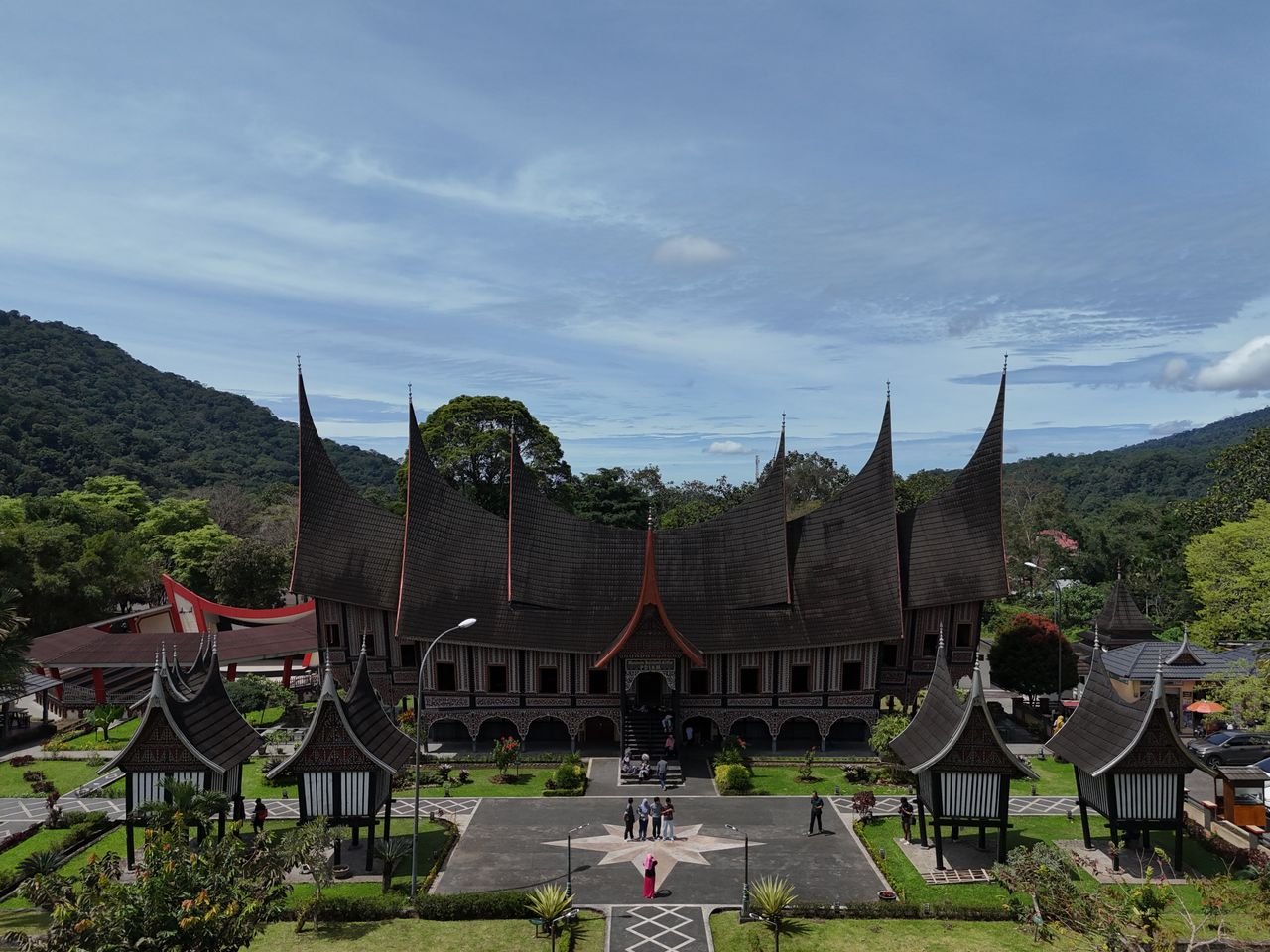
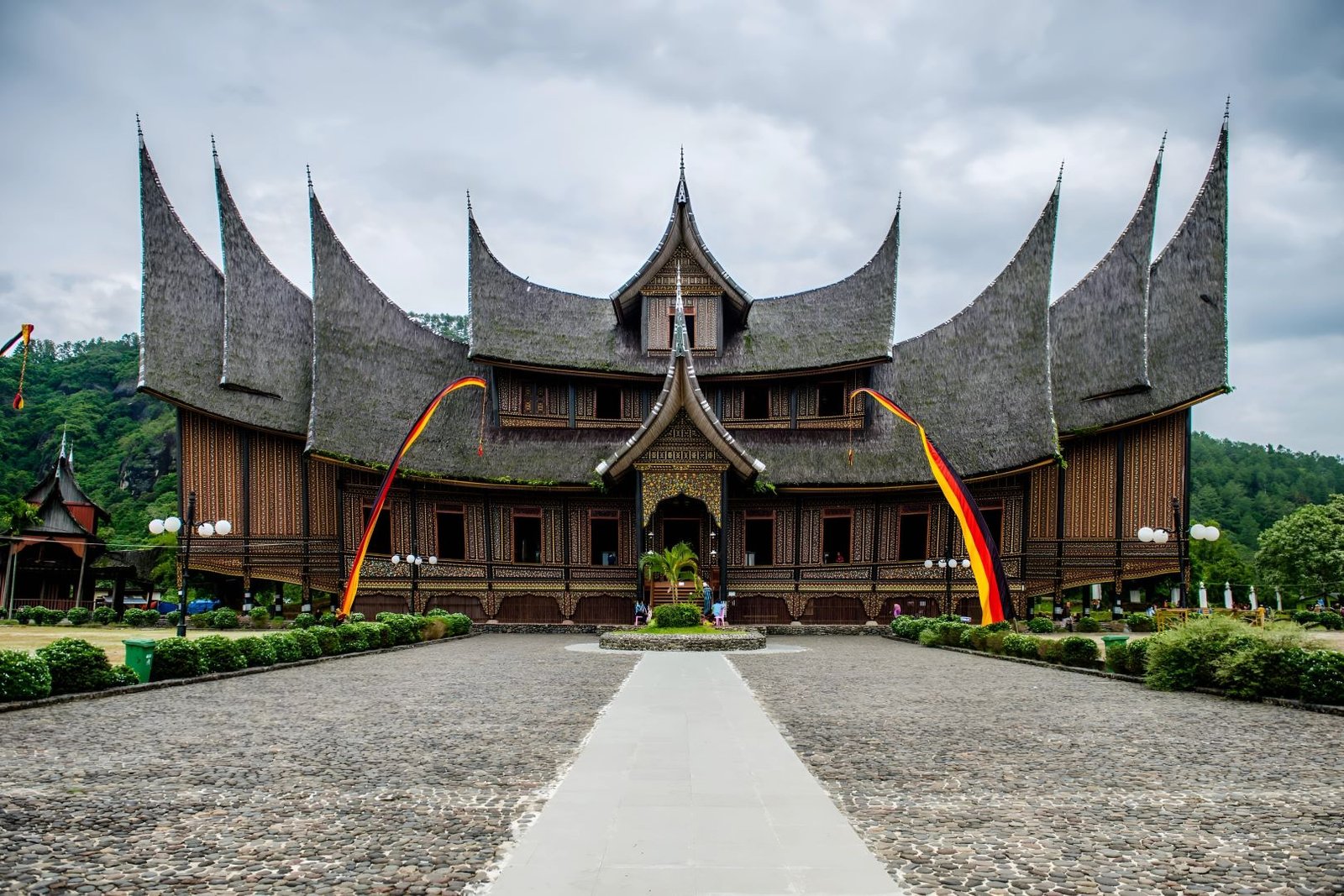
    The Minangkabau culture treats architecture as a fluid canvas of tribal history and deep respect for nature. The defining visual marvel of the region is the Rumah Gadang (Big House), a traditional clan residence built completely out of weather-resistant hardwoods without using a single iron nail, designed to flex safely during earthquakes.

    Stepping onto a palace compound allows you to appreciate its spectacular silhouette. The roofs sweep dramatically upward into sharp, curved peaks modeled directly after the horns of a water buffalo (gonjong), commemorating a legendary historical victory where a clever local buffalo outsmarted an invading kingdom’s giant beast.

    The outer timber panels are covered in extensive geometric wood carvings painted in royal gold, crimson, and black, with each floral pattern symbolizing a specific moral lesson from the community’s ancestral laws.

    The Secret Behind Its Appeal

    source: 1001resepnusantara.com

    This highland cultural pocket continuously captures the fascination of anthropologists, foodies, and eco-travelers for several massive reasons:

    • The Matriarchal Kingdom:
    The Minangkabau proudly stand as the largest matrilineal society on Earth. Property, family names, and ancestral land pass directly from mothers to daughters. You can read a thorough anthropological breakdown of this dynamic on the Britannica Minangkabau History and Matrilineal Culture Page. While men manage political and religious spheres, the women hold absolute veto power over tribal assets, ensuring an incredibly balanced, communal framework.

    • The True Home of Rendang:
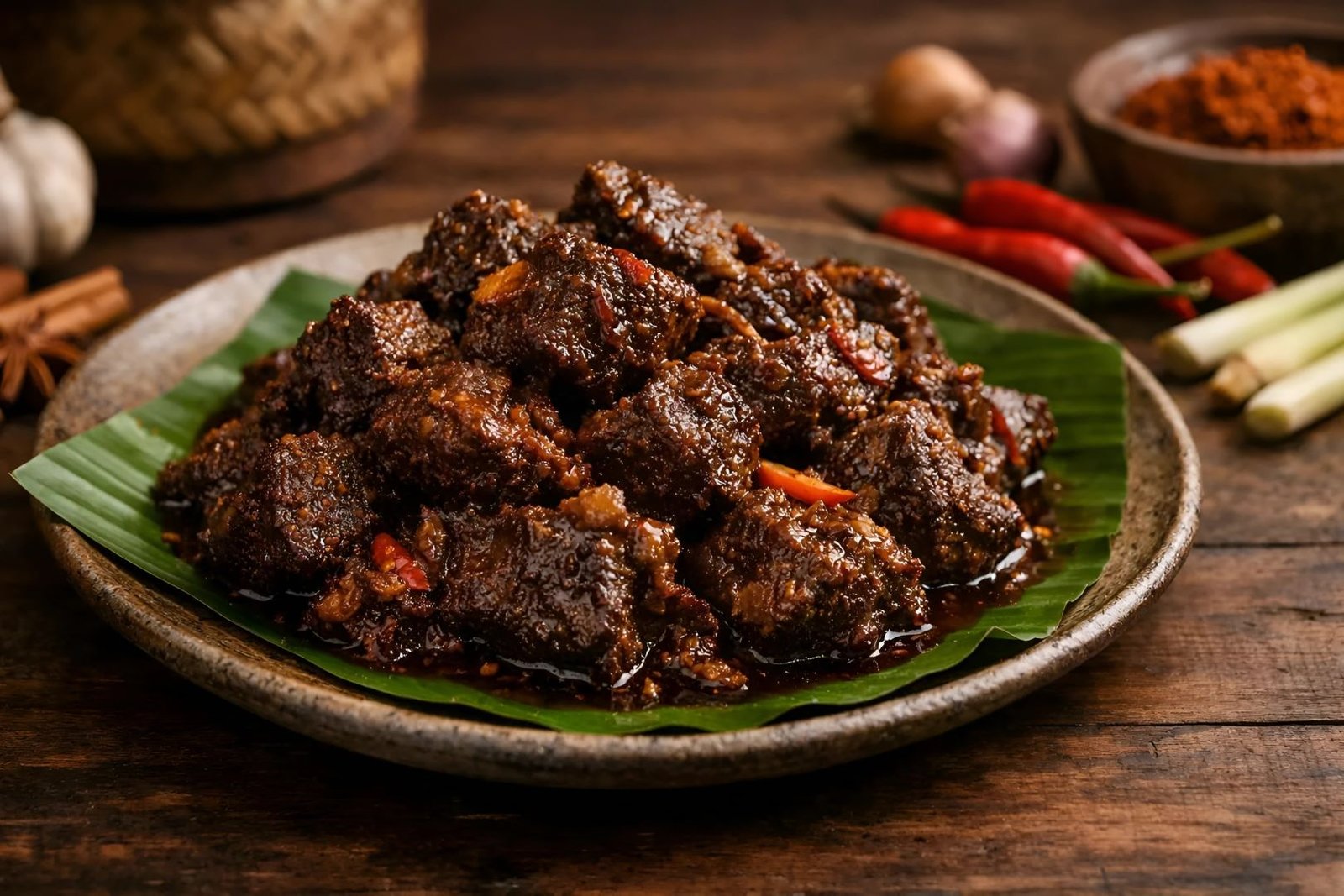
    Padang is the undisputed culinary capital of Indonesia. It is the birthplace of Nasi Padang and Beef Rendang—slow-simmered for hours in rich coconut milk and local spices until it achieves a deep, dark caramel texture. The unique Hidang service style relies on waiters stack-serving dozens of dynamic plates right onto your table, charging you only for what you eat.

    • The Sianok Geo-Park Extension:
    The region has seen a massive surge in modern eco-tourism. The dramatic canyon landscapes of Sianok Gorge have been thoroughly integrated into the West Sumatra Geo-Park trail framework, giving travelers premium access to world-class hiking, mountain biking, and volcanic sightseeing loops. Plan your hiking or volcanic sightseeing routes through the official Indonesia Travel West Sumatra Hub.

    💡 Read Next: Ready to trade the high-altitude spired roofs and spicy rendang kitchens of West Sumatra for the aromatic lanes and red lanterns of Java’s oldest cultural enclave? Head south to explore our ultimate guide to Jakarta’s historic Glodok Chinatown!

    Local Highlights and Attractions

    Structuring your overland route from the coast into the mountains yields a spectacular sequence of cultural and natural stops:

    • Marvel at Istano Basa Pagaruyung:
    Head to Batusangkar to explore this colossal, three-story replica of the grand royal palace. Settle inside its grand galleries to admire royal thrones, hand-woven songket silk drapes, and an incredible collection of historic weapons.

    • Explore Bukittinggi’s Clock Tower (Jam Gadang):
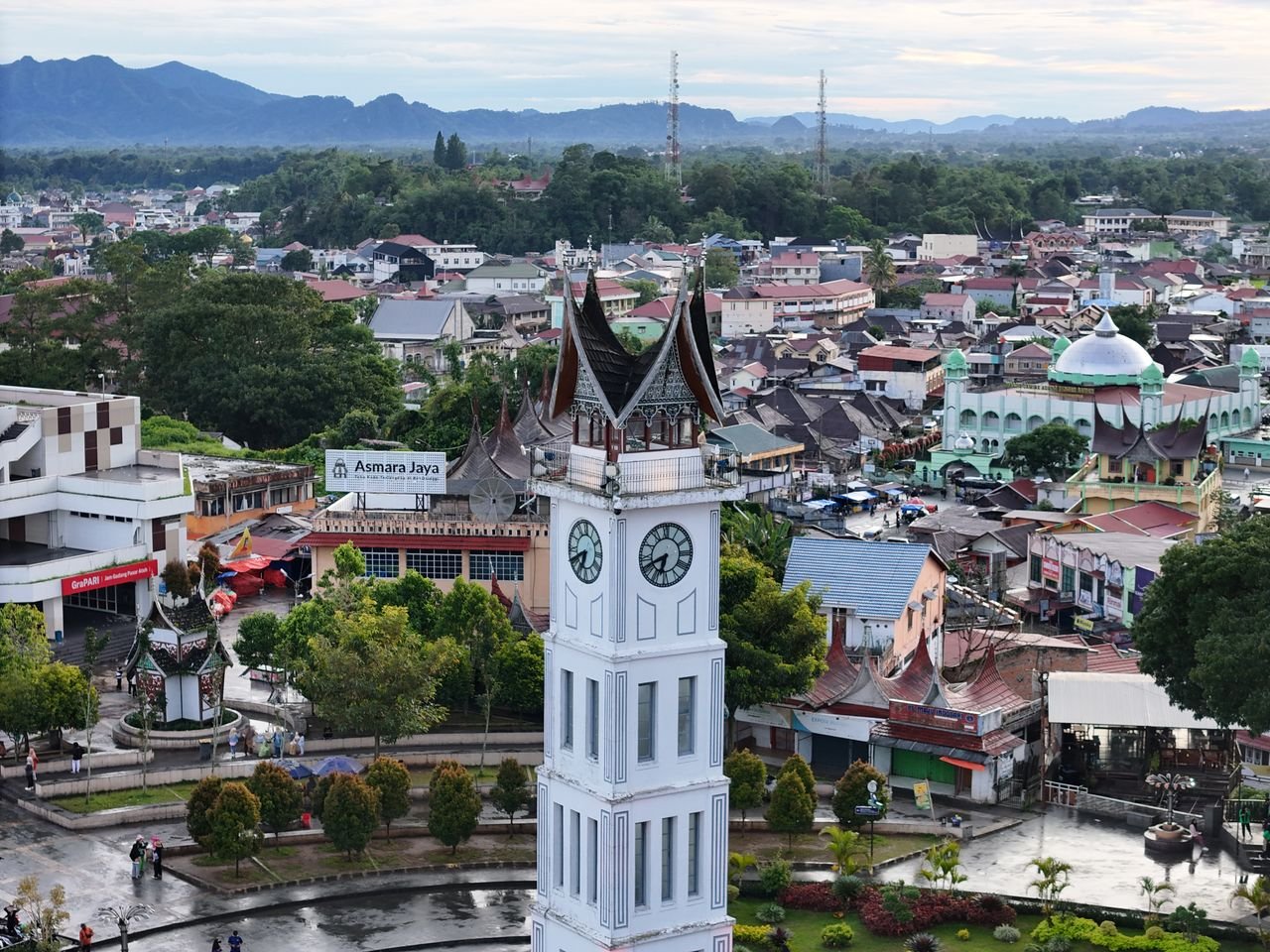
    Stop right in the center of the mountain capital to view its iconic 1926 clock tower, topped with a gorgeous Minangkabau roof. The surrounding plaza is a lively community hub lined with local markets selling authentic embroidery.

    • Catch the Thrilling Tari Piring:
    Arrange a cultural evening showcase to witness the spectacular Plate Dance. Dancers move with dizzying speed while balancing ceramic plates on their open palms, culminating in a dramatic finale where they leap barefoot directly onto piles of jagged, broken glass shards without taking a single scratch!

    📌 Fast Facts for Your Itinerary

    📍 Gateway Location: Minangkabau International Airport (PDG), Ketaping, Padang Pariaman Regency, West Sumatra

    ⏰ Best Time to Visit: The highlands are incredibly lush all year round; however, aiming for the dry months between May and September ensures clear mountain roads and optimal visibility for trekking through the gorges.

    🎫 Admission & Museum Tariffs: Exploring the towns and public plazas is completely free. Mandatory entry donations for major historical palaces like Pagaruyung are priced around IDR 15,000 to IDR 25,000 (approx. RM4 to RM7) for domestic visitors and international travelers alike.

    🥾 Pro-Tip: The mountain roads winding from Padang up to Bukittinggi are notoriously steep, narrow, and prone to heavy tropical rain fog. Skip the stress of public buses and hire a private local driver for your overland loop—it is incredibly affordable, ensures maximum safety, and lets you pull over instantly whenever you spot a beautiful spired roof cutting through the morning mist!

  • Masjid Raya Al-Jabbar: West Java’s Floating, Translucent Wonder

    Masjid Raya Al-Jabbar: West Java’s Floating, Translucent Wonder

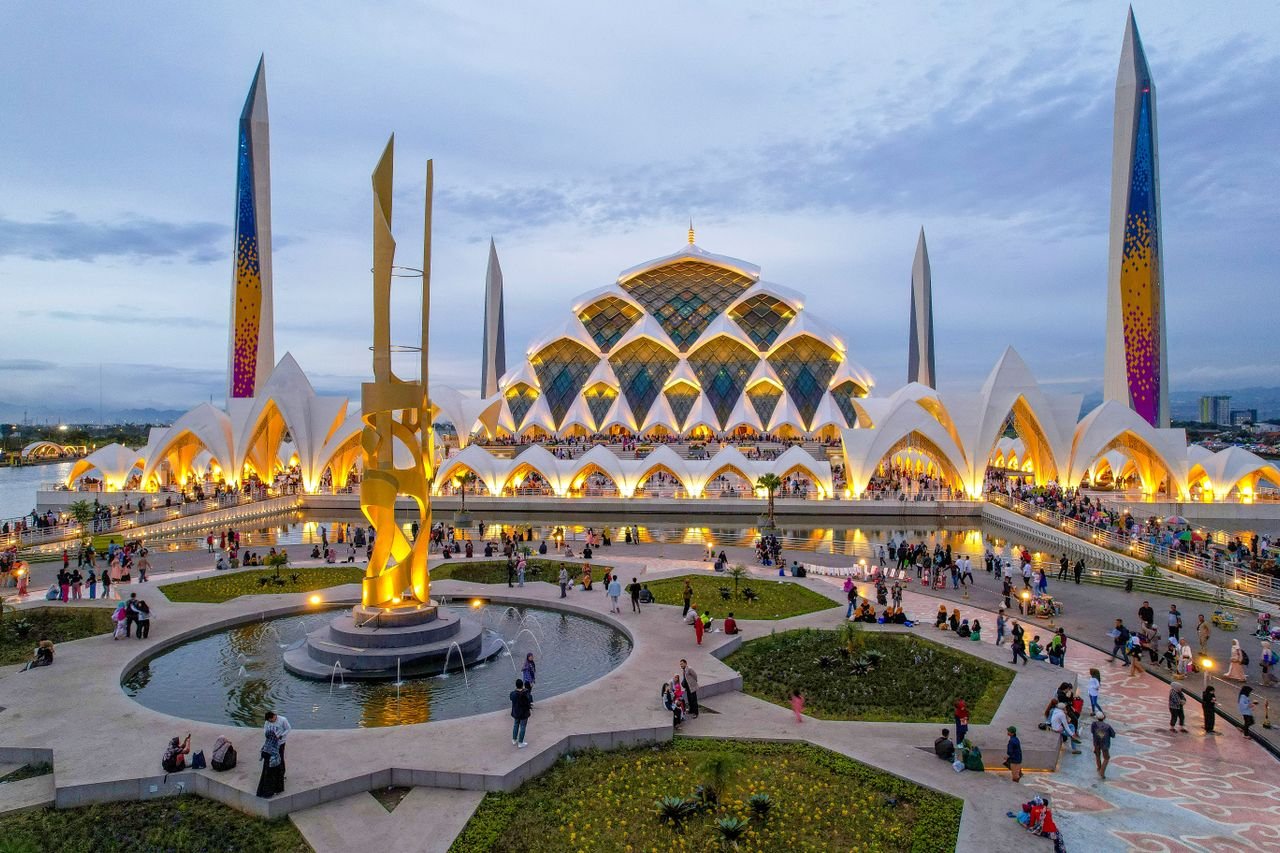
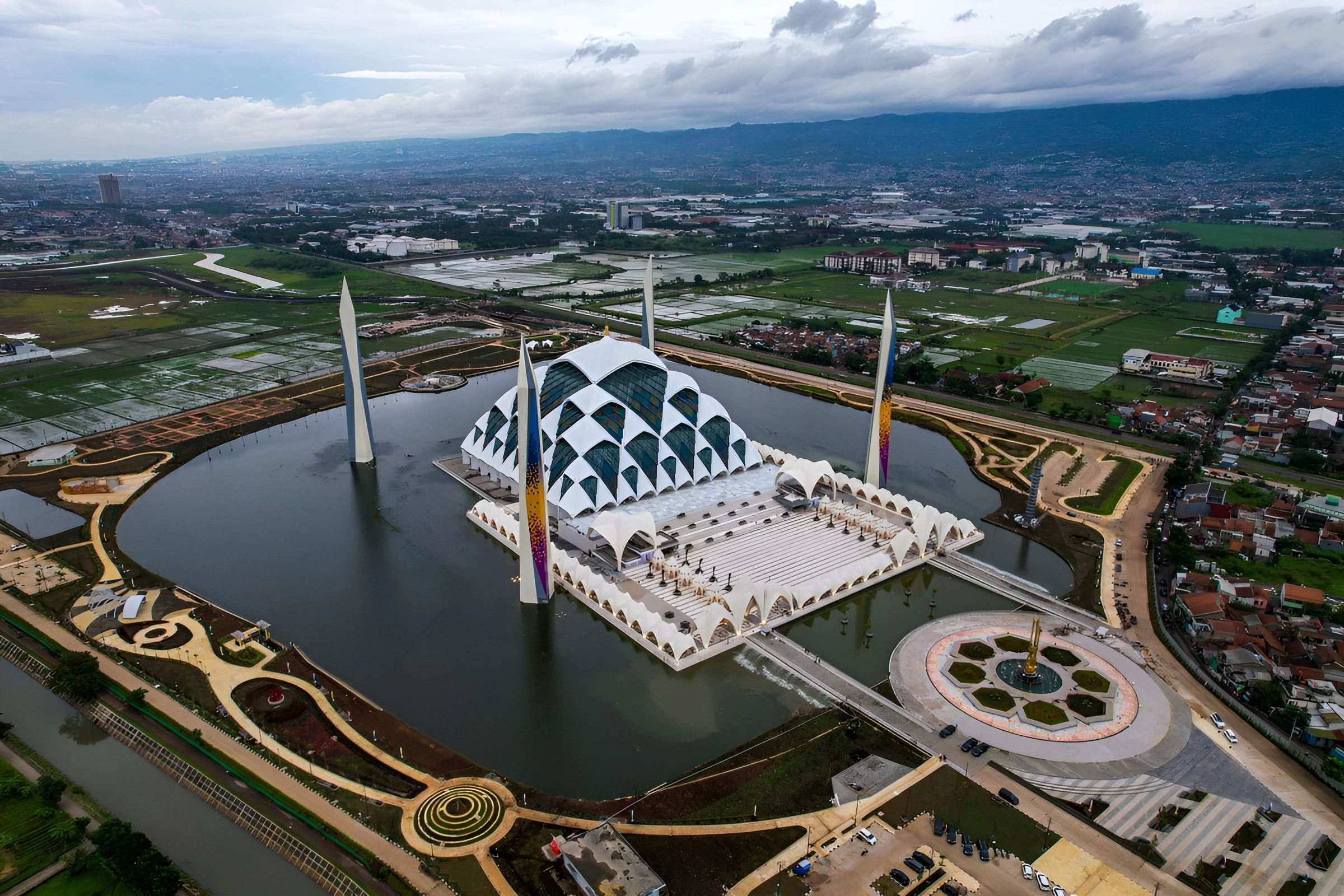
    Sipping hot local tea overlooking the rolling hills of Lembang and checking out vintage art-deco streets are absolute staples of a Bandung getaway, but the true majestic anchor of the region’s modern spirit commands the eastern plains. Rising grandly over a massive 25-hectare lake basin in Gedebage, the Masjid Raya Al-Jabbar is a jaw-dropping, futuristic floating marvel that has fast become the definitive contemporary icon of West Java.

    Designed by the brilliant architectural mind of Ridwan Kamil and officially launched to the public after years of precision engineering, this monumental sanctuary fits up to 60,000 worshippers across its vast grounds. Fusing complex mathematical patterns with local Sudanese weaving traditions, it completely ditches standard domes and columns for a structure that looks straight out of a science-fiction epic.

    If you are ready to stand inside a column-free glass fortress, wander along illuminated floating plazas, and dive into state-of-the-art heritage museums, here is why this floating jewel deserves a spot on your travel blueprint.

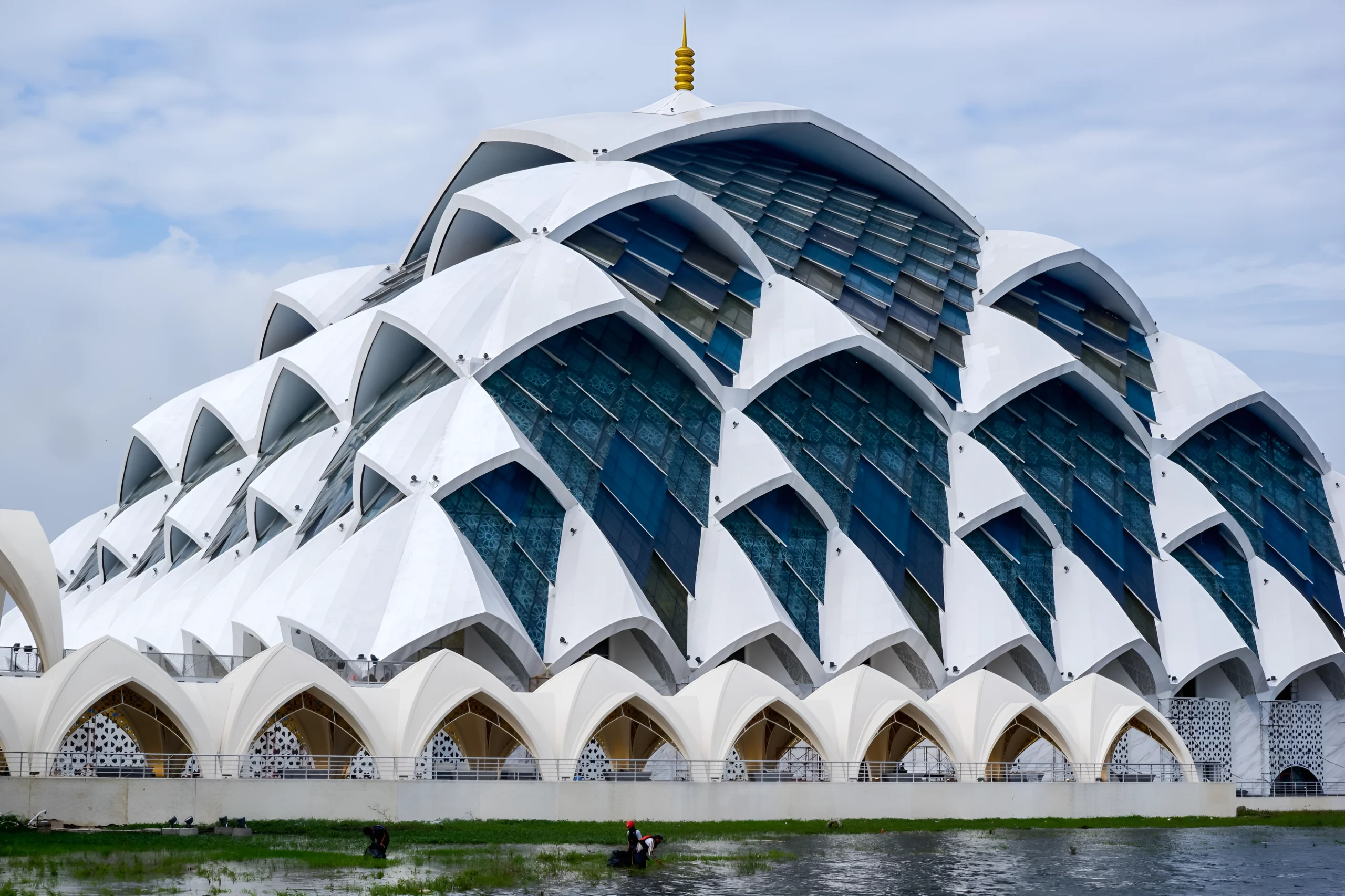
    Masjid Raya Al-Jabbar is an extraordinary exercise in fluid structural engineering that redefines classic sacred spaces. Instead of using traditional concrete domes or standalone minarets, the building is shaped like a colossal, multi-tiered pyramid wrapped in interlocking glass scales that mimic the geometric beauty of local Sundanese woven bamboo handicrafts (anyaman).

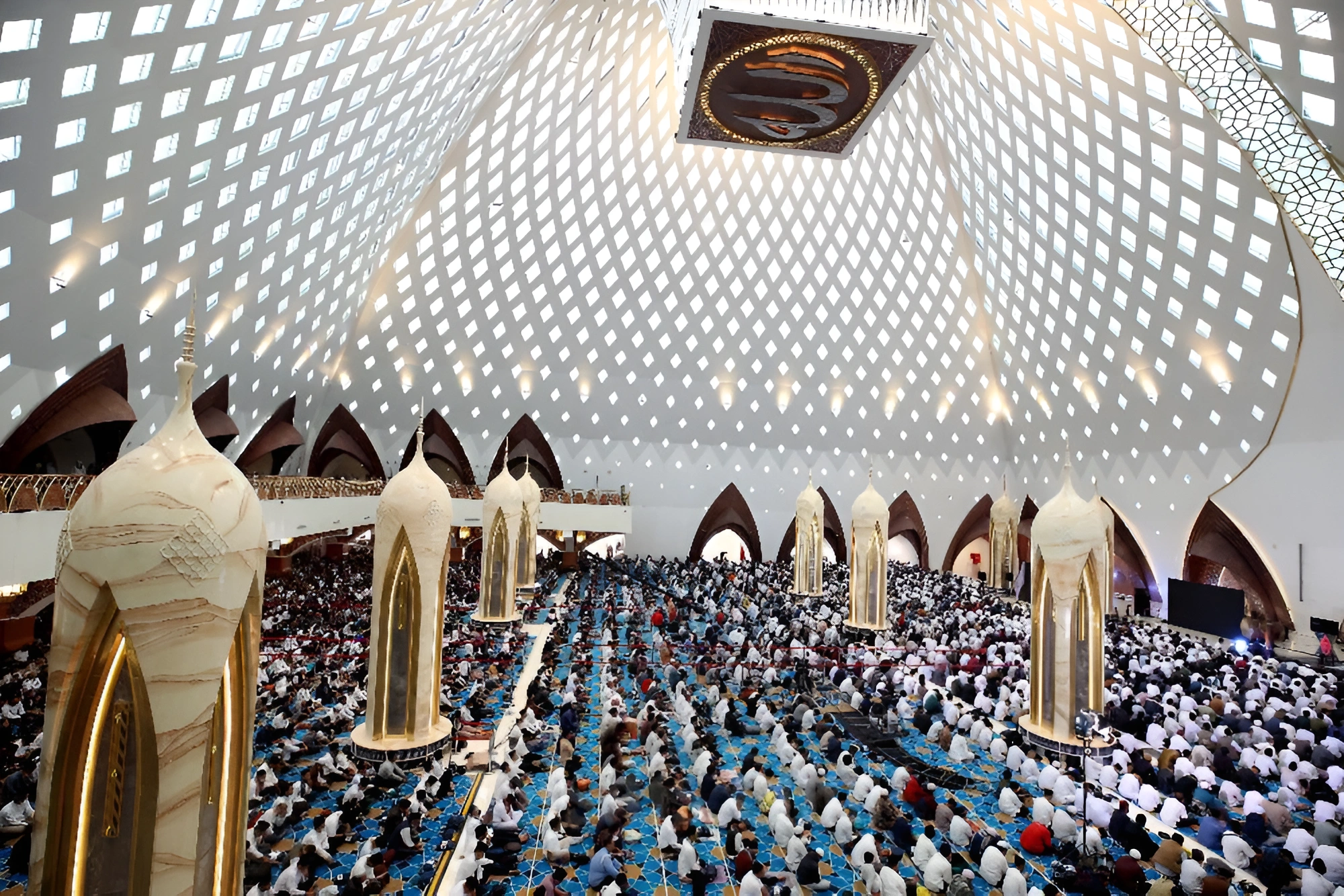
    Stepping onto the grand marble plaza reveals a highly polished nature-first design. The main structure appears to float completely on top of a massive artificial retention reservoir designed to manage regional flood control while creating a stunning visual mirror. Four corner minarets slice into the sky like geometric blades, while the interior completely eliminates central pillars, leaving a soaring, open-air prayer hall that relies entirely on natural daylight filtering through thousands of custom triangular glass panes.
    Why It Is Popular

    source: foto.bisnis.com

    This structural titan continuously captures the curiosity of international travelers, design buffs, and digital photographers for several key reasons:

    • The 99 Al-Jabbar Connection:
    The name of the mosque beautifully serves a dual purpose. It directly honors Al-Jabbar, one of the 99 Names of Allah meaning “The Almighty,” while subtly referencing algebraic mathematics—the exact computational geometry used to build the sweeping structural frame.

    • The Galeri Rasulullah Subsystem:
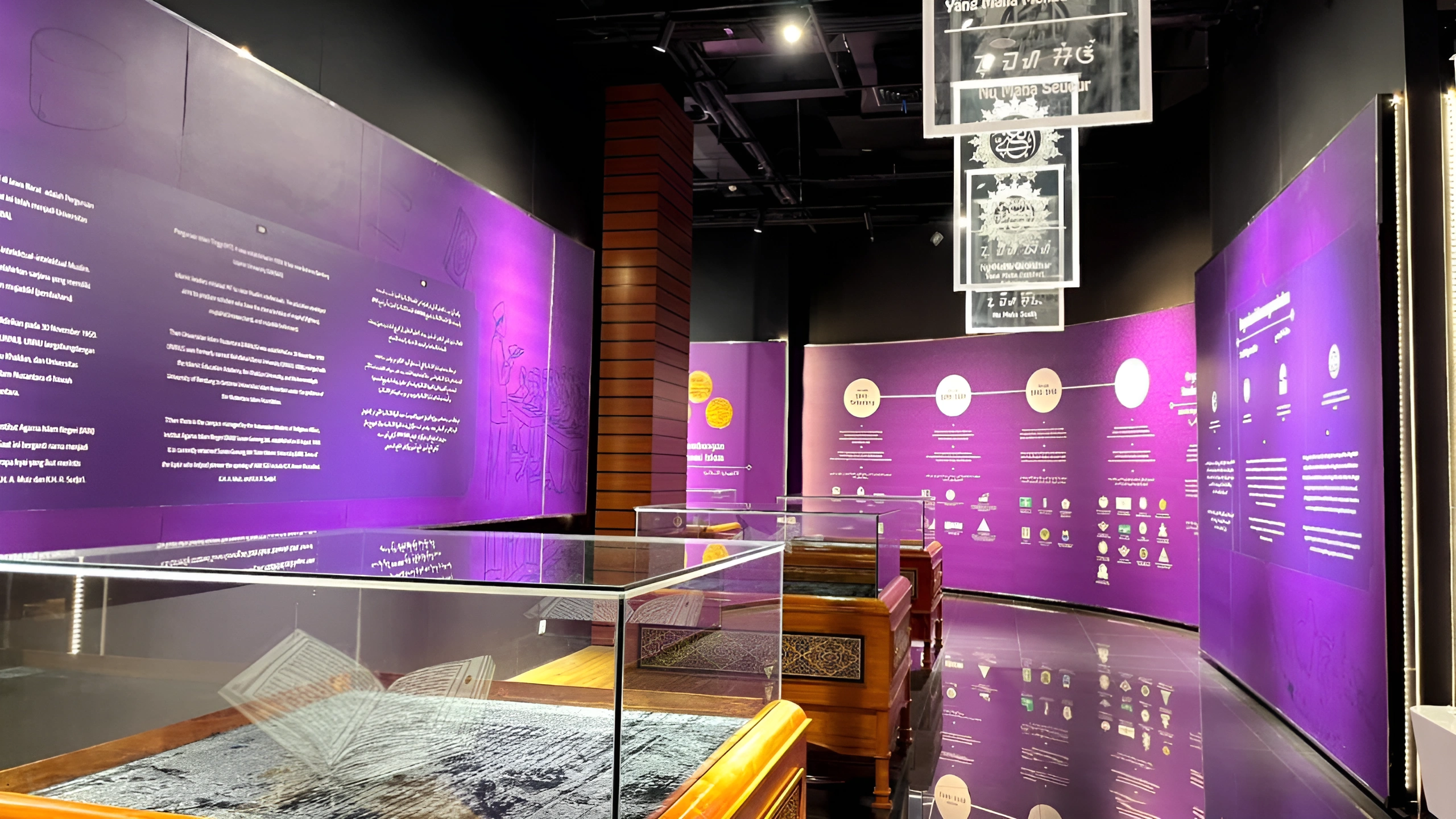
    Settle beneath the grand hall to explore a highly immersive, world-class Islamic and Digital Heritage Museum. This state-of-the-art gallery uses custom motion screens, holographic projections, and interactive soundscapes to chart the life of the Prophet Muhammad and the history of Islam in Nusantara.

    • The Integrated Transit Boom:
    Reaching the mosque from the national capital has become incredibly fast and smooth. Thanks to the comprehensive rollout of the Whoosh High-Speed Rail network, travelers can hop on the bullet train at Halim Station in Jakarta and pull into the nearby Tegalluar Station in just 45 minutes, transforming this into the ultimate modern day-trip run. To lock in your itinerary, you can purchase seats and check departure schedules on the official KCIC Whoosh Ticket Booking Portal, transforming this into the ultimate modern day-trip run.

    Local Attractions to Experience

    source: metrotvnews.com

    Structuring your morning or late afternoon visit across the complex yields an array of brilliant lifestyle and cultural stops:

    • Wander the Botanical Waterfronts:
    Take a relaxing stroll down the paved paths wrapping around the outer retention lake. The banks are beautifully landscaped with diverse floral gardens, public seating parks, and open plazas that offer the absolute premium angle for street-style photography.

    • Dive Into the High-Tech Museum Loop:
    Secure an advance slot to tour the lower-level galleries. The exhibits feel less like a traditional museum and more like a high-tech science pavilion, making it incredibly popular for young travelers mapping out local history.

    • Catch the Sunset Reflection:
    Ensure you hang around the plazas as dusk approaches. The entire translucent dome lights up from the inside, sending a striking gold, green, and white neon glow reflecting across the dark lake waters. Check out the trending Masjid Aljabbar Reels Hub on Instagram to see creative angles, real-time weather clips, and composition inspiration from other creators.

    source: detik.com

    📌 Fast Facts for Your Itinerary

    📍 Address: Jl. Cimencrang No.14, Cimenerang, Gedebage, Kota Bandung, Jawa Barat 40292, Indonesia

    ⏰ Operating Schedule: The main public outdoor plaza and lake paths are open 24 hours a day, 7 days a week. The indoor prayer sanctuary is welcoming visitors outside of specific service cleanups, while the specialized digital museum follows strict hourly online reservation windows.

    🎫 Entry Fee: Stepping onto the floating grounds and walking through the main architectural viewing areas is 100% free for everyone. (Small ticketing fees apply for the interactive digital history gallery loops).

    👔 Etiquette & Dress Codes: As a highly revered place of worship, all visitors must dress respectfully, ensuring shoulders and knees are fully covered. Footwear must be removed at the central check stations before walking onto the clean marble plaza tracks. Keep your camera gear respectful inside the prayer hall, saving the grand creative content runs for the vast outdoor waterfront plazas!

    💡 Read Next: Ready to trade the ultra-modern woven glass and high-tech floating plazas of West Java for a raw journey back to pure ancestral roots? Head across the water to Flores to explore the conical thatched roundhouses in our ultimate guide to Wae Rebo Village!